Historic Limestone and Travertine Walls: Maintenance Lessons from Kaleiçi
Walking through the narrow streets of Antalya's Kaleiçi, the beige and cream-toned walls rising on either side carry the city's thousands of years of history. Most of these walls are built from stone quarried from the travertine plateau on which Antalya sits and from the surrounding limestone quarries. Similar stones appear in the old stone houses of Muğla and in the historic buildings of Mersin and Adana. In this article, we explain the structure of historic limestone and travertine walls, how they deteriorate over time, and how to approach these surfaces without damaging them.
In short: Limestone and travertine are both composed of calcium carbonate, and are stones that are easy to work but sensitive to external influences. The most common problems on historic walls are black crust, salt crystallization, surface dissolution, and algae. Cleaning is always done with a test area and starting with the gentlest method; acid, pressure washing, and sandblasting cause permanent damage.
Limestone and Travertine: Similar but Different
Both stones consist mainly of calcium carbonate, but they form in different ways. Limestone mostly forms from the compression of shells and organic remains that accumulate on the floors of ancient seas; for this reason, shell fossils can occasionally be seen in it. Travertine, on the other hand, forms when calcium-rich spring waters reach the surface and deposit their minerals; its pores and plant traces come from this process.

- Easy to work: It is relatively soft when quarried, which is why it was widely used historically for walls, arches, and ornamentation.
- Porous: It absorbs water and the salts carried by water; most deterioration begins this way.
- Affected by acid: Calcium carbonate dissolves with acid rain and acidic cleaners.
- Develops a patina over time: The natural protective layer that forms on the surface is part of the stone's historic appearance and must be preserved.
Historic Stone Walls of Our Region
Antalya Kaleiçi
The walls of Kaleiçi, the area around Hadrian's Gate, and the courtyard walls of the old houses are shaped by the region's travertine and limestone. Because of their seaside location, these walls are exposed to both salty air and intense sun.
Muğla, Mersin and Adana
Local stones form the backbone of the old stone houses of Muğla and the historic buildings of Bodrum, while limestone does so in the historic centers of Mersin and Adana. The climate differs in each: salt and humidity stand out on the coast, while temperature differences and traffic-related pollution stand out inland.
| Deterioration | What it looks like | Cause | Right approach |
|---|---|---|---|
| Black crust | Hard, dark layer under eaves | Reaction of calcite with polluted air | Gentle, repeated cleaning on a test area |
| Salt crystallization | White efflorescence, flaking | Crystallization of salts carried by moisture | First the source of moisture, then a salt-extraction poultice |
| Surface dissolution | Rough, sandy surface | Rainwater and acidic cleaning | Avoid acid; consolidation if necessary |
| Algae and lichen | Green, black, or orange stains | Biological growth in shade and humidity | Soft brush and suitable biocide |
How Does Black Crust Form?
In cities, sulfurous gases from traffic and heating react with calcium carbonate in the presence of moisture and form gypsum on the surface. This layer also traps soot and dust and darkens. Areas under eaves, above windows, and in recesses that rain does not wash are where black crust is most commonly seen.

Proper Cleaning of Historic Stone Walls
- Diagnosis first: No method is chosen before the type of dirt, the condition of the stone, and the source of moisture are determined.
- Test area: Different methods are tried on small, inconspicuous areas, and the results are evaluated together.
- Start with the gentlest: Steam, low-pressure warm water, soft brushes, and poultices come first.
- What to avoid: Acidic products, high-pressure water, and sandblasting irreversibly damage the stone's surface and patina.
- Follow the rules: Listed buildings require conservation board approval and expert supervision.

In Antalya, Muğla, Mersin, and Adana, we work with these principles when cleaning walls and floors in mansions, boutique hotels, and old stone houses in historic neighborhoods. The goal is not to make the stone look new, but to extend its life by preserving a surface that bears its age.
Fossil-Bearing Surfaces: The Identity of the Stone

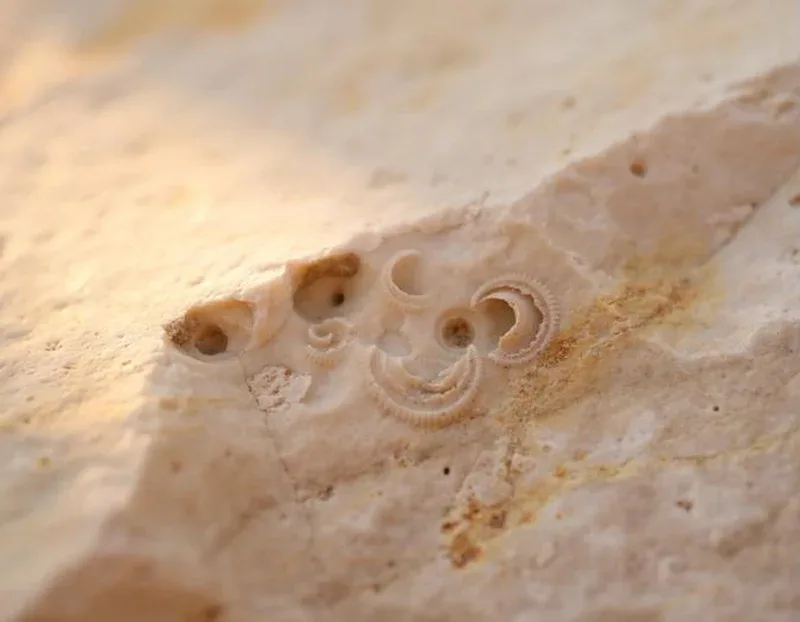
The shell imprints visible on the surface of limestone are evidence that the stone formed in a marine environment millions of years ago. These marks make the stone unique, but they also create spots of varying hardness on the surface.
On fossil-bearing surfaces, stiff brushes and abrasives erode the softer areas more deeply; for this reason, a soft brush and low pressure are preferred for cleaning.
Do not mistake fossil marks for defects and try to fill or erase them; they are part of the stone's natural texture.
Numbered Test Areas

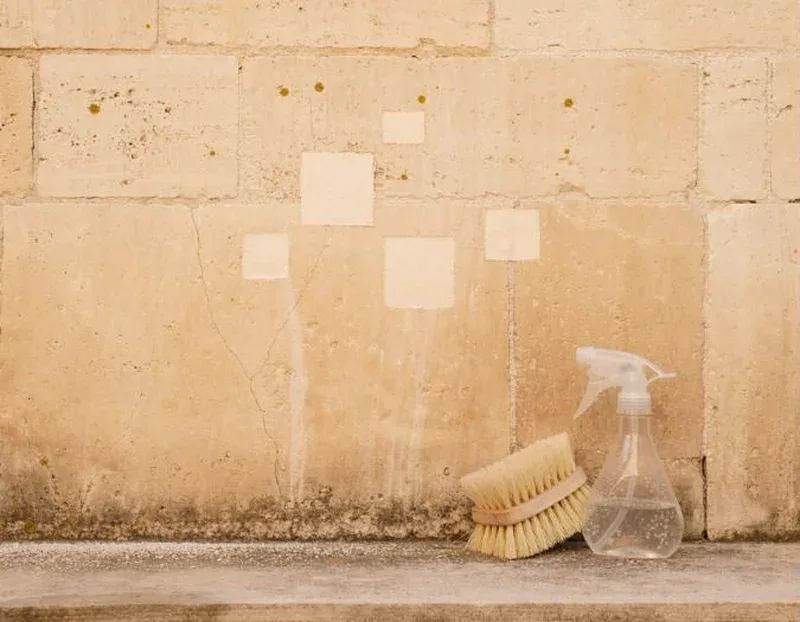
Before cleaning begins on a historic wall, small numbered test areas are set up. A different method or contact time is tried in each area, and the results are documented with photographs.
This approach helps identify the method that gives the best result with the least intervention, and makes it easier for the building owner or the conservation board to make a decision.
Check the test areas again after a few days; the effect of some methods only becomes clear once the stone has dried.
The greatest damage to a historic stone wall is most often done during cleaning. Acid, pressure washing and sandblasting can strip away centuries of patina in a matter of minutes; a test area and patience are the best protection for historic stone. — Expert Note