How to Remove Wax, Chewing Gum and Adhesive Residue from Marble
Candle wax drips left on a marble table after a dinner, chewing gum trodden into a building entrance, tape marks left on the floor after a renovation, or label adhesive on a newly bought marble coffee table. These are less stains than residues clinging to the surface, and in most cases they can be cleaned without damaging the stone. The problem is that at first glance these residues seem to call for harsh action: scraping with a knife, scrubbing with a wire sponge, or pouring on the first solvent at hand. In this article we explain how to remove wax, chewing gum and adhesive residue from marble step by step, which solvent to use and when, and how to deal with the greasy or colored stain that may remain after the residue is gone.
In short: Wax and chewing gum are first hardened by cooling and lifted off with a plastic scraper; adhesives are softened with gentle heat and peeled off slowly. The thin layer that remains is removed with a solvent suitable for the stone, and a poultice is applied for any greasy or colored mark that has penetrated the stone. Metal tools, steel wool and acidic products are not used on marble.
Why Is Sticky Residue a Separate Issue?
Some of the problems encountered on marble are stains inside the stone, some are wear of the surface, and some are residues sitting on top of the surface. Wax, chewing gum and adhesives fall into this last group. Most of the residue sits on top of the stone and can be lifted mechanically. However, since all of them contain greasy or colored components, if the residue stays in place for a long time or is melted with heat, these components can migrate into the pores of the stone.
This distinction determines the order of work. First, the residue on the surface is lifted with methods that do not harm the stone. Then the thin layer left on the surface is removed with a suitable solvent. Finally, if a halo or color mark has penetrated the stone, it is treated as a stain. Skipping this order and starting directly with a strong chemical can mean dissolving the residue and spreading it into the stone.
The surface finish of the stone also changes how difficult the job is. On highly polished marble the pores are largely closed; the residue stays on the surface and comes off relatively easily. On honed, i.e. matte-finish, marble and on surfaces that have aged and lost their polish, greasy components penetrate the stone much faster. On unfilled travertine the residue fills the pores, and on rough or antiqued surfaces it settles into the recesses of the texture. On polished granite the residue mostly stays on the surface, but some light-colored, porous granites can draw oil into themselves. For this reason, the same drop of wax can leave two different results on two different stones.
First Rule: Harden First, Then Lift

Wax and chewing gum soften, spread and stick as they warm up; as they cool they harden and become brittle. So the first step is to cool the residue. An ice bag, or ice cubes wrapped in a thin cloth, is placed on the residue for a few minutes. Using a bag keeps the ice from touching the stone directly and prevents the melting water from spreading over the surface. Once the residue has hardened, it is lifted from the edge with a plastic scraper, an old credit card or a wooden spatula.
When lifting, you should hold the tool almost flat against the stone and work under the residue with small movements. Hardened wax often comes off in large pieces; chewing gum is removed piece by piece over several attempts. Using a metal knife, utility knife or screwdriver on marble easily leaves scratches on a polished surface. On polished, hard granite an experienced hand may use a razor blade; on marble, it is safest to limit yourself to plastic and wooden tools.
Wax: Paraffin, Vegetable and Colored Candles
The type of wax determines how easy the cleaning will be. Paraffin candles are petroleum-based; when cooled they harden and largely come off cleanly. Soy and other vegetable waxes are softer, have an oily texture even at room temperature, and are more likely to leave a greasy halo on the stone. The essential oils in scented candles and the dyes in colored candles are also components that can penetrate the pores of the stone.
If a thin layer of wax remains on the surface after cooling and scraping, it can be removed with gentle heat. A hair dryer is held on low heat a few centimeters away from the residue, and the softened wax is immediately blotted up with a clean paper towel. A clean side of the paper is used each time. The aim here is not to melt and spread the wax, but to draw it into the paper as soon as it softens. Heating the stone for a long time or at high heat both pushes the wax deeper and creates a sudden temperature difference in the stone.
Poultice for the Greasy and Colored Stain Left by Wax
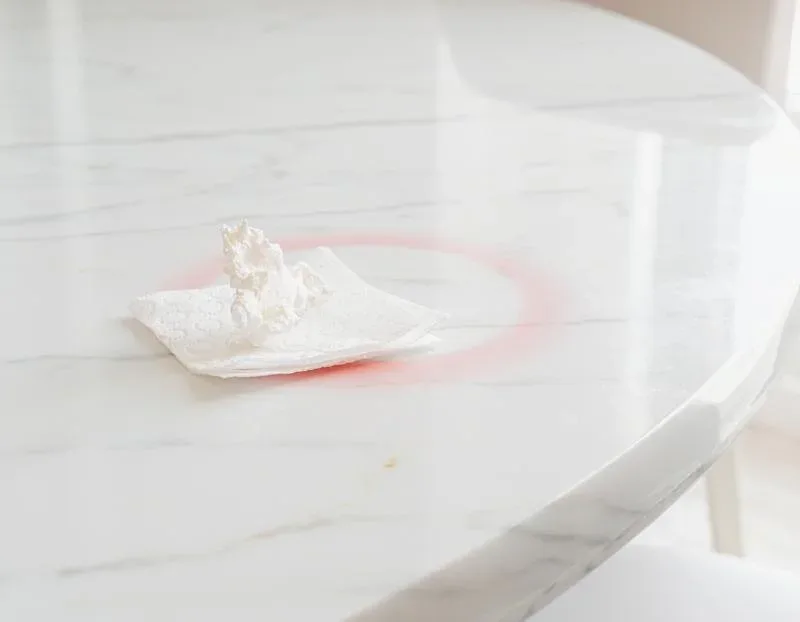
After the wax has been completely removed, a dark, wet-looking halo may remain on the surface. This indicates that the greasy components of the wax have penetrated the stone. For a greasy halo, a poultice prepared with a solvent suitable for the stone is the most effective method: an absorbent powder is mixed with the solvent to a paste consistency, spread over the halo so that it extends beyond the edges, covered, and left to dry. As the poultice dries, it draws out with it the oil that the solvent pulled from inside the stone.
With colored candles, a dye mark may also appear alongside the greasy halo. Red, purple or dark green candles can leave a pink or gray mark on white marble. For such marks, a solvent poultice is applied first for the oil; if the color is still there, a hydrogen peroxide poultice can be tried on light-colored stones. On dark-colored stones there is a risk that peroxide will lighten the stone's color, so a test area must always be done. We explained how to prepare a poultice and choose the chemical in detail in our stain-removal poultice article in detail.
Chewing Gum: Cooling, Scraping and Residue
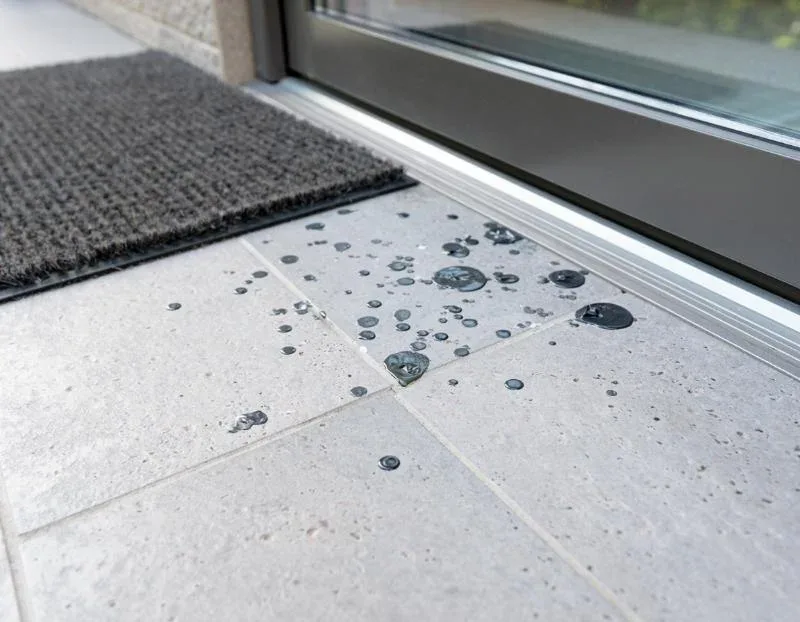
Chewing gum is a problem that natural stone frequently encounters, especially at building entrances, in shopping mall and hotel lobbies, school corridors and on sidewalks. Gum that is stepped on spreads into the texture of the stone and combines with dust and dirt to form a dark, flat stain. On rough or flamed surfaces, gum gets into the recesses of the texture, so it is harder to remove than from polished surfaces.
With chewing gum too, the first step is cooling. At home an ice bag is enough; in busy areas, cleaning crews use special cooling sprays to freeze the gum. Frozen gum becomes brittle and is lifted from the edge with a plastic scraper. The thin layer left on the surface is softened with a solvent suitable for the stone or a gum remover and wiped off with a soft cloth. The colorants in some gums can leave a slight mark on light-colored stone; this mark is also lightened with a poultice.
In large outdoor areas, hot steam machines are also used to remove gum. This method can be effective on hard, dense stones such as granite and basalt; however, on marble and porous stones, heat and moisture together can damage the surface, so it should be tested first on a small area. We discussed the limits of steam cleaning on natural stone separately in our steam cleaning article separately.
Adhesives from Tape, Labels and Protective Film
Protective tapes stuck to the floor during renovation, packing tapes used when moving, labels on a new countertop and protective films from the factory can leave a sticky layer on the surface after they are removed. How long the tape stayed on the stone and whether it was exposed to sun determine the amount of residue. Tape left for weeks in the sun or on a heated floor practically bakes some of its adhesive onto the surface of the stone.
Gentle heat helps when removing tape and labels. Tape heated with a hair dryer on low heat is peeled off slowly in one continuous motion at an angle almost parallel to the stone. Pulling quickly and at a steep angle leaves more of the adhesive on the stone. The remaining adhesive layer is removed with a soft cloth lightly moistened with a solvent suitable for the stone, working in small circles. We explained which tapes and covers to choose to protect the stone during renovation in our floor protection materials article article.
Choosing a Solvent: What for Which Residue?

Solvents used for adhesive and wax residues generally do not harm the marble itself as long as they contain no acid. Even so, every solvent should first be tested on a small, inconspicuous area, because an impregnating sealer, an old polish or a resin filler on the stone may be affected by the solvent. While working, the area should be ventilated, gloves should be worn, and flammable solvents should be kept away from fire.

The table below summarizes the approach for common residues:
| Residue | First step | For the remaining thin layer | If it remains |
|---|---|---|---|
| Paraffin wax | Cooling with ice, plastic scraper | Low heat and paper towel | Solvent poultice for a greasy halo |
| Vegetable or scented wax | Cooling and scraping | Low heat, wiping with white spirit | Solvent poultice |
| Colored wax | Cooling and scraping | Low heat and paper towel | Solvent poultice first, then peroxide poultice |
| Chewing gum | Ice or cooling spray | Gum remover suitable for stone | Poultice for color marks |
| Tape and labels | Slow peeling with gentle heat | Isopropyl alcohol or citrus-based solvent | Acetone, with a test area |
| Protective film residue | Slow peeling with heat | Citrus-based solvent | Professional help if it has been exposed to the sun for a long time |
Instead of pouring the solvent directly onto the stone, apply it to a cloth or cotton pad; this limits how far the liquid spreads over the surface and seeps into the pores. After wiping with the solvent, the surface is cleaned with a neutral stone cleaner and clean water, then dried.
Practices to Avoid
Sticky residues test your patience, and most damage happens at this stage. The common mistakes made on marble are as follows:
- Scraping with metal tools: A knife, utility knife or screwdriver leaves fine scratches on the polished surface of marble, and these scratches leave a mark that is more permanent than the residue itself.
- Scrubbing with steel wool and hard sponges: Abrasive scouring pads dull the surface, and steel fibers left on wet stone can rust and create a new stain.
- Heating directly with an iron: Pressing a hot iron onto the stone, even through paper, pushes the wax deeper and creates a risk of cracking due to the sudden temperature difference.
- Using acidic products: Vinegar, lemon, or adhesive removers containing acid dissolve the calcite in marble and take away the surface's shine along with the residue.
- Spraying oily sprays: Although rust remover or lubricant sprays soften the adhesive, they leave their own oil inside the stone and create a stain that is harder to remove than the residue.
Checking the Surface After Cleaning and Protection
After the residue and stain have been removed, looking at the surface under side lighting reveals problems that may have been missed. Sometimes the residue is completely gone but a dull area remains underneath; this shows that the residue or a product tried earlier has etched the surface. Small dull areas can be corrected with polishing products suitable for stone or with light on-site honing. If a scratch has formed, honing may be needed depending on its depth.
On tables and mantel shelves where candles are often burned, simple precautions make the next cleaning unnecessary: burn candles in holders with bases or on trays, place tealight candles on a plate together with their metal cups, and put a coaster on the stone surface next to the candle. On countertops and tables with a high risk of staining, regular sealing also slows the penetration of spilled melted wax or oil into the stone. If a dull area or scratch remains on the surface after residue cleaning, you can reach us via the service request form so that we can see the stone on site.
Chewing Gum Stains at Building Entrances

At apartment building and office block entrances, chewing gum gradually forms a pattern of dark spots on the stone. Most of these spots are old pieces of gum that have been stepped on, flattened and darkened by dirt. They are hard to notice individually, but together they ruin the overall look of the entrance.
For entrances like these, we recommend planning gum removal as a separate task, carried out at regular intervals rather than as part of daily cleaning. Giving the cleaning crew a freezing spray, a plastic scraper and a gum remover suitable for stone prevents the gum from settling into the surface. A large doormat at the entrance also reduces how much gum gets carried inside.
Red Candle Wax Drip on a Dining Table

On a white marble dining table in one home, a large drip of wax from a red candle had run onto the center of the surface, and the homeowner had tried to scrape it off with a knife. Most of the wax had come off, but fine scratches and a pink halo remained on the surface. First, we removed the remaining wax using low heat and paper towels, then applied a solvent-based poultice for the oily halo.
In the second stage, the pink color was lightened with a peroxide poultice. Finally, we honed the scratched area through fine grit stages and then polished the entire surface of the table.
Before removing wax or chewing gum stuck to marble, cool it rather than heating it; the hardened residue will lift off by itself, whereas melted residue spreads into the pores of the stone. — Expert Tip
Frequently Asked Questions About Wax, Chewing Gum and Sticky Residue
01Is it right to melt wax on marble with hot water?
02Can acetone be used on marble?
03Does nail polish remover work on sticky marks?
04How do you remove wax that has seeped into the pores of travertine?
05Will a wax stain go away on its own over time?
06What should I do if the protective film has been left on for a long time?
Related Articles
How to Prepare a Stain Removal Poultice: Choosing Materials and Chemicals, Marble Cleaning After Renovation: Paint, Plaster, Silicone and Tape Marks, Protecting Marble During Renovation and Moving: Floor Protection Materials, Can a Steam Cleaner Be Used on Natural Stone?, Cosmetic Stains on Marble: Perfume, Hair Dye, Cream and Oils