Unfilled (Open-Pored) Travertine: Maintaining the Natural Look
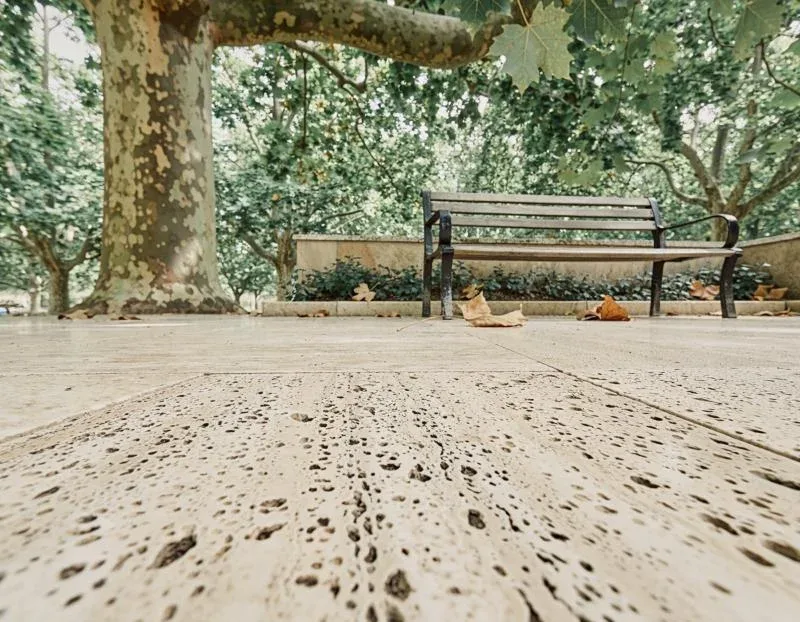
Unfilled travertine is a surface where the stone's natural voids are left open rather than sealed with cement or resin. This choice is often deliberate: the architect or homeowner wants a textured, lively look that carries the traces of the stone's formation. Unfilled travertine is used on garden paths, around pools, in courtyards and on terraces, and sometimes in rustic interiors. However, this natural look comes with its own care routine. Open pores collect dirt, dust, bits of leaves, soap residue and moisture; on a poorly maintained surface, dark spots, algae and bad odors can develop over time. In this article we cover why unfilled travertine is chosen, what the pores collect, how to clean it indoors and outdoors, the role of impregnation, and when filling is the better option.
In short: With the right brush and regular maintenance, unfilled travertine stays beautiful for years. Dirt in the pores is not removed with a mop but with brushes whose bristles reach into the voids; outdoors, controlled water use and regular checks for algae are needed. In dining areas, places that stay constantly damp, and interiors with heavy high-heel traffic, filled pores make maintenance noticeably easier.
Why Choose Unfilled Travertine?
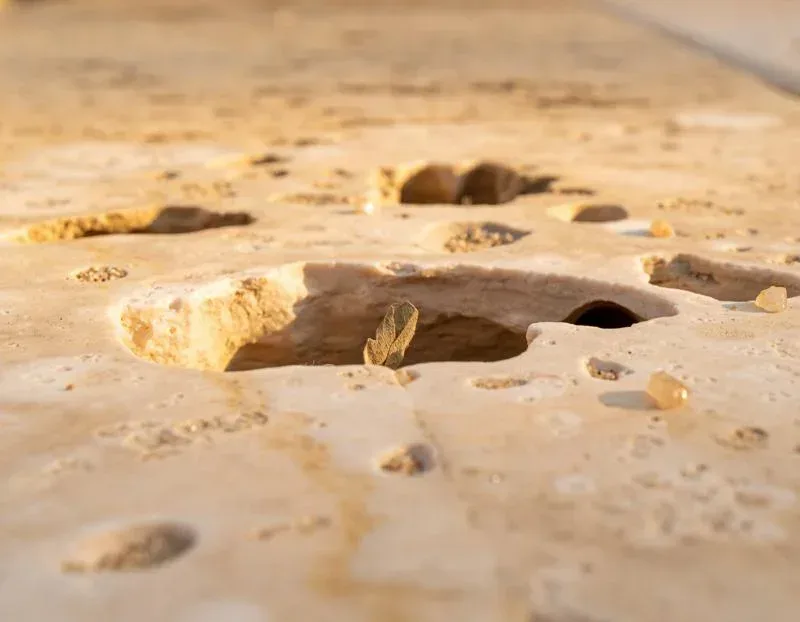
Travertine is a stone formed by calcium carbonate precipitating from spring waters and accumulating layer by layer. During this process, water, gas bubbles and plant remains leave voids inside the stone. At the factory, these voids are usually filled with cement or resin and the surface is made smooth; unfilled travertine skips this step and leaves the voids as they are. We explained the formation of travertine and the origin of its voids in the article formation and geological structure of travertine .
The main reasons for choosing an unfilled surface can be listed as follows. The first is appearance: open pores highlight the stone's natural texture and, especially when combined with an antiqued or brushed finish, create a historic, rustic atmosphere. The second is behavior outdoors: open pores can help some of the water on the surface disperse quickly, and the rough texture can provide better footing. The third is an advantage in terms of maintenance: since there is no filler, there is no problem of filler falling out, cracking or changing color.
In return for these advantages, unfilled travertine holds more dirt than a smooth, filled surface and requires a different approach to cleaning. When choosing, this maintenance burden should be considered together with where the stone will be used.
What Do the Pores Collect?
To understand how to maintain unfilled travertine, you need to know what the open pores accumulate. The type of buildup varies greatly depending on where the stone is used.
The substances that most commonly build up in open pores are:
- Dust and fine sand: Carried in on shoes and by the wind, it settles at the bottom of the pores and over time begins to show on the surface as dark spots.
- Organic residues: Leaves, pollen, pine needles and soil fill the pores, especially in gardens and courtyards; combined with moisture, they rot and cause stains and odors.
- Soap and cosmetic residue: Soap, sunscreen and oils that accumulate in the pores around pools, in shower areas and in bathrooms make it easier for dirt to cling.
- Food residue: In kitchens and dining areas, crumbs, grease and liquids get into the pores; these are the areas that need the most attention in terms of hygiene.
- Moisture and biological growth: On surfaces that stay in the shade and do not dry for long periods, the pores are the first places where algae, mold and black stains begin.
Most of this buildup is easily removed with regular cleaning done the right way. The problem grows when the buildup is left for years and turns into a hardened layer inside the pores.
Indoor Cleaning: Brush, Mop and Vacuum
The first and most important rule for indoor unfilled travertine is not to use a mop alone. A flat mop only touches the high points of the surface; it does not reach into the pores. Worse, it carries dirty water into the pores and darkens these voids over time.
For daily care, the most effective tool is a vacuum cleaner with a soft brush head. The brush pushes its bristles into the pores to loosen the dust, and the vacuum picks it up. Robot vacuums can also be used for regular dusting; however, since the side brushes and wheels of some models can leave marks on stone, compatibility should be checked. We covered this topic in the article robot vacuums and natural stone .
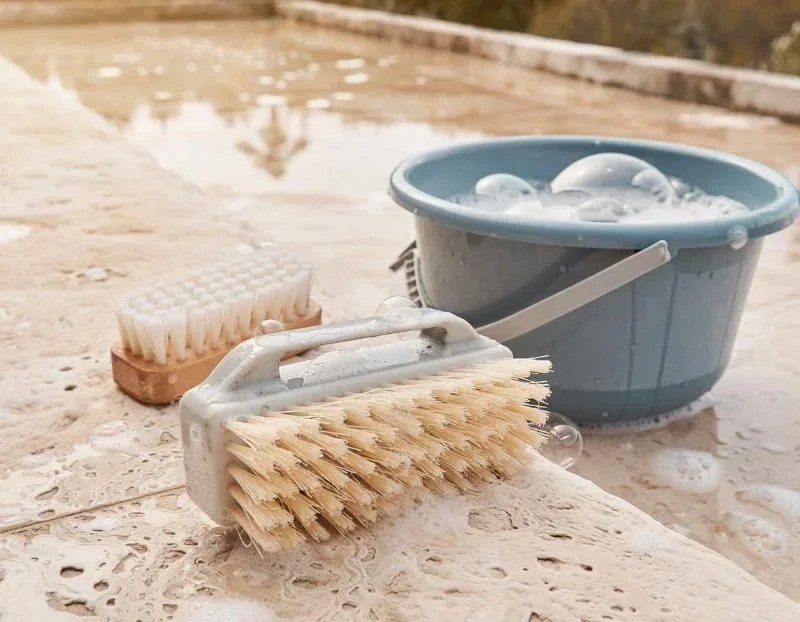
For weekly cleaning, a pH-neutral stone cleaner is diluted with lukewarm water and applied to the surface. After letting the cleaner sit for a few minutes, the surface is scrubbed with a medium-stiff synthetic-bristle brush whose bristles can reach into the pores. The dirty water is then picked up with a clean mop or a wet-dry vacuum, and the surface is rinsed with clean water. Not letting dirty water dry on the surface is the key to preventing the pores from darkening.
Acidic cleaners, vinegar, lemon and limescale removers dull travertine just as they do marble and erode the edges of the pores. Bleach can cause discoloration on the stone, especially in the joints. Avoiding these products is the simplest way to protect the surface of unfilled travertine.
Spills also call for a different reflex. On a smooth surface, you wipe the liquid and move on; on unfilled travertine, part of the liquid flows into the pores immediately. So at the moment of a spill, first blot the liquid on the surface with an absorbent paper or cloth, then repeat the same blotting with a damp cloth and a small amount of neutral cleaner for the part inside the pore. Rubbing only spreads the liquid into the surrounding pores. If a coffee or grease mark remains settled at the bottom of a pore, it can be drawn out of that spot with a small poultice.
Outdoor Cleaning: Water, Pressure and Algae
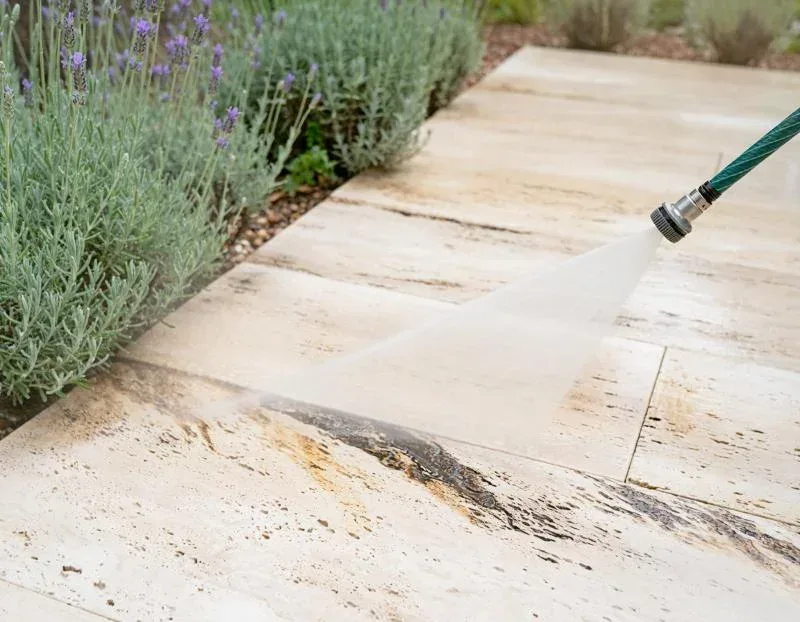
Unfilled travertine outdoors faces far more organic residue and moisture than indoors. Leaves on garden paths, pollen on terraces, and sunscreen and soap residue around pools easily build up in the pores.
Water is the most important tool in outdoor cleaning. Washing with plenty of water from a garden hose, combined with brushing, removes most of the buildup in the pores. Pressure washers can also be used, but low pressure, a wide-angle nozzle and sufficient distance from the surface are essential. High pressure can break off the thin stone edges around the pores, roughen the surface and gouge out the joints. Systems that use hot water dissolve greasy buildup at lower pressure and are therefore a gentler option.
On surfaces that stay in the shade and are constantly damp, algae and black stains develop over time. These stains do not just spoil the appearance; they also make the surface slippery and create a safety problem. Against biological growth, biocides suitable for stone are used, allowed to work for enough time after application, and the surface is cleaned by brushing. We described this topic in detail in the article lichen and black mold on outdoor stone . For regular slip-resistance checks around pools, you can also see the article pool and spa slip-resistance inspection .
Cold climates have a separate issue: freezing of water collected in the pores. Water expands as it freezes and can cause flaking at the edges of the pores. In regions exposed to frost, the frost-resistance values of the travertine to be used should be checked, and before winter, buildup that causes water to collect in the pores should be cleaned. For the effect of freezing and thawing on stone, see freeze-thaw in Central Anatolia .
Impregnation: Protecting the Porous Surface
Because its pores are open, unfilled travertine can absorb more water and oil than filled travertine or a smooth marble surface. Impregnation penetrates the stone's pores, slowing the entry of water and oil and making dirt easier to clean.
Impregnation on unfilled travertine has a few particularities. The product must reach not only the surface but also the inside of the pores; for this reason, spraying or brush application is sometimes preferred over a brush or roller. Product that collects at the bottom of the pores can leave a whitish layer when it dries; excess product must always be removed. Outdoors, the product should be of the vapor-permeable type that allows the stone to breathe; film-forming coatings peel outdoors, create slipperiness and can trap water inside the stone. For the difference between outdoor water repellents, see silane siloxane water repellents .
To tell when impregnation needs renewing, a water drop test is done regularly. If the drop darkens the stone within a few minutes, the protection has weakened and it is time to renew it.
When Should Filling Be Done?
Unfilled travertine is not the right choice everywhere. In some areas of use, open pores increase the maintenance burden and hygiene risk to an unacceptable degree. In these cases, sealing the pores with a suitable filler, even if it changes the stone's appearance somewhat, is a healthier solution in the long run.

The table below summarizes the decision between leaving unfilled and filling according to where it is used:
| Place of use | Leave unfilled | Fill |
|---|---|---|
| Garden path, courtyard | Suitable; natural look and grip | Not necessary |
| Around the pool | Suitable; regular washing is essential | Can be considered if dirt and algae are heavy |
| Enclosed terrace, conservatory | Suitable; moisture control is important | Recommended if there is constant moisture |
| Living room and seating area | Possible; regular brush cleaning | Recommended if there is heavy high-heel traffic |
| Kitchen and dining area | Not recommended; grease and crumbs build up | Recommended |
| Bathroom floor and shower | Not recommended; soap and moisture build up | Recommended |
| Commercial entrances and lobbies | Not recommended; darkens quickly | Recommended |
Another criterion when deciding on filling is the user. In places used by the elderly, small children or wheelchair users, large pores can catch heels, wheels and cane tips. In this case, filling at least the large pores is important for safety.
Partial Filling and Zone-Based Solutions
You do not have to choose between unfilled and filled. In many projects, it is possible to find a middle path. For example, the heavily used section of a terrace near the door can be filled while the part extending toward the garden is left unfilled. Or only pores larger than a certain size can be filled while smaller pores are left open; this method both preserves the natural look and closes the voids that cause the most problems.
If filling is to be done, color matching is decisive. The filler should be close to the overall tone of the stone; otherwise, unwanted spots appear on the surface. Cement-based and resin-based fillers have different properties; we explained color matching and application details in our article on color-matched filling . As for how the cutting direction affects the distribution of the pores, see our article on vein-cut and cross-cut travertine .
Maintenance Schedule for Unfilled Travertine
Maintaining unfilled travertine is not very difficult when done regularly. The key is not to give buildup a chance to harden in the pores.
A sample maintenance routine may consist of the following steps:
- Several times a week: Indoors, dust is removed with a brush-head broom; outdoors, leaves and debris are swept or blown away.
- Once a week: Indoors, the floor is washed and scrubbed with a neutral cleaner; outdoors, the surface is wetted with a hose, scrubbed and rinsed.
- At the start of the season: Deep cleaning is carried out outdoors, shaded areas are checked for algae, and a biocide is applied if necessary.
- Once a year: The condition of the sealer is checked with a water drop test; if necessary, the sealer is renewed after deep cleaning and drying.
If your unfilled travertine terrace, pool surround or garden path has darkened, developed algae, or has hardened dirt buildup in its pores, you can reach us with a few photos via the service request form ; we will inspect the surface on site and evaluate deep cleaning, sealing or partial filling options together with you.
Choosing the Right Brush for the Pores

On unfilled travertine, the choice of brush directly determines how well the cleaning works. The wrong brush either fails to reach the pores or damages the surface.
- Bristle length: Long, dense-bristled brushes reach the bottom of the pores; short-bristled brushes only wipe the surface and leave dirt in the cavities.
- Bristle material: Synthetic bristles are resistant to water and cleaning agents, whereas steel wire brushes leave rust spots in the pores from broken-off pieces of wire.
Pores Darkening in a Courtyard

A situation we come across often is the pores of unfilled travertine flooring in a tree-lined courtyard turning pitch black over the years. Leaves and soil have settled into the pores and rotted with moisture, turning into a dark layer.
For a job like this, we first wet the surface and apply a biocide, and after allowing enough dwell time, we deep clean with a machine fitted with brushes. We then flush out the pores with low-pressure water and, once the stone has dried, apply a vapor-permeable impregnating sealer. We also recommend that the courtyard owner clear fallen leaves seasonally.
With unfilled travertine, preventing dirt from getting into the pores is much easier than removing it once it has penetrated; outdoors, sweeping once a week during leaf-fall season does half the work of an annual deep cleaning. — Expert Tip
Frequently Asked Questions About Unfilled Travertine
01Can unfilled travertine be filled afterwards?
02Is unfilled travertine uncomfortable to walk on barefoot?
03Does unfilled travertine cause bad odors?
04Is unfilled travertine affected by pool chemicals?
05Which lasts longer: unfilled or filled travertine?
06Can old dirt in the pores be removed completely?
Related Articles
The Formation and Geological Structure of Travertine: Stone Born from Thermal Waters, Vein-Cut and Cross-Cut Travertine: How Does Cutting Direction Affect Maintenance?, Lichen and Black Mold on Exterior Stone, Color-Matched Filling in Marble: Resin Tinting Techniques, Slip-Resistance Inspection in Hotel Pool and Spa Areas