Granite in Türkiye: Main Granite Regions and Stones
Türkiye is one of the first countries that comes to mind worldwide when marble and travertine are mentioned; granite is talked about less. Yet granite and granite-like plutonic rocks are quarried in many parts of Anatolia, and we encounter domestic granite in many places, from the pavements of our cities to the steps of public buildings. In this article we look at the regions where granite is concentrated in Türkiye, the main domestic granites known on the market, what these stones are used for, how they behave in maintenance, and how they differ from imported granites. The region and stone information in this article is based on academic studies and industry sources; since the status of quarries and trade names can change over time, current information should always be confirmed with the producer.
In short: Türkiye's granite fields are broadly grouped as Western Anatolia, Central Anatolia and Northeastern Anatolia. Most domestic granites come in different shades of gray; the Bergama, Aksaray and Kırşehir Kaman areas are among the best-known production areas. These stones are especially common for paving stones, curbs, steps and exterior cladding; for interior projects that require a variety of colors, imported granites stand out.
Türkiye's Granite Map: Three Main Belts
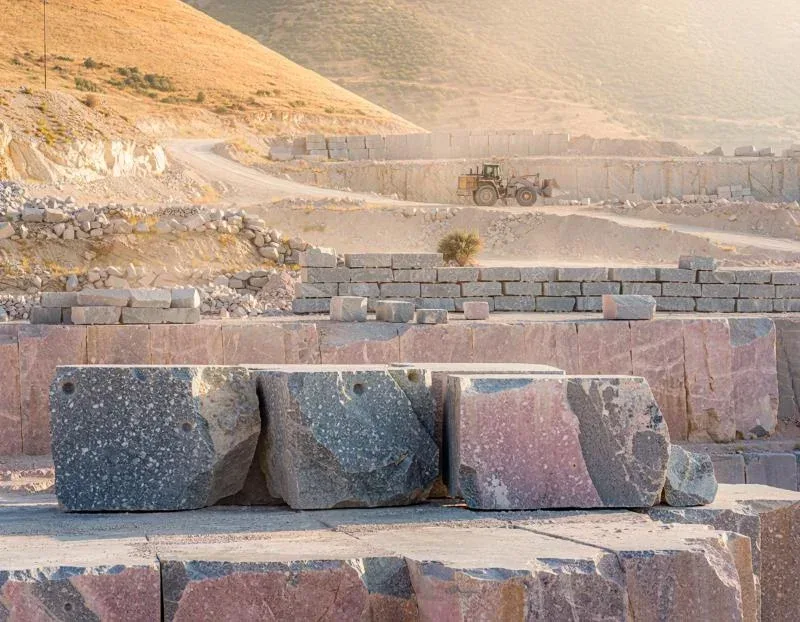
Granite is a coarse-grained rock formed when magma cools slowly and solidifies deep within the earth; its main minerals are quartz, feldspar and mica. Anatolia's complex geological history has caused such plutonic rocks to surface in different regions of the country. In academic studies examining Türkiye's natural stones, granite fields are addressed in three main groups based on data from the General Directorate of Mineral Research and Exploration: Western Anatolian granites, Central Anatolian granites and Northeastern Anatolian granites. In addition, smaller deposits are found along the Southeastern Taurus Mountains and in Eastern Anatolia.
Western Anatolia
In Western Anatolia, the best-known address for granite is the Kozak area in the Bergama district of İzmir. In addition, the west of the Kapıdağ Peninsula in Balıkesir, Kazdağı around Edremit, Uludağ south of Bursa, the Armutlu Peninsula between Yalova and Bursa, the Ezine area of Çanakkale, and Kırklareli in Thrace are counted among the areas where granite or similar plutonic rocks are quarried. Kapıdağ granites are known for having been used for many years as paving stones and curbs in the Marmara region.
Central Anatolia
In Central Anatolia, Aksaray and the Kaman area of Kırşehir stand out. The granite masses in this region spread over wide areas; research in the Kaman area reports that block and rubble stone are produced in many quarries. Granites around Yozgat are also mentioned among the region's production areas.
Northeastern Anatolia
Granitic rocks are found in Giresun, Ordu and Rize along the Black Sea coast. The pink-toned granites in Gümüşhane are cited as examples showing that colors other than gray also exist in our country. The stones of this region have also traditionally been used for roads, retaining walls and building work in the rugged terrain of the Eastern Black Sea.
Common Domestic Granites by Trade Name
In the stone market, granites are generally named after the area they come from and their color. The same stone may be sold by different producers under different names; therefore, when choosing stone for a project, the quarry location and technical values should be asked about in addition to the trade name. As with Turkish marbles, the trade name and the geological name of granites do not always match; we covered this topic separately in our article on trade names of Turkish marbles .

The table below summarizes the domestic granites frequently mentioned in sources and their known characteristics:
| Trade name or area | Region | Color and notes | Common use |
|---|---|---|---|
| Bergama Gri, Kozak granite | İzmir, Bergama | Gray; said to take a good polish | Paving stones, curbs, cladding, export |
| Aksaray Yaylak | Aksaray | Pink, light pink and gray varieties | Cladding, steps, exterior |
| Kaman granites | Kırşehir, Kaman | Gray tones | Block, rubble stone, crushed stone |
| Kapıdağ granites | Balıkesir | Gray tones | Paving stones and curbs in Marmara |
| Bulancak Füme | Giresun | Smoke, i.e. dark gray tone | Mentioned among commercial gray granites |
| Ezine area stones | Çanakkale | Syenite origin | Paving stone |
What the stones in the table have in common is that they are largely in gray tones. Studies examining the sector also emphasize that most granites in Türkiye are gray and that color variety remains limited. This directly determines the character and areas of use of domestic granite.
The color of granite is largely determined by feldspar. Stones in which whitish or light gray plagioclase feldspar predominates, with black biotite and hornblende grains scattered among them, form a gray background when viewed from a distance. Pink and red tones come from the color of potassium feldspar; stones in which this mineral is prominent and colored take on a warmer appearance. The fact that both pink and gray varieties come from the same quarry in the Aksaray Yaylak field shows that mineral proportions can vary even over short distances. Therefore, in a large project, the same quarry and same batch requirement should be agreed from the outset to avoid tone differences between the sample and the delivered material.
Syenite and Other Stones Sold as "Granite"
In the commercial world, the word "granite" is used far more broadly than its narrow geological meaning. In Türkiye's natural stone classifications, stones such as serpentine and diabase are included in the "hard marbles" group, while on the market almost any hard, polishable plutonic rock can be sold under the name granite. Therefore, some of the stones called domestic granite are actually related rocks such as syenite, granodiorite or tonalite.
The stones quarried in the Ezine and Kestanbol area of Çanakkale are a good example: in scientific studies these stones are identified as syenite and are especially known for paving stone production. In the Aksaray Yaylak field as well, tonalite and granodiorite are reported alongside granite. For the user, this distinction often poses no problem; most of these rocks are as hard and durable as granite. However, knowing the true identity of the stone is a useful guide, especially when choosing fillers, repairs and chemicals. We described the general structure and formation of granite in our article on the formation and geological structure of granite .
Where Are Domestic Granites Used?

The area where domestic granites are strongest is the exterior. Their hardness, abrasion resistance and frost resistance make them suitable for city squares, pedestrian paths, curbs and streets where the historic fabric is preserved. Academic studies emphasize that granite is used as paving stone in public spaces with heavy pedestrian traffic, and, owing to its chemical resistance, in wall cladding, countertops and wet floors. It is also reported that most of the paving stone produced in the Bergama area is exported.
We can group the areas of use as follows:
- Street furniture and flooring: Cobblestones, slabs, curbs and seating blocks; they provide a long-lasting surface that blends with the surroundings, especially on historic peninsulas and in squares.
- Building entrances and steps: Gray granite with a flamed or bush-hammered surface is preferred in public buildings, schools and business centers as a slip-resistant and durable solution.
- Facades and cladding: Polished or honed gray granite slabs create a dignified, easy-to-maintain surface on the facades of administrative buildings and commercial structures.
- Infrastructure and landscaping: Rubble and block stone are used in retaining walls, quays and landscaping work; as crushed stone, they are also used in aggregate production.
Indoors, domestic granite is seen mostly in places where durability matters most, such as corridors, stairs and wet-area floors. For kitchen countertops and decorative surfaces, imported stones are chosen more often because expectations for color and pattern are higher.
Maintenance Characteristics of Gray Granite
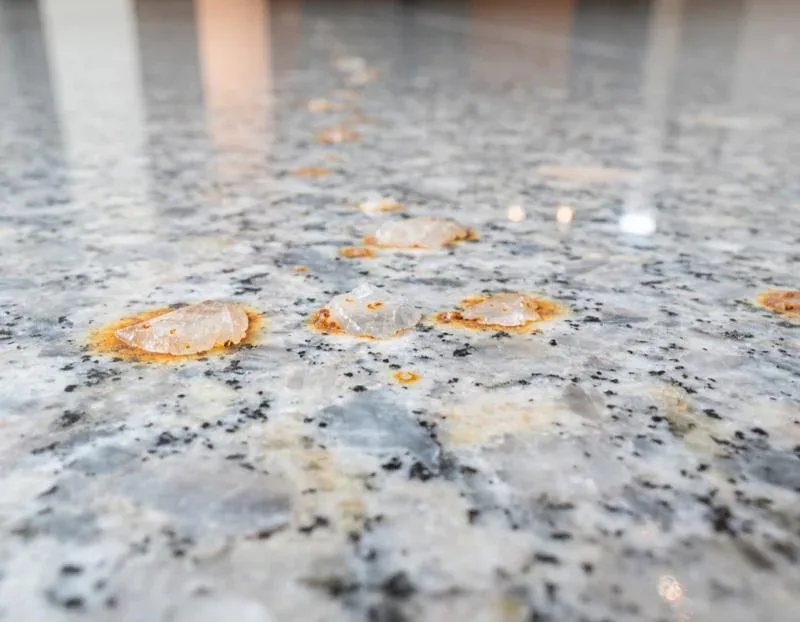
Domestic gray granites are generally easy-to-maintain stones, but there are a few specific issues to watch for. Rust comes first among them. A study on Aksaray Yaylak granite reported that in some of the gray and light pink varieties extracted from the quarry, rust stains can form quickly on the surface after production. Such stains result from the reaction of the iron-bearing minerals inside the stone with moisture and oxygen; they differ from rust transferred from a metal object, and so does their solution.
The other most common problems in outdoor gray granite are soiling along walking paths, dirt and chewing gum accumulating in the pits of the flamed surface, algae in shaded areas, and de-icing salt residue in winter. Polished gray granite floors indoors lose their shine along walking paths over the years; sand and dust gradually dull even hard stone. These floors can be re-polished with a honing process that takes longer than for marble and requires more stages. For the procedure to follow when cleaning flamed steps, see flamed granite step cleaning .
In light gray and coarse-grained stones, especially indoors, oil and colored liquid stains may also appear. How much this varies from stone to stone and how to test it is covered in detail in our article is granite really stain-proof We have also covered radioactivity measurements, which have been carried out on some domestic granites; how this issue is assessed for indoor use of natural stone is explained in our article natural stone and radon For a concrete health-related assessment, you should consult organizations and experts that carry out measurements.
Differences from Imported Granite
Turkey is a granite-producing country as well as a country that imports processed granite. A significant portion of the black, white, green, blue or heavily patterned granites we see on kitchen countertops and in the decorative surfaces of hotel and residential projects comes from sources such as India, Brazil, China and Scandinavia. While these stones stand out for their variety of colors and patterns, domestic granites are better known for their consistent gray tones, easy availability and outdoor durability.
The differences are not limited to color. Some exotic slabs from distant countries are reinforced with resin at the factory or have mesh glued to their backs because of their fragile structure. This process makes the slab transportable but creates its own maintenance problems; we explain the details in our article factory resin filling in granite Domestic gray granites, on the other hand, can mostly be processed as thick slabs and blocks without requiring such a treatment.
There is also a difference in terms of supply and sustainability. Stone from a nearby quarry makes it easier to find material from the same batch for additional orders or repairs in large projects. Shorter transport also reduces the project's environmental footprint. We cover this topic more broadly in our article natural stone and sustainability
When Choosing Domestic Granite for a Project
When choosing a domestic granite, asking a few questions from the start, beyond color and price, prevents problems later on. Especially in public and corporate projects, these questions should also be reflected in the technical specification.
The main questions recommended for the selection are as follows:
- Quarry and batch information: Which quarry the stone comes from and how much material can be supplied from the same batch should be learned in advance, so that no tone differences occur with additional needs.
- Technical values: Values such as water absorption, compressive strength, abrasion resistance and frost resistance should be documented with independent laboratory reports.
- Rust and stain behavior: Especially for gray and light-toned stones, samples can be kept in a damp environment for a while to observe whether rust spots form on the surface.
- Surface finish compatibility: How the stone looks with a flamed, bush-hammered, honed or polished surface should be evaluated with samples finished in the surface to be used.
You can find a detailed checklist of these questions in our article quality control when buying natural stone For the maintenance, honing, or rust and stain problems of your existing domestic granite floors, steps or facades, you can reach us via the service request form we inspect the stone on site and recommend the appropriate method.
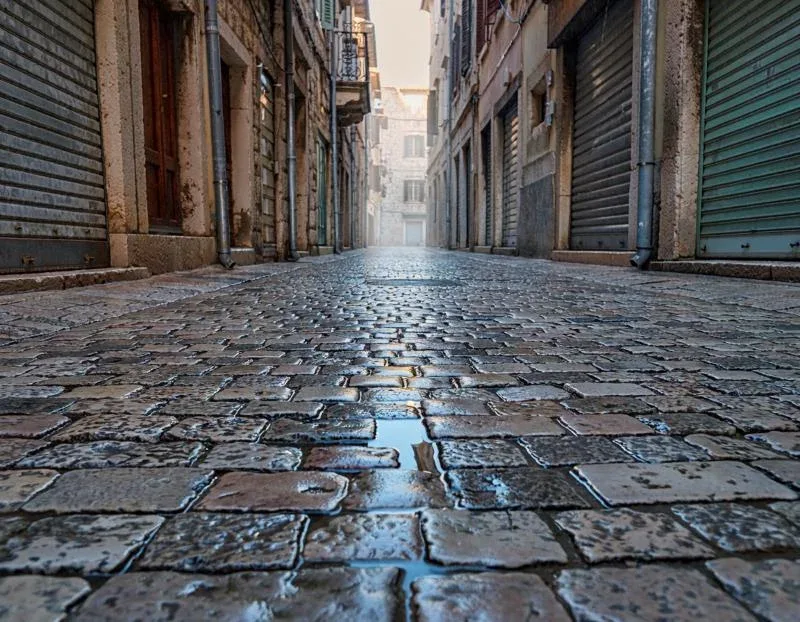
Granite Cobblestones in the Historic Peninsula

In historic city centers, granite cobblestones are often preferred for both their durability and their harmony with the old urban fabric. However, maintaining these surfaces is different from maintaining a flat slab floor.
- Joint maintenance: The sand or mortar joints between cobblestones loosen with washing and traffic; loose joints cause the stones to shift and dirt to build up.
- Grease and chewing gum: Grease and chewing gum that accumulate in front of cafés and shops leave stubborn stains on the rough surface of the cobblestones and require regular machine cleaning.
When You See Rust Spots on Local Granite

When orange spots appear on a newly installed gray granite floor within a few months, the first step is to find the source of the rust. If the spots are around specific grains within the stone and are scattered, the problem may stem from the stone's own minerals. If the spots are concentrated along the path of a metal object, a railing post, or a steel brush, the source is external.
For rust that originates in the stone, we lighten the stain with a rust remover suited to natural stone, then plan a protective treatment that reduces the surface's contact with moisture.
Before accepting a local granite sample, leave it under a damp cloth for a few days; if orange spots appear on the surface, talk to the manufacturer before using this stone outdoors. — Expert Note
Frequently Asked Questions About Granite in Turkey
01Is black granite quarried in Turkey?
02Can Bergama Gray be used indoors?
03Is domestic granite more durable than imported granite?
04What surface finish is used when laying granite paving stones?
05Can you tell which quarry the granite in an old building came from?
Related Articles
The Formation and Geological Structure of Granite: From Magma to Slab, Commercial Names of Turkish Marbles: Which Name Describes Which Stone?, Is Granite Really Stain-Proof? Porous Granite Types, Quality Control When Buying Natural Stone: Choosing Slabs and Recognizing Defects, Cleaning Flamed Granite Steps and Floors