Oil, Rust, and Paint Stains on Concrete Floors: Method by Stain Type
A concrete floor is a surface to be worked on, and every surface is stained: oil dripping from the vehicle, rust flowing from a shelf leg, paint left from renovations, and forklift return marks. When explaining stain chemistry in marble or granite, we talk about the mineral structure of the stone; in concrete, the decisive factor is the pore structure and the alkaline nature of the cement. The same stain behaves differently in polished raw concrete, polished concrete, and coated floors. In this article, we address the most common stains we encounter on concrete floors according to their type, explain which method works, what the wiping removes and what it cannot, and why the oil must be removed before polishing.
In short: The rule for staining concrete is to first recognize the stain and pull it back from where it came: absorbent and alkaline degreaser for oil, rust-specific solvent for rust, scraping and removing paint for paint. Acid burn is not a stain but damage and can only be fixed by repolishing. Oil that has penetrated deeply does not come out completely with wiping, but if not removed before wiping, it also damages the hardener and preservative.
Why Does Concrete Stain Hold Easily?
Hardened concrete carries a network of invisible capillary cavities. The part of the mixture water that does not react with the cement evaporates and leaves these channels behind; the more water there is, the wider the network. The liquid poured onto the surface is drawn into these channels by capillary suction, and the higher its fluidity, the deeper it descends. Therefore, thin engine oil and hydraulic oil do not remain on the surface; within a few days, the color of the stain darkens and its boundary widens.
The second factor is chemistry. Cement paste is strongly alkaline and dissolves by reacting with acids. This means that some stains are not actually stains: battery acid, lime remover, or sour fruit juice do not leave color on the concrete and corrode the surface. Polished concrete is noticeably less absorbent than raw concrete thanks to hardener and mechanical compaction, but it is not impermeable. Stain protector also does not stop the entry of the liquid; it delays it.
Diagnosis First: Stain, Damage, or Residue?
A misdiagnosis leads to the wrong chemical that enlarges the stain. We try to understand what happened first in front of a scar; a few simple observations are enough for this:
- Location and form: The round dark mark in the middle of the parking spot is oil, the orange around the rack leg is past, and the black spring at the turning point is the tire; the stain often reveals its source by its location.
- Touch: If a bump is felt on the surface when probed with a fingertip, this is a residue; if the surface is rough and hollow around it, it is wear, that is, acid burn.
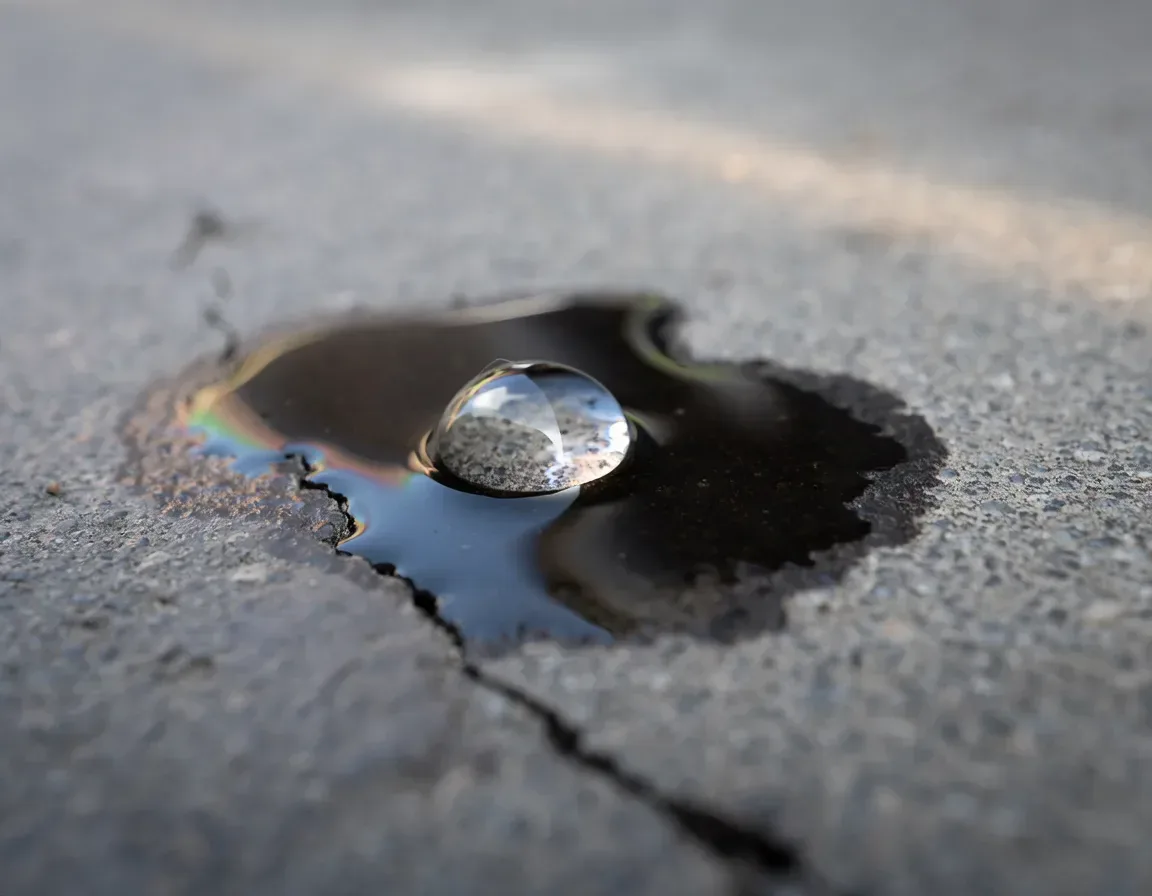
- Water droplet: If water dropped onto the stain beads and remains, the pores are filled with oil; if it is absorbed immediately and darkens like its surroundings, the stain is a dry dye.
- Smell and trace: When pressed with a white cloth, the oily mark and distinct smell that pass to the cloth indicate that the stain is still fresh and active, and that it can be removed with absorbent material.
Diagnosis makes two decisions at once: which chemical to use and how deep the work will go. Residue on the surface is mechanically removed, the stain in the pore is withdrawn with the chemical, and the damage is only repaired by reworking the surface.
Motor Oil and Hydraulic Oil: Retracting From the Pore
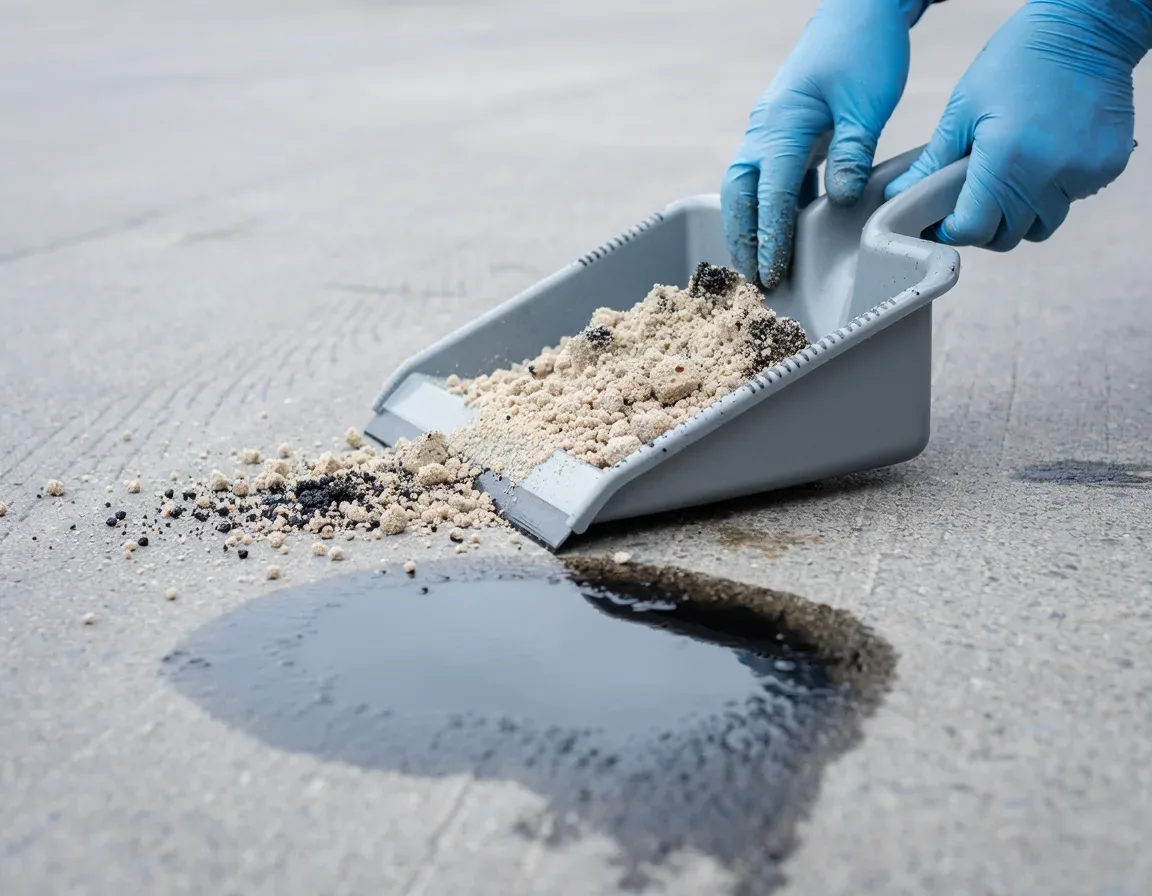
The first few minutes are decisive in freshly poured oil. The oil is not wiped off with a cloth because wiping spreads it over a wider area and presses it against the pores. Plenty of absorbent material is sprinkled on top, it is left to wait for a while, and collected with a plastic shovel. For the remaining thin film, an alkaline oil solvent suitable for concrete is diluted and applied, left wet for the recommended time, worked with a stiff nylon brush or brushed machine, and dirty water is removed with a wet vacuum.
Starting with pressurized water is a common mistake. Water does not dissolve the oil; pressure pushes oil sideways and downwards, causing the stain to return faded but enlarged. Acids like spirit salt do not affect the oil; they only erode the surrounding concrete, leaving the stain light-colored, rough.
The method for old and deeply penetrated oil is the porridge. An absorbent powder is brought to a paste consistency with a degreaser or a suitable solvent and spread over the stain and slightly outward; as the porridge dries, it draws the dissolved oil toward itself. The dried porridge is swept up, and the process is often repeated several times. The logic and preparation of porridge In the stain removal paste article We explained in detail; the same principle applies to concrete, only the area is large. There are also microbial cleaners that break down oil, but these show results within weeks and must be kept moist during this time.
Rust Stain: From the Surface or From the Inside?
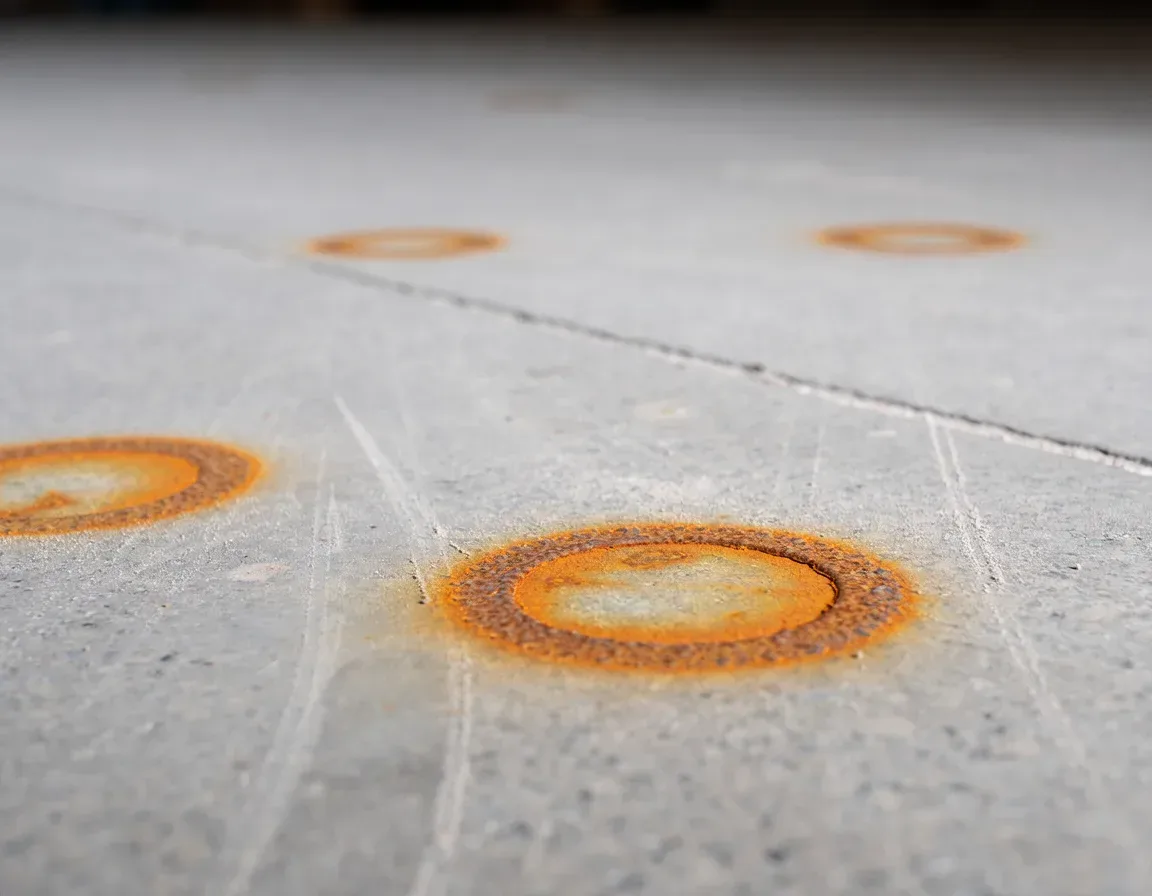
The first question in a rust stain is where the weld is. Rack legs, metal barrels, steel parts forgotten on the floor, welding and grinding burrs leave rust on the surface; when the weld is removed, the stain does not grow. Rust seeping through the crack or hitting the surface through concrete comes from the reinforcement and is not a stain but a sign of a structural problem. Instead of trying to clean such a trace, the cause should be examined by a civil engineer.
Rust-specific solvents are used for surface-welded rust. Some of these contain mild acids like oxalic acid, while others work with compounds that bind iron instead of acid. In concrete, the second group is safer because each acid erodes the cement mixture to some extent. In polished concrete, an acid-containing rust remover leaves a matte mark on site when removing rust; this mark only closes by repolishing that area. Therefore, the product is first tested on a small area out of sight, the waiting time is kept short, and the surface is rinsed thoroughly with water.
For deep rust stains, the solvent is applied in the form of a pore, and the stain is opened in several repeats. Steel wire brushes are not used: broken wire particles remain on the floor and form their own rust spots after a few days.
Paint, Spray Paint, and Old Line Remnants
Paint stains are found in concrete in two layers: the film on the surface and the pigment that has penetrated the pores. Fresh water-based paint is largely removed with water and brush. Mechanical methods are first tried on dried paint; a plastic or metal scraper removes most of the film without using chemicals. For the remaining part, a gel-like paint remover is applied, the softening paint is scraped off, and the surface is rinsed.
Choosing a remover is important in polished concrete. Strong solvents dissolve not only the paint but also the stain protector on the surface, leaving the cleaned area different, duller, and more absorbent than its surroundings; after the process, the protector needs to be renewed in that area. Pigment that has penetrated the pores cannot be completely removed with any remover. Therefore, the faded shadow left by spray paint and old park lines remains and can only be removed by wiping. On the issue of strip removal and renewal Parking lines and ground marking in the text We also processed it.
Tire Mark, Acid Burn, Leaf Mark, Lime, and Salt
The rubber track is plastered onto the floor at maneuvering and braking points; it stands on the surface and is largely removed by alkaline cleaner, waiting time, and brushed machine. Its mechanism and different behavior on coated floors Tire and brake mark in the parking lot sign We explain.
Acid burn looks like a stain but is a loss. Sulfuric acid in battery charging areas, improperly used limescale removers in cleaning, fruit juice spilled on the ground in food facilities and citrus packaging lines dissolve cement paste. What remains is a light-colored, rough, and matte area around it; fine aggregate particles appear. No cleaner can bring this back. The task is to neutralize the acid with plenty of water and, if necessary, a slightly alkaline solution, then wipe and polish the area again. The effect of acids and alkalis on surfaces in the article on cleaning chemistry We explained it in general terms.
Brown marks left by wet leaves and tree debris in open areas are tannin-sourced. Oxygen-releasing cleaners open these; on sunny surfaces, the marks fade over time. The white, dusty limescale and salt deposits are not dirt coming from outside but salts carried by water from inside the concrete. They are removed with a dry brush; washing with water dissolves the salt and reabsorbs it into the pores. The source moisture returns unless cut; this cycle White salting on the interior floor We announced.
What does grinding remove and what does it not?

A gloss removes the top layer of concrete; therefore, everything inside that layer goes with it. Surface dirt, paint shadow, rubber residue, light rust, and roughness of acid burn are removed by grinding. The thickness of the removed layer is limited: only in a surface gloss is it below a millimeter, and in the deep section where aggregate is shown, it is only a few millimeters. Stains like oil and rust can go deeper than this.
The table below summarizes the first method for common stains and the expected results from removal:
| stain | First method | Contribution of deletion | Possibility of permanent scars |
|---|---|---|---|
| Fresh oil | Absorbent, then alkaline degreaser | Takes the remaining film | Low |
| Old, deep oil | Repeated porridge | The surface is exposed, the oil remains deep | High, dark shade |
| Surface rust | Rust-specific solvent | Takes a light trace | Medium |
| Paint and line | Scraping, gel remover | Takes on the pigment shade | Low |
| Tire track | Alkaline cleaner, brush machine | Takes the entire residue | Low |
| Acid burn | Neutralization and rinsing | Corrects with repolishing | A deep burn leaves a pit |
| Lime and salt | Dry brush, cutting moisture | It takes the deposit, but does not remove the source | If moisture persists, they will recur |
Why Should Oil Be Removed Before Rubbing?
Wiping an oily floor directly does not remove the oil; it disrupts the job. The first problem arises with the diamond. The oil mixes with grind powder or mud to create a sticky paste; this paste covers the surface of the diamond segments and starts to slide instead of cutting the diamond. The machine also transfers the same paste to clean areas, and a small stain turns into a wide shadow.
The second problem lies with chemicals. The liquid hardener is water-based and works by being absorbed into concrete; its pores cannot penetrate oil-filled areas, remain on the surface, and leave a whitish residue when dried. After all, the areas of the floor that experience the most load and drip the most oil are the ones that harden the least. The same applies to stain protector: it cannot adhere to oily surfaces.
The third problem becomes apparent over time. Even if the oil on the surface is removed by wiping, the deep oil rises back up through the capillary path when the floor warms up. A parking spot that looks clean at delivery gives a dark shadow after a few weeks. Therefore, during the inspection, we mark the oily areas and plan rounds of degreaser and slurry before polishing. For concrete that has been under machine for years and has absorbed oil from head to toe, the honest answer is to cut that layer and renew it with repair mortar or to cover the area.
Stain Protector and First Intervention in Shedding
The stain protector applied at the end of the wipe makes the pore walls of the concrete repelling water and oil. This prevents the spilled liquid from being absorbed immediately and saves time for cleaning; however, it does not make the surface impermeable. The oil protector that waits for hours also penetrates the surface, while the acid erodes the surface despite the protection. The protective is worn down by traffic and monitored and renewed by a water droplet test; how this is done in the article on polished concrete maintenance We explained.
For quick response to spills, we recommend keeping a small set at the parking entrance, in the storage charging area, or in the maintenance workshop. The set includes:
- Absorbent material: The absorbent in the form of granules or pads collects the spilled liquid without spreading it and reduces the amount that will enter the pores of the concrete within the first minutes.
- Plastic shovel and bucket with lid: Materials that have absorbed oil are collected without rubbing against the ground and collected separately according to the facility's waste regulations, not thrown into the drain or trash.
- Neutral cleaner and brush: After the absorber, the remaining film is brushed with a diluted neutral or slightly alkaline cleaner, and dirty water is removed with a cloth or vacuum.
- Gloves and goggles: Liquids such as battery acid, antifreeze, and fuel are harmful to the skin and eyes; protecting the intervening person comes before cleaning.
Removing the stain is always more troublesome than preventing it from forming. If there are oil, rust, or paint stains that have been on your floor for a long time, here are a few photos service request form you can send it to us through the inspection; we will separate together during the inspection which will be solved by cleaning, which by wiping, and which by repair.
Where Do Dirty Water and Waste Oil Go?

The invisible half of stain cleaning is waste. Dirty water coming from the surface where the degreaser is worked carries dissolved oil; if injected into the parking drain or rainwater drain, the problem only shifts.
We collect dirty water with a wet vacuum and store it in lidded containers. Oil-absorbed granules, porridge residues, and cloths are bagged separately. How these are disposed of depends on the facility's waste management rules and relevant environmental regulations; before starting work, determining the collection point and delivery method together with the manager prevents abandoned barrels left behind when the work is finished.
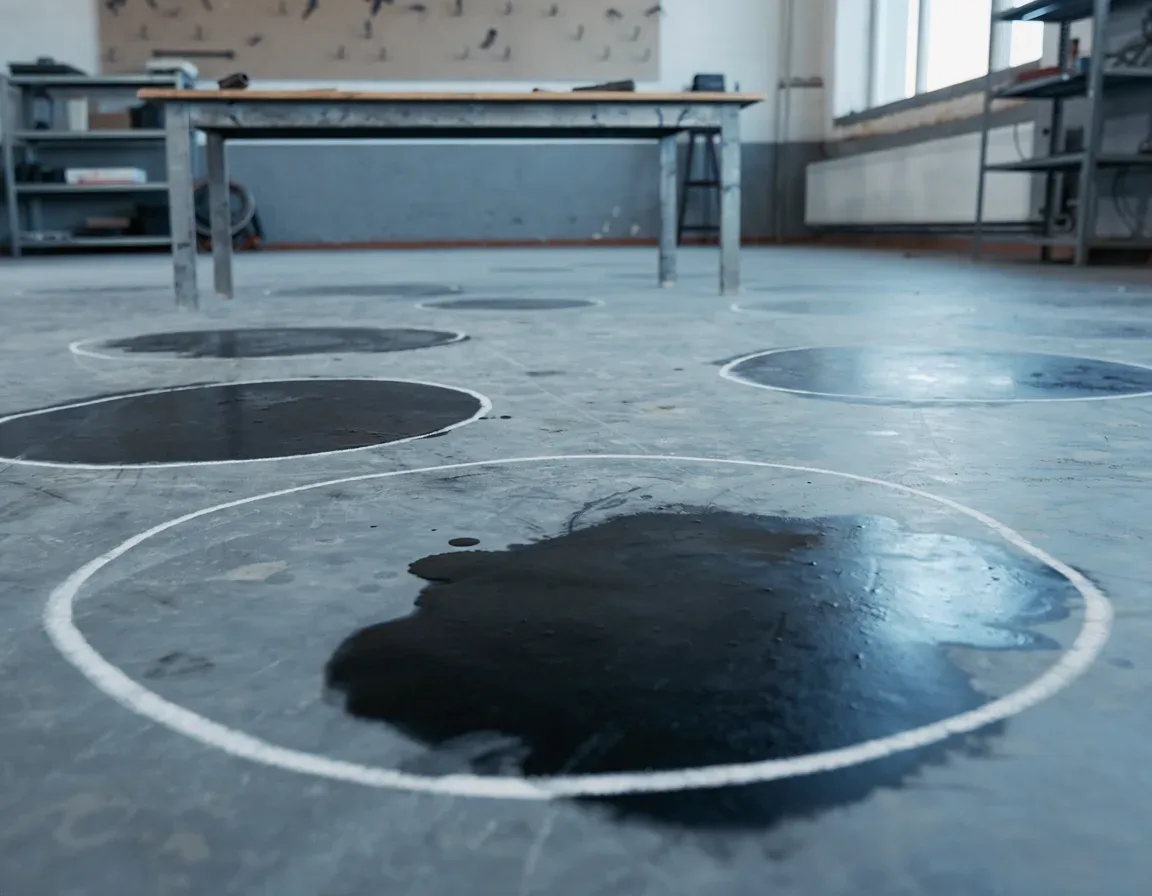
Stain map on a workshop floor

In an area converted from a car maintenance workshop, we divided the floor into zones before wiping. Fresh drops in front of the door were opened in one go with the degreaser. Three rounds of crust were needed for the old grease around the lift feet, leaving a slight shadow.
We did not try to clean the narrow strip along the canal, which had absorbed oil for years; we cut it and renewed it with repair mortar. Instead of applying the same method to every area, deciding based on the age and depth of the stain both shortened the time and reduced the risk of stains coming back after delivery.
Remove the oil stain by absorbing rather than wiping it, with a rust-specific product rather than acid, and the acid stain by repolishing rather than cleaning; mismatching enlarges the stain or leaves a permanent mark. — Expert Note
Frequently Asked Questions About Stains on Concrete Floors
01Does old oil stains completely disappear?
02Is there a smell when using degreaser, should the parking lot be closed?
03Does bleach or dish detergent work on concrete stains?
04After stain cleaning, the floor remains light-colored, why?
05Can there be oil stains on a floor with stain protector?
06Can porridge be applied in winter or on damp ground?
Related Articles
Tire and Brake Marks in the Parking Lot: Why Does It Form, How to Clean It?, Polished Concrete Care: From Daily Cleaning to Repolishing, Parking Floor Maintenance Plan: Daily, Monthly, and Yearly Tasks, How to Prepare Stain Removal Paste? Material and Chemical Selection, Concrete Clearing Stages: Step-by-Step Process from Discovery to Delivery