The Difference Between Refined (Helicopter) Concrete and Polished Concrete
Someone collecting bids for a warehouse or factory floor may hear two different proposals from two different teams on the same day: one says, "Let's polish it with a helicopter and sprinkle quartz," the other says, "let's wipe and polish the concrete." From the outside, both surfaces are flat, gray, and slightly glossy; therefore, they are often discussed interchangeably. However, one is done on the day the concrete is poured, the other weeks or years later; the tools, materials, and chemistry they use differ, and their wear patterns also vary. In this article, we introduce the two methods separately, explain the difference between dry spreading hardener and liquid hardener, explain whether a polished floor can be polished afterward, and how both are used together on industrial floors.
In short: Refined concrete is the compaction and smoothing of the surface of fresh and still plastic concrete with a trowel machine; most often, a dry hardener made of quartz or corundum aggregate is sprinkled on the surface during this process. Polished concrete involves gradually removing the hardened concrete with a diamond, condensing it with liquid silicate hardener, and polishing. The polished floor can be wiped afterward; however, since the spreading layer is thin, the amount to cut must be measured in advance.
Same Material, Two Different Times
The first thing that distinguishes the two methods is the calendar. The grinder is done in a window of several hours after being unloaded and spread out from the concrete mixer. At this time, the concrete is neither liquid nor hard; when pressed with a finger, it is a texture that takes a slight mark. If the craftsman misses this window, there is no turning back: the surface entered early waves, the surface entered late does not close. Therefore, the quality of the grinding largely depends on air temperature, wind, the consistency of the concrete, and the team's experience.
Polishing, on the other hand, works with hardened concrete. Concrete is processed after gaining most of its strength, and if desired, the work can be done years later. The margin of error is broader: if one step is insufficient, it is repeated; if an area does not reach the desired appearance, it is ground again. How long to wait for wiping in newly poured concrete Time to Sweep in New Concrete We examined it in detail.
This time difference also brings a result. A polished surface is the concrete itself, its own casting shell; if it deteriorates later, the same process cannot be repeated because hardened concrete is not polished. A polished surface is a mechanically opened and machined surface and can be reworked with the same tools if necessary.
How is helicopter grinding done in the field?
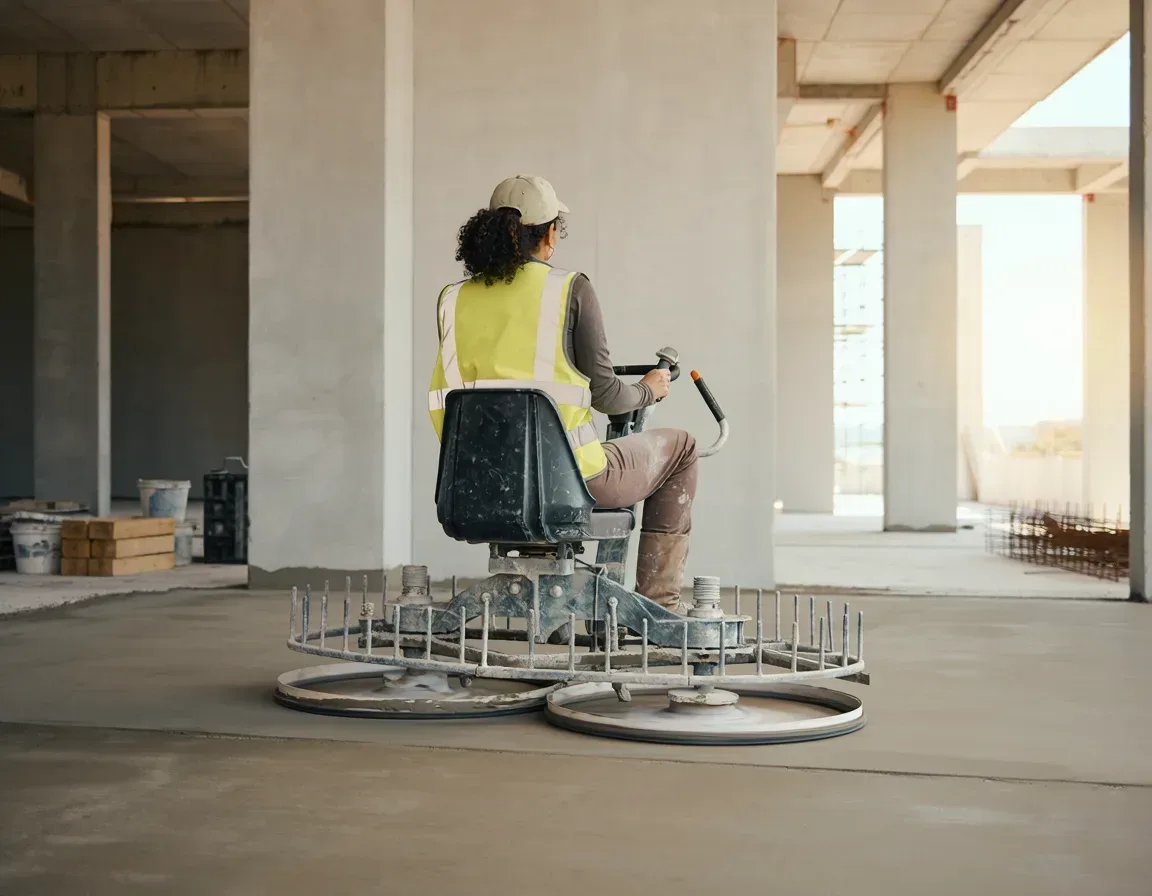
The machine, commonly called a "helicopter," is a motorized trowel machine with wide rotating blades underneath; it got its name because the rotating arms resemble a blade from a distance. After the concrete spreads and is leveled, water rises to the surface for a while. When this water evaporates and the surface becomes slightly marked, the first pass is done with wide discs attached to the blades. This stage, also called the tray trowel, flattens the surface, pushes the coarse grains down a bit, and collects the cement paste at the top.
After removing the discs, several more passes are made with the blades. With each pass, the angle of the blades is slightly increased and the surface gradually tightens. In the final passes, a thin, closed dough crust forms on the concrete; the slight gloss of the surface comes from this compaction. This shine is not the result of abrasion but of pressing and flattening the soft dough with a steel blade.
The most common mistake with a glaze is sprinkling water on top to make the work easier when the surface starts to dry. This water raises the water ratio of the top few millimeters and weakens exactly the layer where the traffic will be transported. Covering the surface before the sweat water is fully absorbed is a similar problem: some of the water and air remain under the crust and return months later as bubbling or flaking. Causes of this and similar dust Why does the concrete floor dust in the article we examined.
"Burnt" grind: dark and hard crust
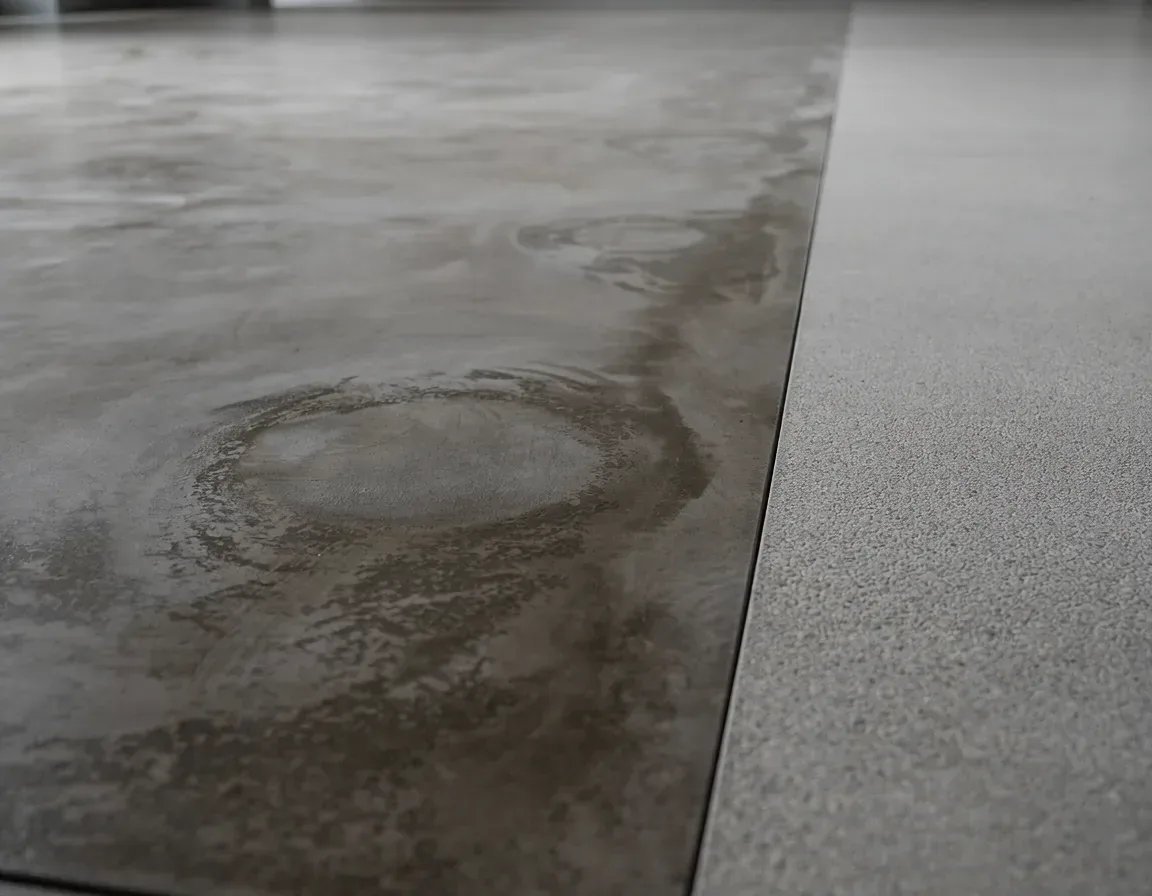
If the platter continues after the concrete has solidified well, the surface darkens and takes on an almost black, shiny appearance. In the field, this is called a burnt grinder. The water content of the overcompacted dough drops significantly, and blade friction can leave metal marks on the surface. This crusts are very hard but irregular in color; dark and light areas are read as blade whirlpools and machine spin marks. On a surface to be wiped later, this crust resists the diamond, slows down cutting, and does not easily eliminate the tone difference.
Dry Sprinkling Hardener: Embedded Layer in Fresh Concrete
Dry sprinkling hardener is applied to the surface on most industrial polished floors. This product is a ready-made powder consisting of cement, additives, and hard aggregate. It offers different wear resistance depending on the type of aggregate: those with quartz aggregates are common in general warehouses and production areas, harder aggregates like corundum are preferred in heavy traffic areas, and metal aggregates are preferred on heavy industrial floors. Some products are colored and give a lasting tone when poured into the floor.
After the powder has absorbed the sweating water and the first disc pass is made, it is sprinkled on the surface. It absorbs moisture from the concrete and is worked into the dough with the disc; most manufacturers recommend sprinkling the total amount in two or more passes. Then the curing continues with the blades. As a result, a thin layer forms at the top of the concrete, harder than the stem, and more wear-resistant. The thickness of this layer varies depending on the product and application; in most cases, it does not exceed a few millimeters, usually around 2–3 millimeters.
Although the strength of the spreading layer is good, it has two weak points. The first is the unevenness of hand spreading: it remains thicker in one place, thinner in another, and this difference appears years later when the layer wears away. The second is adhesion: if the timing is wrong, the layer does not fully integrate with the concrete and can lift like leaves under impact.
Liquid Hardening Agent: The Chemistry That Works Inside Hardened Concrete
The hardener used in polished concrete is a completely different product. It is a water-like silicate solution; it is applied to hardened concrete with smoothed pores, is absorbed inside, and reacts with the free lime inside the concrete to form a hard binder in the pores. It does not add a layer to the surface but concentrates the upper part of the existing concrete. Differences between lithium, sodium, and potassium silicate types In the concrete hardener article We also explained.
The similarity of the names of the two products causes confusion in the field. If a proposal only says "surface hardener," it should be asked which one is meant. Dry spreading products are applied only to fresh concrete on the day of pouring; if sprinkled on hardened soil, it is useless, swept away. Liquid silicate, on the other hand, works not in fresh concrete but in hardened concrete. In short, it is not possible to replace one in place of the other; two products can be used together on the same ground at different times.
Appearance, Powder, and Lifespan Side by Side

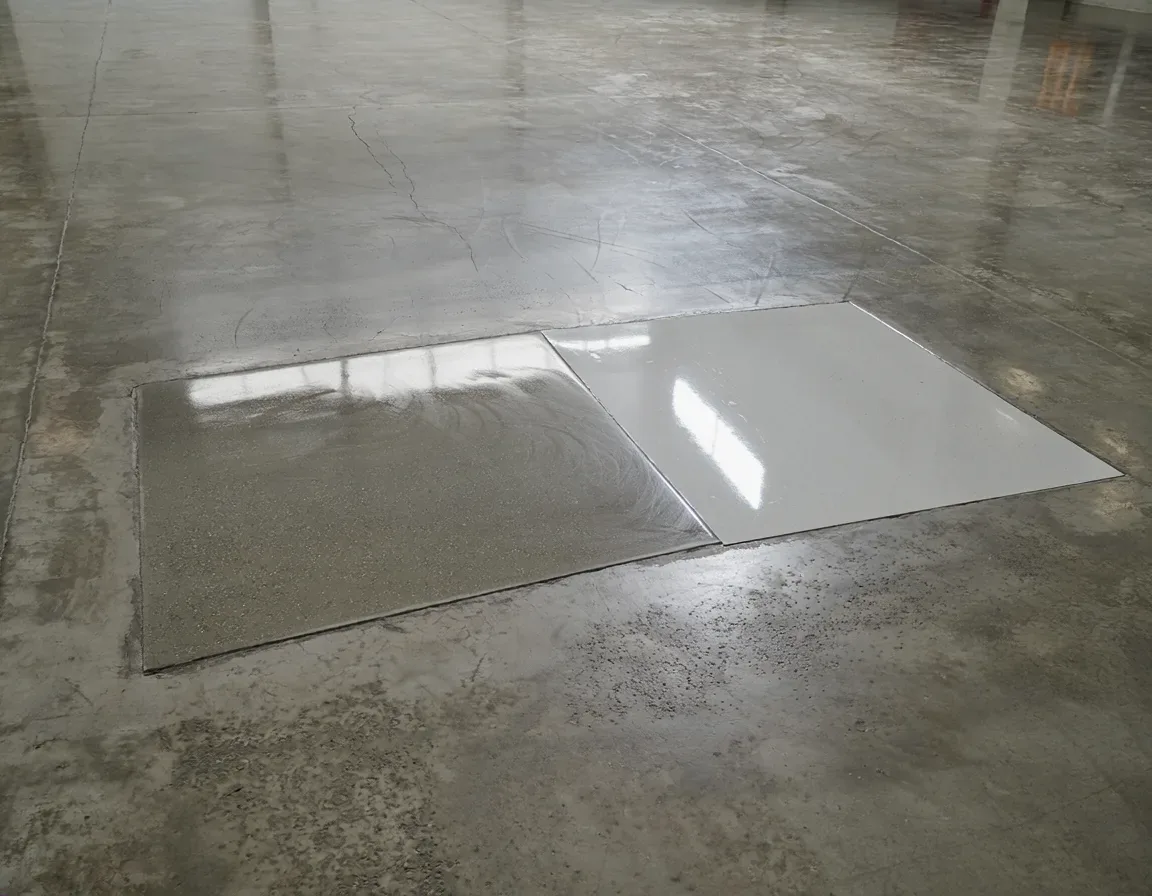
The behavior of the two surfaces in use directly derives from their construction methods. A polished floor is smooth and slightly glossy on the first day; then the sprinkler layer thins on traffic roads, whirlpool marks become more pronounced, and where wear progresses, the body concrete is exposed and begins to dust. In polished concrete, since the shine comes from inside the hardened concrete, wear appears as slow mattification and is gradually recovered in fine steps. The table below compares the two surfaces against the basic criteria:
| Criteria | Brushed (spread) concrete | Polished concrete |
|---|---|---|
| When to do it | Pouring day, fresh concrete | In hardened concrete, at the desired time |
| Source of brightness | Dough crust pressed with a knife | Scratch pattern thinned with diamond and hardened surface |
| Overview | Solid gray or sprinkled color, swirl and tone differences can occur | Cream, salt-pepper, or aggregate appearance can be selected |
| Tozuma | The layer is thin when intact; it starts to wear away | Cut with hardener, does not turn unless the surface weakens |
| Wear and tear | The layer thins and may lift in places | Slow matting on the road |
| Renewal | Finishing cannot be repeated; grinding or coating is required | It is tied up in fine stages in place |
The "appearance" line in the painting requires a separate parenthesis. Choosing how deep to go in polished concrete can leave a paste on the surface or open up fine and coarse aggregate. These options and the gloss level to focus on In the article on aggregate and brightness selection we explained. There is no such option on a polished surface; the appearance is whatever happened on the day of the casting.
Can Finished Concrete Be Finished Afterward?
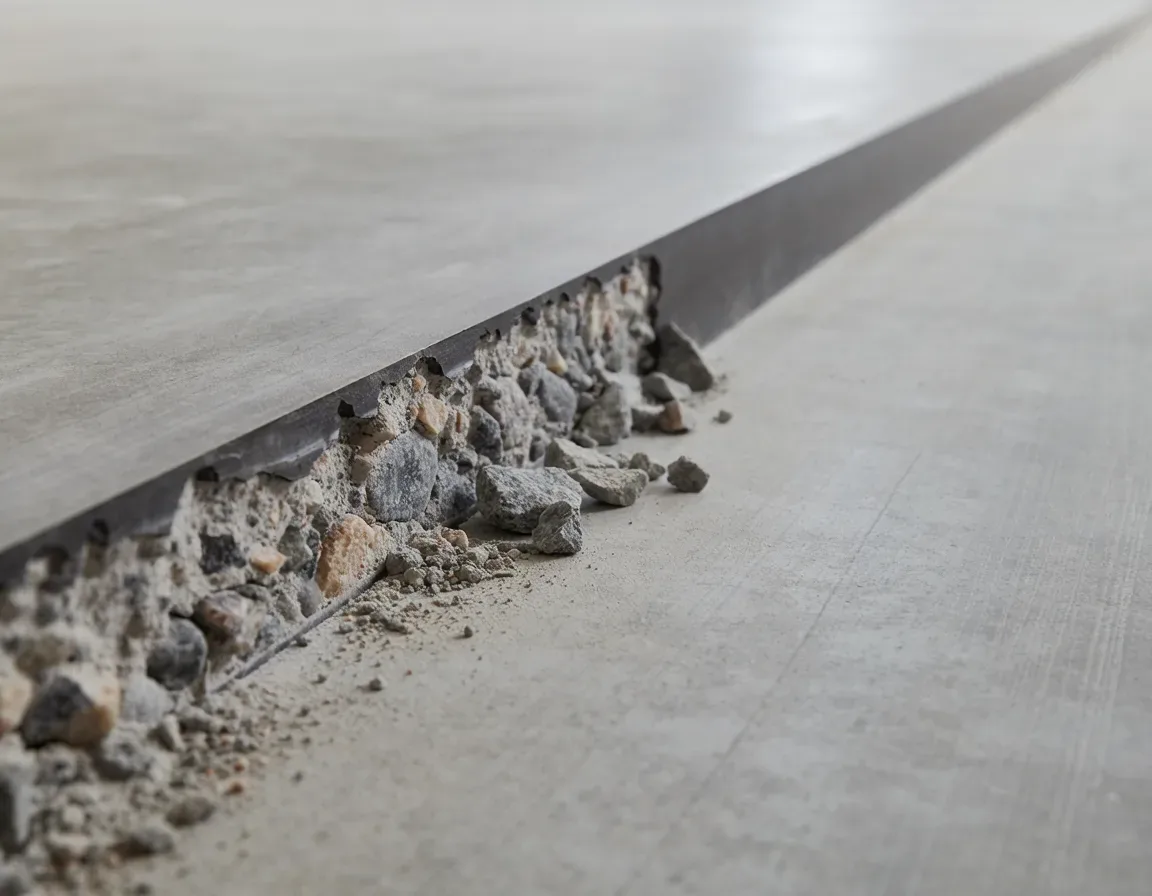
Yes, and this is exactly the work we encounter most often in the field: a warehouse or production floor that was polished years ago and finished with a spreading hardener, now dusted or stained. These floors mostly respond well to wiping because they have well-compacted industrial concrete underneath. But there is a limit to the work, and that limit is the thickness of the spreading layer.
The grind takes material from the surface. In a thin sprinkler layer, several coarse steps can pierce part of the layer and descend onto the body concrete. As a result, in some areas the hard and colored layer appears, in others the gray concrete beneath it appears, and the floor becomes patchy. This difference is very pronounced on colored sprinkler floors; the color is usually most intense at the top and opens as it is cut. Therefore, the cutting depth on a polished floor is decided before the work begins. We make the assessment in the following order:
- Getting to know the layer: By looking at a broken joint edge, an old anchor hole, or a break at the base of the column, the thickness of the spreading layer and its connection to the body can be seen in place.
- Wear map: How thin the layer is on traffic roads is compared with protected areas such as under shelves and under walls and recorded on a written map.
- Burnt shell inspection: Dark and bright areas are marked because these areas respond late to the diamond and may require separate pre-treatment.
- Testing area: Small areas in the two least and most worn areas are processed up to the targeted levels, and the tonal difference is evaluated together with the operator.
- Decision to cut: If the layer is solid and sufficiently thick, a light cut retains a creamy appearance; if punctured in places, either go one step deeper and open the monotonous body concrete or accept the difference from the start.
Another factor determining cutting depth is diamond selection. Starting with thinner metal or hybrid diamonds instead of very coarse metal bonds in light cut is a way to preserve the sprinkler layer. Differences between diamond bond types in resin, metal, and hybrid diamond inscriptions We explained. Some spreading hardener products are designed to be wiped off the top, and the manufacturer prescribes thicker applications for this; this option should definitely be discussed in new constructions.
Using Both Together on an Industrial Floor
The two methods are not rivals; most of the time, they are two separate phases of the same floor. In a new warehouse or factory, the concrete is polished with a spreading hardener; this provides a solid wear surface throughout construction and the first years of use. Years later, when the roads wear down, the floor is not removed but is wiped and condensed with liquid hardener. Thus, the hardness of the polishing and the renewability of the polishing are used consecutively.
If the goal is to use polished concrete from the top in the new building, the planning changes. Whether spreading will be used on the day of pouring, if so, what thickness and color it will be, how tightly the finishing will be; all of these should be discussed with the cleaning team in advance. While it is possible to create a aggregate appearance on a floor without spreading, a surfaced floor mostly remains creamy. Within the same structure, a distinction can also be made by region: the loading area where forklifts rotate can be spread and mated, while the office or showroom area seen by guests can be left unspread and polished.
Another warning concerns slipperiness. A burnt polished surface can become slippery when wet, like high-gloss polished concrete; appearing matte does not indicate safety. In wet working areas, the actual behavior of the surface must be seen through measurement; how the measurement results are read In the article on non-slip values You can find them.
Questions to be asked when making a decision
Clarifying which method is being discussed is the first step in comparing offers. The following questions guide you based on the condition of your floor and the stage of the project:
- Has the concrete not been poured yet: If you are before casting, polishing, spreading, and later grinding can be planned together, and decisions that cannot be corrected later are made that day.
- Is the floor polished and should be sprinkled: On the existing ground, no promises should be made for cutting depth or appearance without mapping the thickness of the layer and wear map.
- How important is appearance: If a monotonous and even surface is expected, one must go one step deeper on patched, worn sprinkled floors or accept the difference.
- What kind of traffic: In areas with heavy traffic with hard wheels, the wear resistance of the spreading stands out, while in pedestrian and light traffic, the easy maintenance of polished concrete stands out.
- How to renovate: If a surface that can be reworked upon wear is desired, a smoothing or casting day hardness gained once is sufficient, the finishing can work alone.
Most of these questions cannot be answered without looking at the spot. If you have a polished floor and are thinking about glossing, consider the size of the area, the age of the floor, any casting records, and a few close-up photos of traffic paths service request form you can submit it to; after the preliminary assessment, we set a date for the trial area.
Understanding the Thickness of the Sprinkler Layer

The thickness of the sprinkler layer is rarely known on paper; casting records may have been lost, or the application team may have changed. Therefore, we look at the ground itself. At the edges of the broken joints, a darker and tighter cross-section is seen at the top, and a coarse aggregate section is seen below; the line between the two layers indicates the thickness of the layer and how well it is attached to the body.
If the cross-section is not visible, we observe where the color changes during the trial cut. If the color is exposed in several passes, the layer is thin and the light cut is maintained.
Testing Area in a Worn Warehouse

On a warehouse floor used for many years with spread-hardener, the forklift corridors had become matte and body concrete had been exposed in places; the shelves were almost as they were on the first day. When we conducted a test area in both regions, we saw that the light cut left a noticeable tone difference between the aisles and the under-racks.
Together with the operation, we decided to go one step deeper. When the spreading layer was applied everywhere, the floor gained a monotone, fine-aggregate appearance.
Before wiping a polished and sprinkled floor, look for a broken grout edge; seeing the thickness of the layer there is much cheaper than achieving a patched result. — Expert Note
Frequently Asked Questions About Finished and Polished Concrete
01Can a helicopter grinding be done later on old concrete?
02Does applying liquid hardener on top of a polished floor work?
03Can the swirl marks left by the trowel machine be completely removed with a smoother?
04Does the color disappear if the colored sprinkled floor is wiped?
05Is polished concrete or polished concrete less slippery?
06How to repair areas where the sprinkler layer has lifted?
Related Articles
What is Concrete Plastering? The Path from Dusty Screed to Polished Concrete, Grinding in Newly Poured Concrete: Curing Time and Accurate Timing, What is a Concrete Hardening (Densifier)? Difference Between Lithium, Sodium, and Potassium Silicate, Aggregate Appearance and Gloss Level Selection in Polished Concrete, Warehouse and Logistics Center Floors: Dust-Free Warehouse with Concrete Cleaning