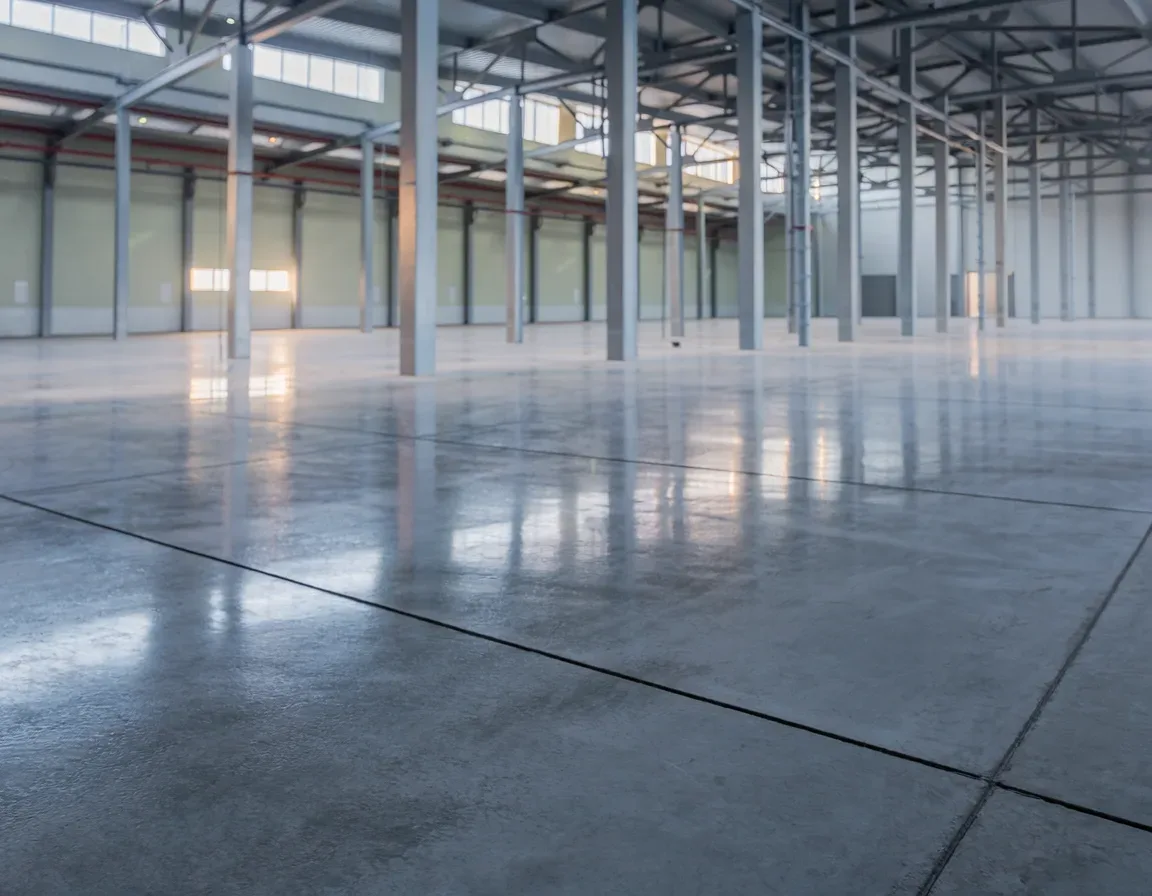
Warehouse and Logistics Center Floors: Dust-Free Warehouse with Concrete Cleaning
In a warehouse, the floor is considered after shelves and forklifts; until the tops of the boxes turn gray, barcode scanners give errors, and customers start complaining about dusty delivery. The warehouse floor is not just a surface that is walked on and vehicles driven; it is a business component that either releases a fine dust into the air with every wheel pass, reflects or swallows light, and can be cleaned or uncleaned. In this article, we discuss the real cost of dust in the warehouse, what concrete wiping changes, how work is divided in a full warehouse, points requiring attention from shelf legs to loading doors, and topics such as floor leveling and delivery.
In short: Dusty concrete affects the product, packaging, readers, sensors, fire detection, and worker health in the warehouse. Concrete grinding removes the weak surface layer and hardens the concrete, eliminating the source of dust, and can be applied corridor by corridor without emptying the warehouse. Smoothing makes the floor dust-free and tight but does not change the flatness class; in high-shelf warehouses with narrow aisles, flatness is a separate specialty.
The Cost of Dust in the Warehouse
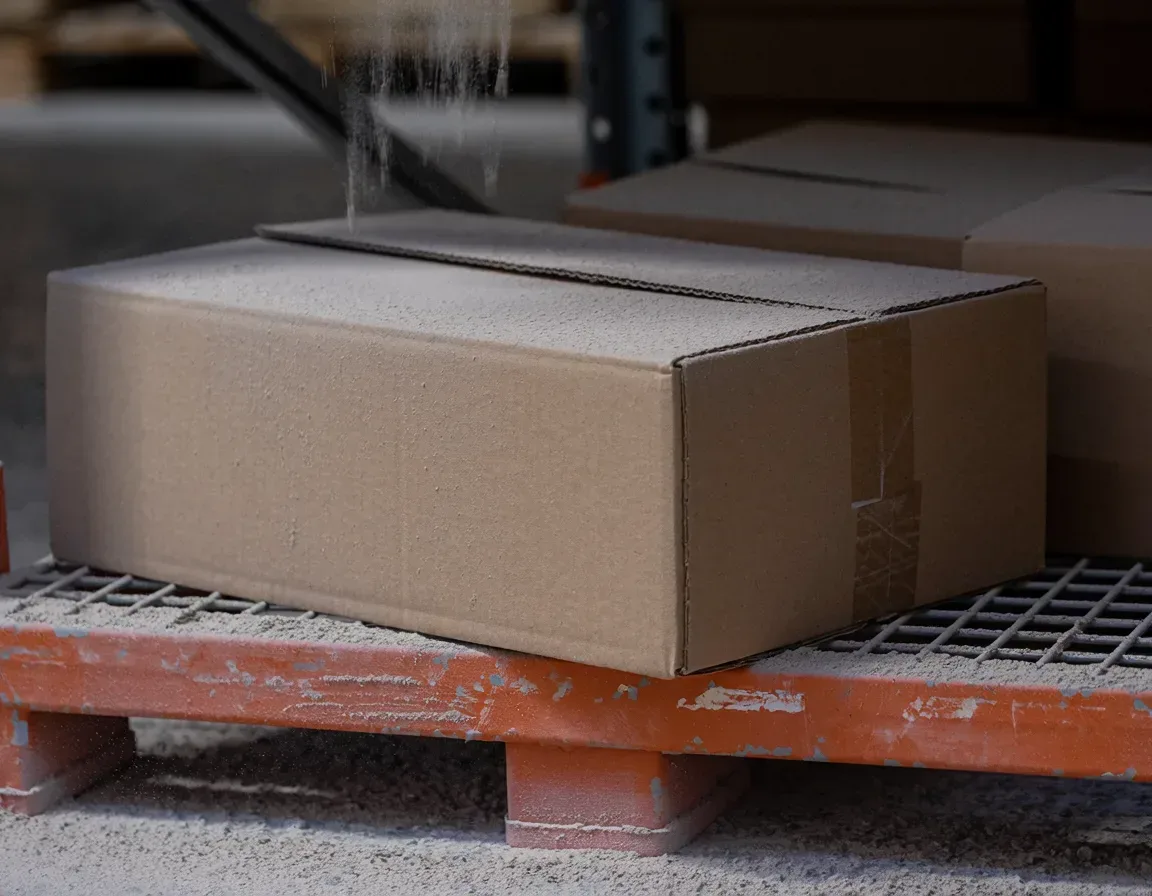
A dusty concrete floor redusts a few hours after being swept because the dust does not come from outside; it detaches from the ground itself. Each forklift and pallet truck pass detaches fine particles from the weak surface and disperses them into the warehouse with airflow. Since the cost of this dust is not visible in a single item, most businesses consider it normal. The main effects we see on site are:
- Product and packaging: A gray layer settles on the top of the boxes, the folds of the cling film, and products on open shelves; for products going to retail, this is a direct cause for returns and complaints.
- Readers and sensors: As the glass of barcode readers, conveyor photocells, and optical sensors on sorting lines are coated with dust, reading errors increase and line stoppages become more frequent.
- Fire detection: Optical-based smoke detection systems may struggle to distinguish dense dust in the air from smoke; dusty environments are a known cause of false alarms.
- Tools and equipment: The air filters of forklifts fill quickly, the cooling channels of wheel bearings and electronic boards are affected by dust, and maintenance intervals are shortened.
- Employee health: Concrete powder contains crystalline silica, and respirable particles pose a risk to the lungs; the health aspect of the subject in silica powder writing We explained.
- Cleaning load: Even if the sweeper runs daily on dusty floors, the shelves and products must also be wiped separately; this is an invisible but continuous labor item.
Understanding where the dust comes from also determines the solution. The weak and brittle layer formed on the concrete surface during pouring crumbles under traffic; the reasons for this and how to test it on site Why does the concrete floor dust in the article we have examined it in detail. Paint or a thin coating covers the top of this layer, but the layer itself remains in place; when the coating wears under the wheel, the dust returns.
What Does Concrete Cleaning Change in the Warehouse?
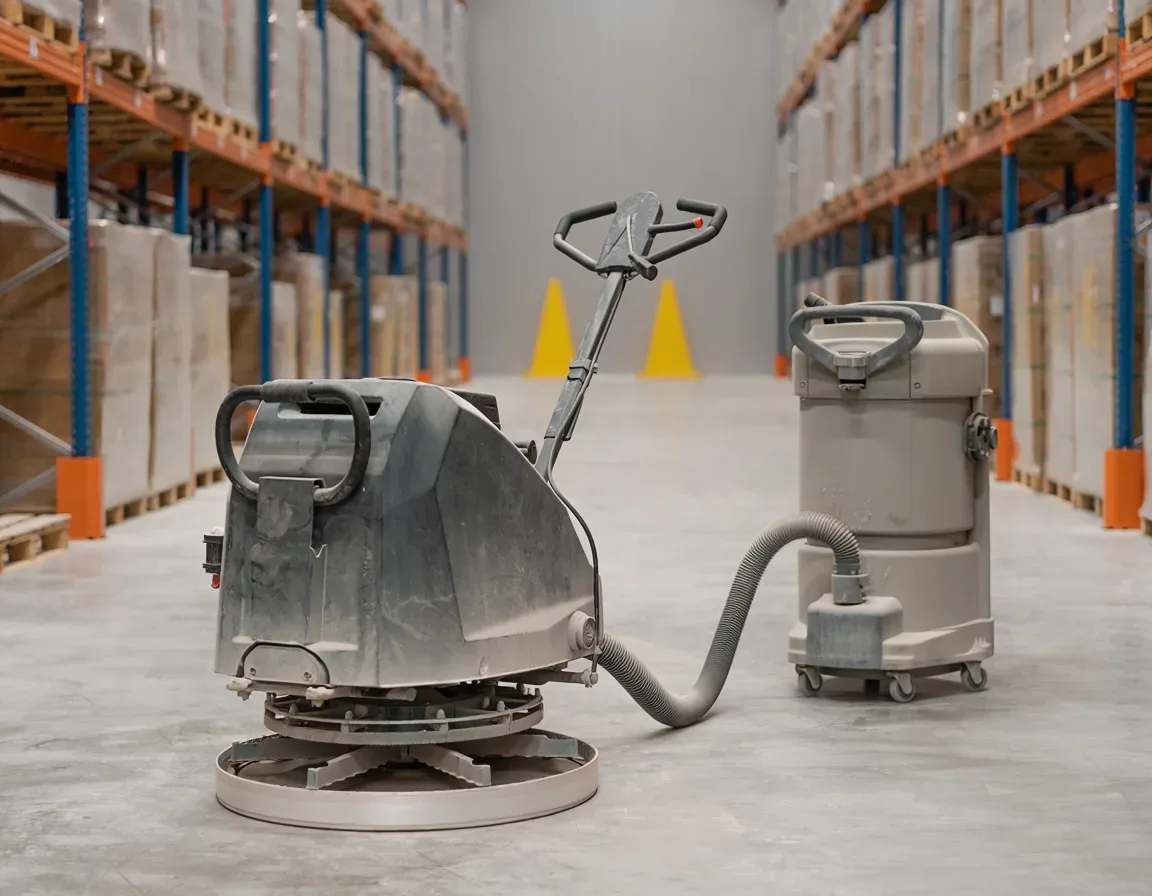
Concrete grinding approaches the problem from its source. Diamond abrasives take the weak top layer and bring the solid concrete underneath to the surface. Silicate-based hardener applied to this surface creates a hard structure in the pores of concrete; the surface tightens and becomes wear-resistant. The following thin steps cover and smooth the surface. The result is not a layer standing on the floor but the treated surface of the concrete itself; there is no film to peel or bubble.
From the warehouse operator's perspective, this is reflected in daily life. The sweeper no longer collects dust from the floor itself, only dirt coming from outside. Spilled liquids remain on the surface longer and can be removed without leaving a mark. Wheel tracks penetrate the tight surface less and are removed with the floor washing machine. Wooden splinters and packaging pieces that break off under the pallet are swept up on the smooth surface without getting stuck.
Its limits must also be stated. In places with acid spill risk such as battery charging areas and in areas with constant chemical contact, wiped concrete alone is not sufficient; a chemical-resistant coating should be considered in these areas. If the concrete itself is very weak, meaning a solid layer cannot be reached in rough shaping, the expected result cannot be achieved, and the top layer of the floor needs to be renewed. This distinction is demonstrated by hardness tests conducted during the survey and a small test area.
Lighting and Reflection
Lighting in storage is a major energy item, and the floor is the silent partner in this calculation. It absorbs most of the light falling on dark, dusty, and rough concrete. Ground concrete, on the other hand, is lighter in color and smoother; it reflects light, and the space is perceived brighter with the same fixtures. This difference is most noticeable at the lower levels of the high shelves and in the corridors between the shelves, because light from the ceiling already reaches these areas in a reduced amount.
As reflection increases, glare can also increase. On a very glossy finished floor, the appearance of ceiling fixtures appears on the floor and can disturb the forklift operator, especially when working looking upwards. Therefore, in warehouses, we usually stand at a finish between satin and semi-gloss; dust-free and cleanability are fully achieved at this level as well. The finish level should be decided at the test area, under the warehouse's own lighting and after consulting the operators.
Working in a Full Warehouse: Corridor by Corridor Segmentation
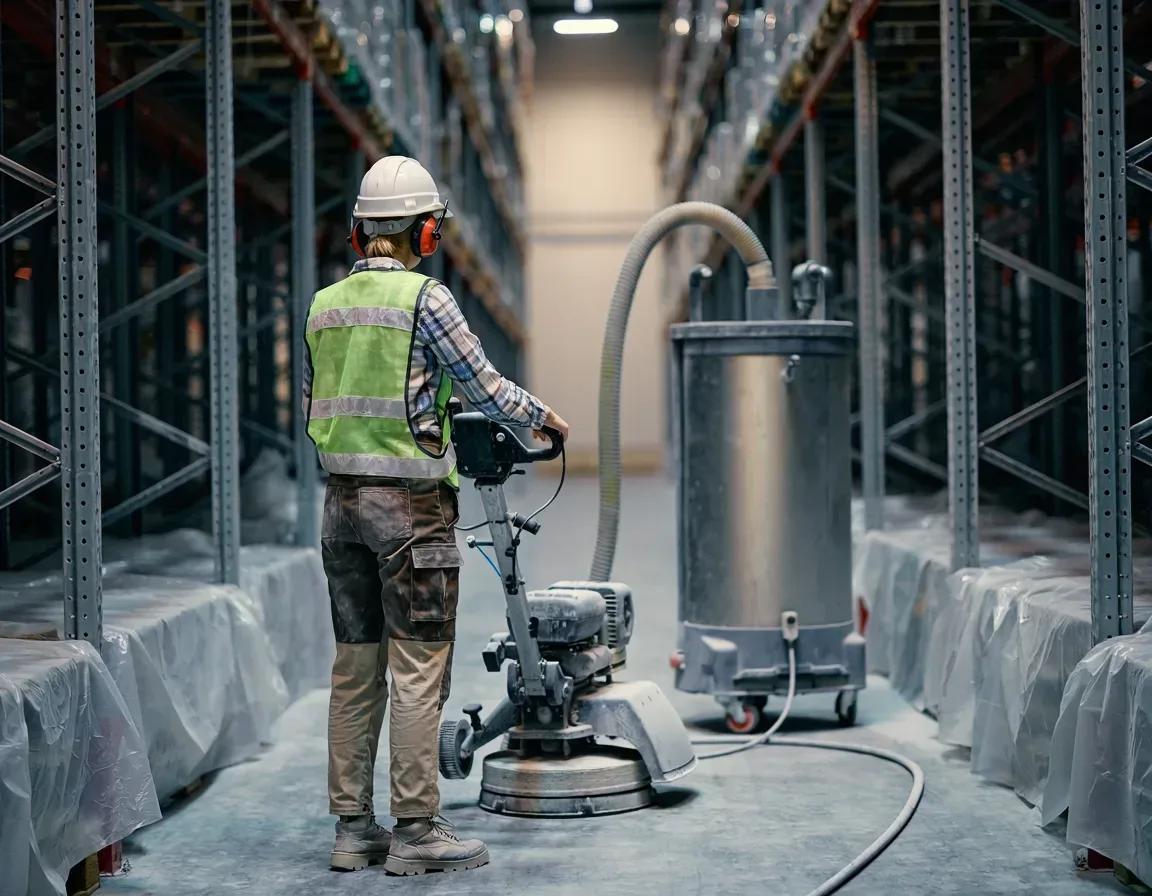
Clearing a working warehouse for floor work is often neither possible nor necessary. The work is divided into parts to fit the warehouse itself. We plan together with the warehouse manager and the shift supervisor in the following order:
- Determining the regions: The warehouse; is divided into aisles between shelves, main corridor, goods receiving, shipment, and intermediate stock areas, and the period during which it can be closed is recorded for each area.
- Closure of locations: The corridor to be worked on is temporarily closed in the warehouse management system, and products collected from that corridor are picked up to other addresses in advance or orders are sorted accordingly.
- Shifting loads on the floor: Pallets placed directly on the floor and loads sitting on the floor at the bottom rack eye are moved to the adjacent corridor; the upper floors of the rack remain in place.
- Protection and separation: Both ends of the aisle are closed, open products on adjacent shelves are covered, and forklift access to the work area is physically blocked.
- Delete and unroll: The corridor is completed from repair to the final stage, cleaned, and after inspection, it is reopened in the system; the team moves on to the next corridor.
The choice of method also changes in a full warehouse. Since the product and cardboard packaging are sensitive to water, we do most of the work with dry methods with industrial dust extractors directly attached to the machine. No matter how strong the suction is, we do not give up covering open products on adjacent shelves. The aisles between the shelves may be too narrow to allow the large machine to rotate; in this case, a smaller machine moves in one direction and the machine is removed at the end of the aisle.
The schedule is determined by warehouse density. No groundwork is planned during periods of increased shipments and counting weeks. The most difficult areas to close, such as the main corridor and shipment area, are left for weekends or night shifts. How planning changes in facilities with production areas Concrete grinding without stopping production in the article We also explained.
Shelf Legs, Column Bottoms, and Edge Crafting
In a warehouse, the edge of the floor is not the bottom of the wall but the rack legs, and there are hundreds of them. A large grinder cannot approach the leg plates and the guards in front of them more than a few centimeters. The remaining strip is processed with small hand machines, following the same step sequence. If this step is skipped or kept short, it becomes dull and dusty around each leg; the floor becomes dust-free in the middle and dusty at the bottom of the shelf.
The bottom of the foot plate cannot be ground and must be known from the start. If the shelf layout is changed later, unfinished traces and anchor holes in the form of plates appear in the old foot areas. Holes can be filled with repair mortar, traces can be brought closer to the surroundings with local smoothing, but they may not disappear completely. If a change in shelf placement is being considered, it is more appropriate to bring the floorwork to the same period as this change both in terms of appearance and workmanship.
Water around the anchor is a separate risk. If wet grinding is done, muddy water gets under the foot plate and into the anchor hole; when dry, it leaves rust stains and loose deposits. This is one reason why we treat shelf bottoms with the dry method. How to repair old anchor slots and broken edges In the article on pothole and joint edge repair You can find them.
Joints, Loading Doors, and Ramp Fronts
The weakest point of the warehouse floor is the joints. Small and hard-wheeled vehicles move from one edge to the other place the load in a narrow area and gradually break the edge. The broken edge produces dust and debris and hits the vehicle and load with each pass. Before polishing, the old fill of the joints is cleaned, broken edges are repaired, and the joint is filled with a solid fill capable of bearing the wheel load; the grind then passes over the fill, leveling the surface. The contribution of the wheel type and route to this wear in the forklift traffic article we addressed it.
The loading doors are where the warehouse contacts the outside. When the door is opened, rain, wind-driven sand, and mud carried by truck tires enter; forklifts constantly rotate in this area. The first few meters in front of the door therefore wear down and get dirty much faster than the rest of the warehouse. We recommend leaving the finish a bit more matte in this lane because the likelihood of getting wet is high. The joint between the steel profile and the concrete around the ramp stabilizers is also checked; if there is broken concrete around the profile, it is repaired before polishing.
Keeping the doorway clean also protects the inside of the warehouse. Sand coming from outside acts like an abrasive under the tire and mostly dulls the main aisle. Daily vacuuming of the doorways delays the need to repolish the entire warehouse.
Floor Level: High Shelf and Narrow Corridor

Two separate concepts are often confused in warehouse floors: surface quality and floor geometry. Smoothing corrects the former, namely dust, firmness, and smoothness. Flatness and horizontality indicate whether the floor is undulating and how much elevation difference it carries from one end to the other; these are largely determined by the day the concrete is poured.
In large areas where forklifts can move freely, small waves are often not a problem. The situation is different in narrow aisles with high shelves. Stackers operating in these aisles always follow the same wheel track and their masts extend very high; a small slope difference in the ground can grow at the top of the mast, consuming the clearance between the rack and the machine. Therefore, in warehouses with narrow aisles, the floor is evaluated separately from free-traffic areas and with stricter criteria. For free-traffic floors, a system that expresses flatness and horizontality with two separate numbers is commonly used; for vehicles following a specific route, documents such as TR 34 in the UK, DIN 15185 in Germany, and EN 15620 in Europe related to racking systems are applied. These systems cannot be directly interconnected, and the preferred class is determined by the vehicle manufacturer and the rack supplier.
It is necessary to clearly state the role of grinding in this regard. A standard polished concrete application takes less and equal amounts of material from the surface; it eliminates a few millimeters of bumps and joint edge differences but does not raise the floor's flatness class. Precise grinding and smoothing of wheel tracks in narrow corridors is a separate specialty done with special measuring devices and machines. We recommend that businesses planning a high shelf investment first have a floor measurement done and decide on the gradient only after this measurement.
The table below summarizes what is expected from the ground according to the sections of the warehouse and the points to pay attention to:
| Section | The factor that challenges the ground | Recommended approach | Points to consider |
|---|---|---|---|
| Shelf aisle | Wheel following the same track, rack legs | Dry iron, hardener, satin finish | Edge crafting on the soles of the feet |
| Narrow corridor, high shelf | Pole swing, precise denim | First flatness measurement, then decision | Straightening is a separate specialty |
| Main corridor | The busiest traffic, turns | Smoothing, stiffener, joint repair | Working at night or on weekends |
| Goods acceptance and shipment | Track friction, impact, sand | More matte finish, frequent sweeping | Possibility of getting wet at the door |
| Battery charging area | Acid shedding | Chemical-resistant coating | Ground concrete does not withstand acid |
| Stock and free space | Load placed on the floor, dragged pallet | Grinding, hardening, protective | The easiest area to work on first |
Ground Delivery Between Tenant and Landlord
A significant portion of the warehouses are rented, and the floor is one of the most controversial items in entry and exit reports. The tenant sets up shelves, drills anchors, and draws lines; years later, when they leave, they leave behind holes, paint stains, grease stains, and broken joint edges. The landlord wants the floor as it was on the first day, while the tenant says it is normal wear and tear.
The way to reduce this argument is through documentation. At the entrance, the condition of the floor is photographed area by area; existing cracks, joint conditions, stains, and dust are recorded in the report. The work to be done at the exit, such as filling anchor holes, removing lines, and repairing joint edges, is defined from the start in the contract. How to take floor photos In the text of the ground photo We explained; the same method works for the minutes. We recommend consulting a legal professional regarding the legal aspects of contract clauses.
From the owner's perspective, a wiped floor is a feature that makes a difference in presenting the warehouse to the next tenant; from the tenant's perspective, it is an investment that reduces dust and cleaning burden throughout the business. Who gets it done depends on the parties' agreement, but doing it at the beginning of the lease period and before the shelves are set up is the easiest way for both parties. Your storage plan, shelf layout, and a few photos of the floor service request form If you transmit it through it, we will issue the partitioning and calendar suggestions together during the exploration.
Before or After Shelves Are Set?

The best time to wipe the floor in a newly opened or changing warehouse is before installing the shelves. In an empty hall, large machines operate without obstacles, edge work is limited only to the walls and column bases, and the work takes much less time. The bottom of the rack legs is also processed; even if the layout changes later, no marks remain on the floor.
The floor must be protected during rack assembly. Concrete dust released during anchor drilling must be vacuumed immediately, metal profiles should not be dragged on the floor, and the wheels of the assembly tools should be clean.
How Did Business Progress in a Twelve-Corridor Warehouse?

In a working distribution warehouse with twelve aisles, we sorted the work according to the warehouse's order order. The warehouse manager closed two aisles in the system every day and shifted pallets on the floor one night before. We wiped the aisles dry with dust-absorbing machines; open products on adjacent shelves remained covered.
We divided the main aisle and the shipping front into two weekends. Shipments did not stop throughout the work; the edge work around the rack legs took up the most time, and we specifically mentioned this during the bidding phase.
The duration of work on the warehouse floor is determined not by square meters but by the number of shelf legs; when requesting a quote, please specify the aisle lengths along with the leg spacing and type of protector. — Expert Note
Frequently Asked Questions About Warehouse Floors
01Do products on shelves get dusty during mopping?
02When can a forklift enter a deleted corridor?
03Will a forklift slip on a swept floor?
04What happens to the old lines and bands on the floor?
05Can a new shelf anchor be drilled after mowing?
06Can work be done if the warehouse is too cold or humid?
Related Articles
Forklift and Pallet Truck Traffic: Wheel, Joint, and Floor Wear, Concrete Rollover Without Stopping Production at the Factory: Segmentation and Shift Schedule, Why Does a Concrete Floor Dust Out? Causes and Diagnosis of Surface Weakness, Concrete Floor in Cold Storage and Food Facilities, Silica Powder in Dry Iron: Health Risk in Granite and Quartz