Concrete Floor Polishing: Turning Matte and Dusty Concrete into a Glossy Floor
The first question people ask us about concrete floor polishing is often the same: what do you apply to the floor? The question is natural because when it comes to shine, polish, varnish, or paint comes to mind. However, permanent shine does not come from a layer added on top of the concrete but from treating the concrete itself. This difference is not just a technical detail; it determines how many years the floor will last, how it will be cleaned, and whether it will peel off one day. In this article, we explain where the shine comes from, how a matte and dusty concrete turns into a glossy floor, the role of a hardener, why the applied varnishes peel off, how much shine matters and where, slip resistance, and maintenance.
In short: Concrete is polished by gradually thinning its surface with diamonds; the gloss is not a coat but the smoothed surface itself. A hardener tightens this surface, making the shine permanent. Applied varnishes and varnishes give quick results but wear and peel under traffic; in places like warehouses, parking lots, and factories, a satin finish is often sufficient.
Brightness is not a layer, but the state of the surface
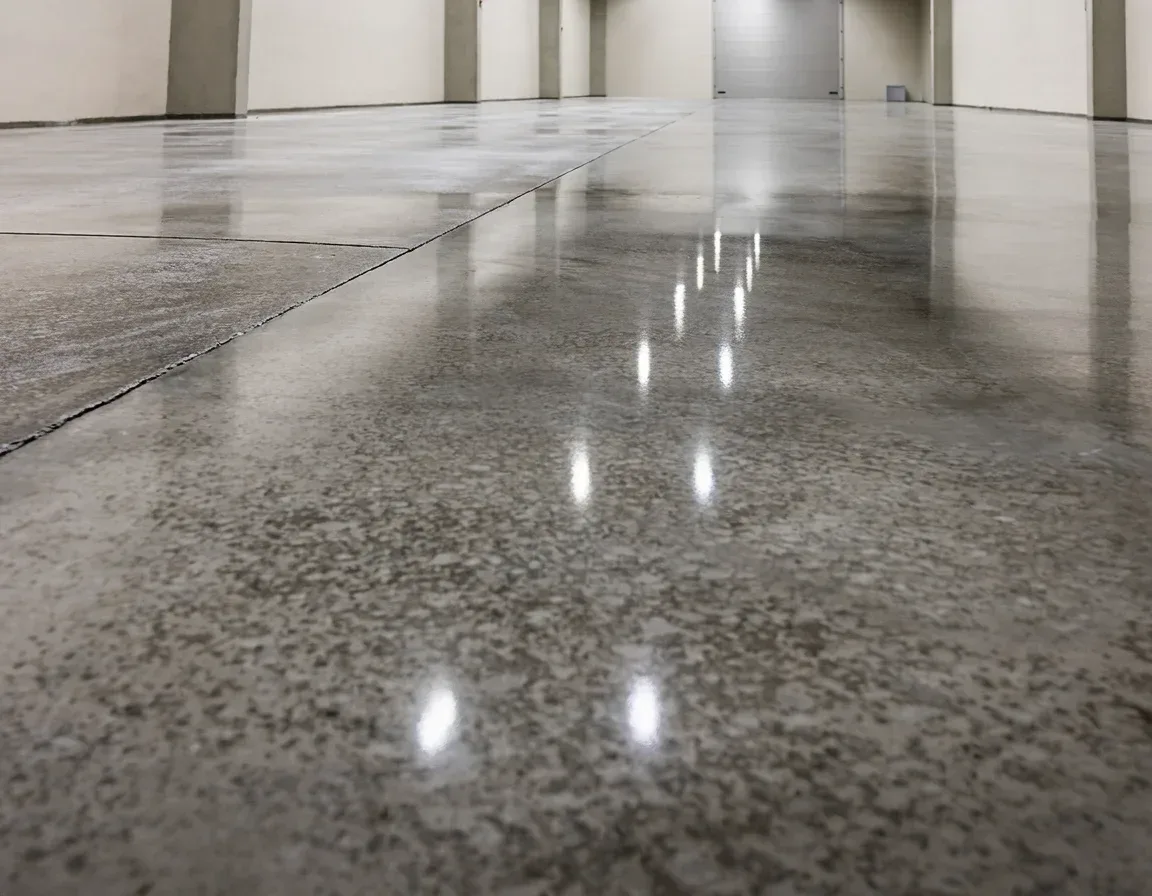
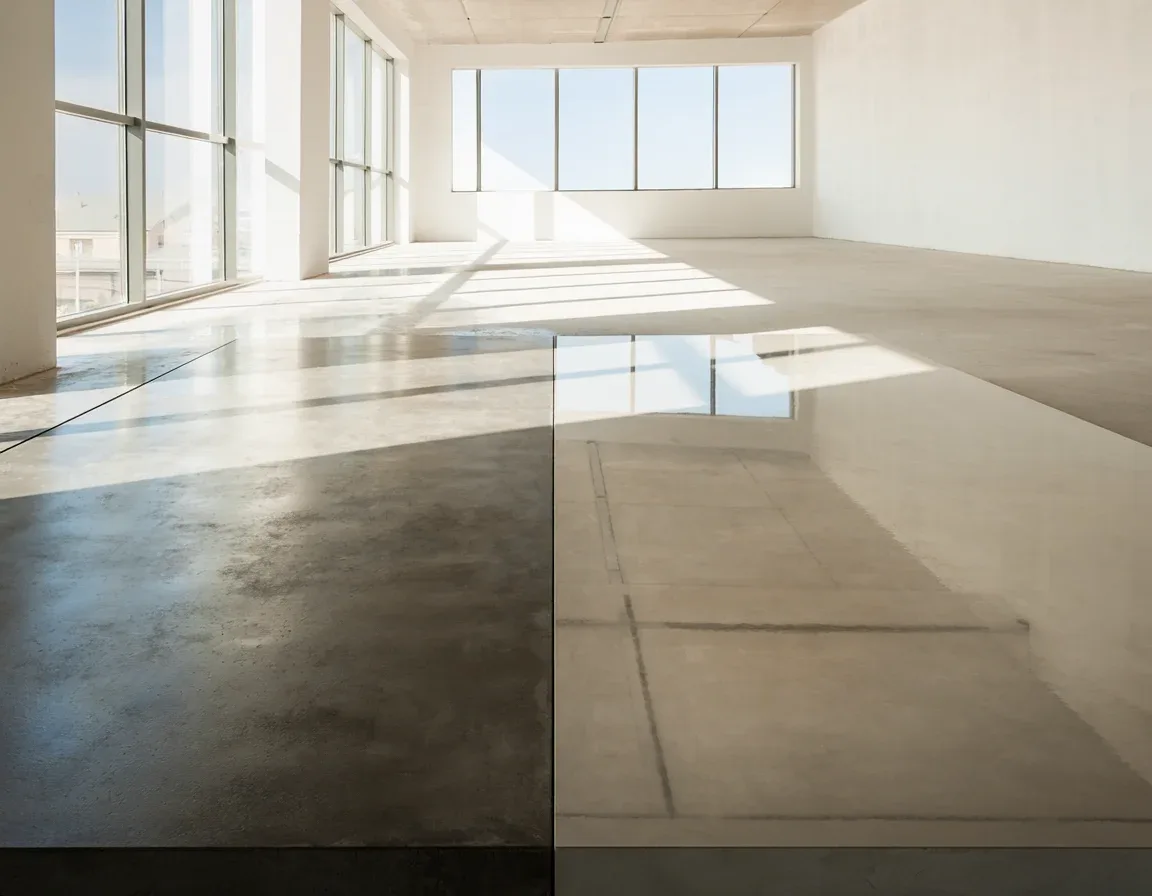
Whether a surface looks dull or shiny depends on how it reflects light. A rough surface scatters the light falling on it in all directions; the eye cannot distinguish individual reflections and sees the surface as dull. A smooth surface reflects light collectively in the same direction; the shape of the ceiling lamp or window appears on the floor. Frosted glass and flat glass are the same material; the only difference between them is the roughness of their surfaces.
The same applies to concrete. The difference between a matte concrete floor and a glossy concrete floor is not whether there is anything on top but the length of the very fine scratches on their surfaces. As the scratches shrink, the light reflects more evenly, and the floor first starts to look silky, then shiny. So polishing is not about adding shine to the concrete, but about removing the roughness from the concrete surface.
This perspective explains something else: the floor with a glossy layer on top also shines, but then it is not the concrete that shines, it is the floor being applied. When the floor wears down or lifts off, the same matte concrete emerges from underneath.
From Matte Concrete to Bright Floor: Reducing Scratches
The way to remove the roughness on the surface is to replace it with a finer roughness. In this process, which craftsmen call grinding, heavy machines with diamond tips attached to rotating heads are passed over the floor. The rough diamonds used in the first pass take over the dirty, weak, and wavy top layer of the floor; the surface flattens but is full of deep scratches and completely matte. With each subsequent pass, a thinner diamond than the previous one is inserted, and each step erases the scratches left by the previous one, leaving smaller ones in their place.
When this chain is extended enough, the scratches shrink beyond the eye to discern, and the surface begins to reflect light. Depending on the goal, one stops at one point of the job: if rinsed early, a matte surface is obtained; if pushed a bit forward, a satin; if done all the way, a reflective surface is achieved. Skipping a step does not speed up the work; deep scratches that the skipped step should erase remain on the surface, and when the floor shines, they appear as curved lines under the light. At which step, which appearance is achieved, and how the aggregate look is chosen. In the article on the selection of aggregate and gloss in polished concrete We explained it with a table.
At the end of the job, a very fine stain protector is often applied to the surface and polished with a high-speed machine. This final step slightly increases the gloss and delays the absorption of liquids; but the source of the shine is not that, only the final touch.
Why Doesn't Gloss Last, Without Hardener?
Treating dusty and soft concrete with only fine diamonds also gives a shine, but this shine does not last long. If the cement mixture on the surface is weak, traffic quickly redraws and dulls it. For the gloss to last, the surface must first harden; liquid hardeners do this work.
The hardener is a silicate-based liquid product that is impregnated into the concrete during the process, with the pores on the surface open. It reacts with the free lime remaining from the cement inside the concrete to form a hard, water-insoluble compound that fills the pores. The result is a tighter, less absorbent, and more scratch-resistant surface. The subsequent fine steps polish a tightened surface rather than a soft paste; the resulting shine is both clearer and lasts longer under traffic. Product types and their differences In the concrete hardener article We also addressed it.
There is another benefit to this step on dusty floors: the compacting surface stops dusting. When turning matte and dusty concrete into a bright floor, the real gain is often not shine but the dust disappearing and the floor becoming easier to clean. The limits of the hardener should also be known; it cannot turn deeply weak, crumbling concrete into a solid floor.
Applying Polish, Varnish, and Polisher: Why Does Rapid Shine Wear Off?
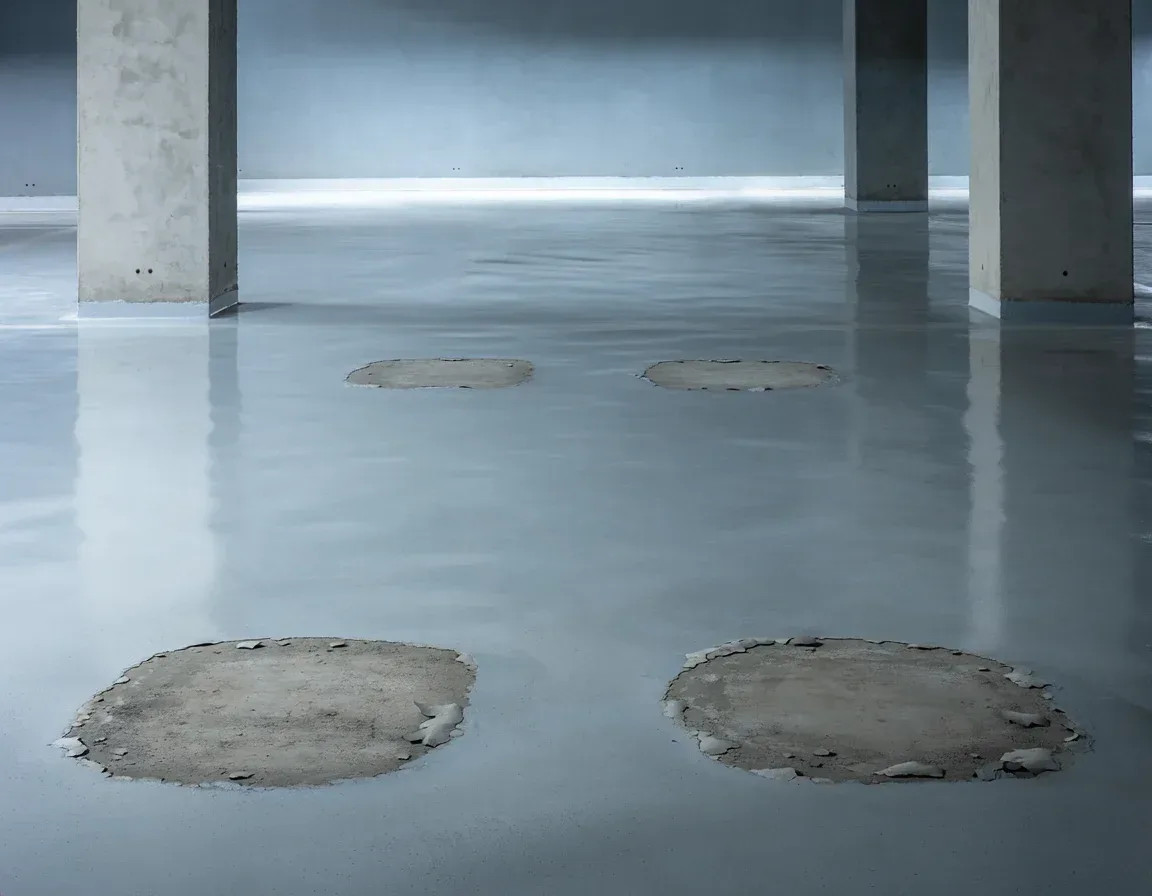
Most products sold on the market under the names concrete varnish, concrete varnish, or polisher are acrylic or similar resins that form a thin film on the surface. They are rolled or mopped, dry quickly, and make the floor really shine on the first day. That's why they look attractive: no machine, no dust, the job is done quickly. The problem is how the film withstands traffic and time. Typical forms of film deterioration are:
- Wear on traffic roads: The film is thin and softer than concrete; foot and wheel traffic erodes it on heavily used lines, splitting the ground into bright edges and matte roads.
- Getting up with hot tires: When a heated tire of a vehicle that has traveled sits on top of the film, the film can soften and stick to the tire; when the vehicle is towed, peeled stains in the form of wheels remain in the parking lot.
- Whitening with moisture from below: If concrete carries moisture, this moisture accumulates beneath the film; the film becomes cloudy in places, whitens, bubbles, and begins to flake.
- Scratching and yellowing: Dragged pallets, sand, and wheels cause scratches in the film that are too noticeable for the concrete itself; some products yellow over time in sunny areas.
The work to be done when the film deteriorates is also laborious. Applying a new coat on top does not cover the defects of the remaining film; it only thickens the layers; for a proper result, the old film must be completely removed with a chemical or machine. Thus, a job that has been done once begins a cycle of repeated removal and reapplication at certain intervals. The difference is summarized in the table below.

| Criteria | Surface polishing by processing | Applying polish or varnish |
|---|---|---|
| Source of brightness | Smoothed concrete surface | Film on the surface |
| First application | Work lasting days depending on the machine, diamond, and area | Roll or mop, short work |
| Under traffic | Paths slowly become matte and refreshed in place | The film is wearing off, patch is visible |
| Peeling and swelling | There is no layer to peel off | Moisture is visible through hot tires and wear |
| Tozuma | Cut with a stiffener | The film is covered when intact, but returns when lifted |
| Renewal | Consolidated with regional polishing | Needs to be disassembled and re-ridden |
| Where applicable | Warehouse, parking lot, factory, store | Low-traffic, temporary, or decorative areas |
It would also be wrong to say that the products used have no place at all. They will work if maintained with knowledge in a low-traffic archive room, a temporary area that will be used for a short time, or a small section where machine work is not possible. The wrong thing is to expect permanent shine from a film layer on a wide floor under forklift or vehicle traffic.
How Bright Is It? Three Questions That Determine the Decision
When it comes to polishing, the goal does not always have to be a mirror-like surface. As the gloss increases, the number of stages processed and the duration increase; at the same time, the surface reveals every dust, every trace, and every flaw in the concrete more clearly. When choosing the right level, one should look at the work of the area, not the catalog images. The questions that guide us are as follows:
- What will fall to the ground, what will be dragged on it: High gloss is quickly drawn in a production or shipping area exposed to pallets, sawdust, and sand; a matte or satin finish both looks neat longer and preserves marks.
- Who will clean the floor and with what: A store with regular vacuuming and machine washing has a glossy finish; in a warehouse where cleaning is infrequent, satin finish is much more forgiving.
- Where does the light come from, who is looking at the ground: In areas where customers visit, where display cases and lamp reflections are desired, brightness is a design element; what is sought in an indoor parking lot is not reflection but an open and clean surface that enhances brightness.
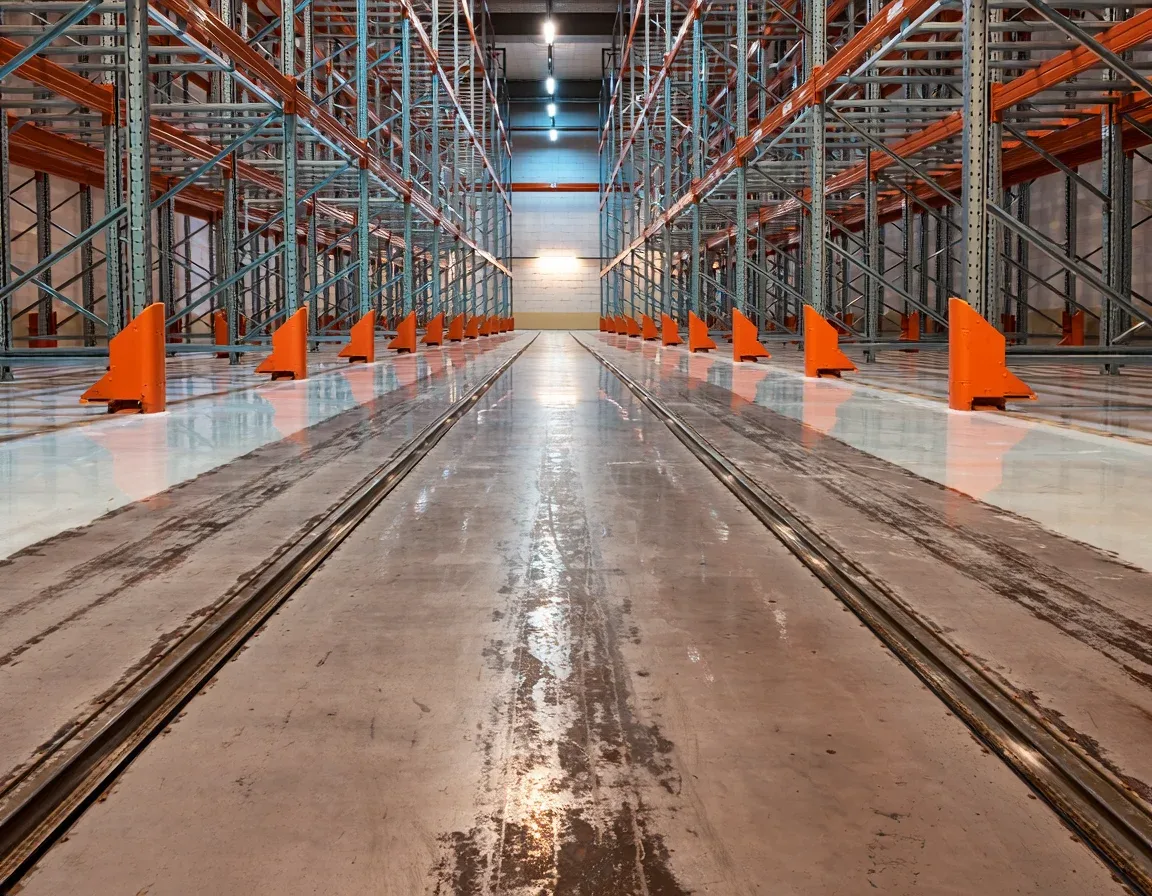
The answers to these questions come down to the same place in most large areas: a satin or semi-glossy finish in parking lots, warehouses, and factories meets the goal of dust-free and easy cleaning; high gloss stays in places where the appearance stands out, such as stores, showrooms, and lobbys. The service corridor of a hotel in Antalya and a logistics warehouse in Mersin need more of a durable and clean surface than shine.
Is Glossy Concrete Slippery?
It is common to think that every shiny-looking surface is slippery, but gloss and slipperiness are not the same thing. Clean, dry processed concrete is a surface that provides grip for shoes and rubber; since there is no slippery polish film on it, many people find it different from what they expect when walking on it. The main factor determining slippery is not the surface shine, but what is on it.
Water, oil, detergent residues, and fine dust make every flat surface slippery; processed concrete is no exception. Therefore, a bright finish is not aimed for in constantly wet areas, vehicle ramps, and outdoor spaces; a coarser texture that increases grip is chosen here. In production areas where oil is poured, safety is determined not by the level of gloss but by how quickly the spill is cleaned. Care must also be taken with applied polishes: when the film layer gets wet, it can be slippery than the concrete itself.
No decision is made in areas where non-slip is required. In the test area, the surface is tested both dry and wet, measurements are taken on site if necessary, and the finish is selected accordingly.
Not Every Concrete Shines the Same
The result of polishing is determined not only by the machine and the craftsman but also by the concrete itself. A well-poured, tightly polished, and properly cured floor shines easily and uniformly. If the surface is heavily watered, rained, or has a weak surface, that weak layer must first be removed; otherwise, the shine will appear blurry and stained. Areas that have absorbed oil are dark around them, while sections poured on different days shine in different shades.
The type of existing floor is also important. Industrial floors that are machine-polished during casting and coated with hardener can be polished afterward, but the thickness of that spreading layer changes how the work is done; this distinction The difference between polished concrete and polished concrete is in the article We explained. Thin and weak screed placed on the load-bearing floor is often not suitable for polishing.
The way to eliminate this uncertainty is to work a small area on the ground up to the targeted level before starting work. The test area shows how much that concrete will actually shine, which stains will remain, and how the selected level will look in the light of the area itself.
Maintaining Brightness: Three Rules of Care
Processed polished concrete requires little maintenance but cannot go unattended. The difference between floors that retain their shine for years and those that become dull quickly is often these three habits:
- Keeping sand away from the ground: What really dulls the glossy surface are the fine scratches created by the sand carried under the shoes and wheels; mopping at the entrances and regular dry mopping significantly slow down this wear.
- Washing with a neutral cleaner: Acidic products dissolve the concrete surface and leave dull stains, while detergent used in excess covers the shine with a residue film; the right product and the right dose are sufficient.
- Do not apply gloss on top: Trying to polish the matted roads with polish or waxed products turns the treated concrete back into a filmed floor; the matted lines are refreshed on site with fine diamond pads and a high-speed machine.
From daily cleaning to periodic refreshing, the entire maintenance routine in the article on polished concrete maintenance You can find the details.
To see how much your floor can shine and which level suits your business, check the size of the area, how it is used, and a few photos service request form you can transmit it through; the decision is made along with a trial area to be opened on the ground.
Wet Appearance and Shine Are Not the Same

Some who want bright concrete actually describe something else: the dark, vibrant color the floor takes when wet. This wet appearance and brightness are different things. One is the depth of the color, the other is the reflection of light; a matte but dark floor, or a light-colored but mirror-like floor, is also possible.
Processed and hardened concrete usually darkens by a tone, and the application of a protective agent slightly enhances this effect. If a more distinct color depth is desired, this should be discussed in the trial area as a separate decision from the gloss level.
How Does a Row Work in a Stripped-Off Corridor?

Polishing, polishing a previously polished and peeling warehouse corridor on traffic lines starts differently from polishing concrete that has never been touched. The process proceeds in this order:
- Dismantling the film: The remaining polish is completely removed with rough diamonds or a suitable remover; if left on the film, the hardener cannot penetrate the concrete and the surface becomes mottled.
- Surface treatment: The opened concrete is gradually thinned, hardened in a hardener, and polished to the selected level; after this point, no film is applied to the ground again.
Do not equate a proposal that suggests applying something to polish concrete with a proposal to treat the surface. The first starts a maintenance cycle, the second changes the floor itself. — Expert Note
Frequently Asked Questions About Concrete Floor Polishing
01How can we tell if the floor has been polished before?
02Can concrete be polished with marble polishing powder or paste?
03Does polishing change the color of concrete?
04Does the gloss appear the same everywhere on the floor?
05Do joint fillings and crack repairs also shine?
06Can we polish a small section with our own means?
Related Articles
Aggregate Appearance and Gloss Level Selection in Polished Concrete, The Difference Between Refined (Helicopter) Concrete and Polished Concrete, Polished Concrete Care: From Daily Cleaning to Repolishing, Concrete Floor Cleaning and Renewal: In Which Situation Is It Necessary?, How to Renew Old Concrete Floors? Dusty, Stained, and Worn Surfaces