How to Renew Old Concrete Floors? Dusty, Stained, and Worn Surfaces
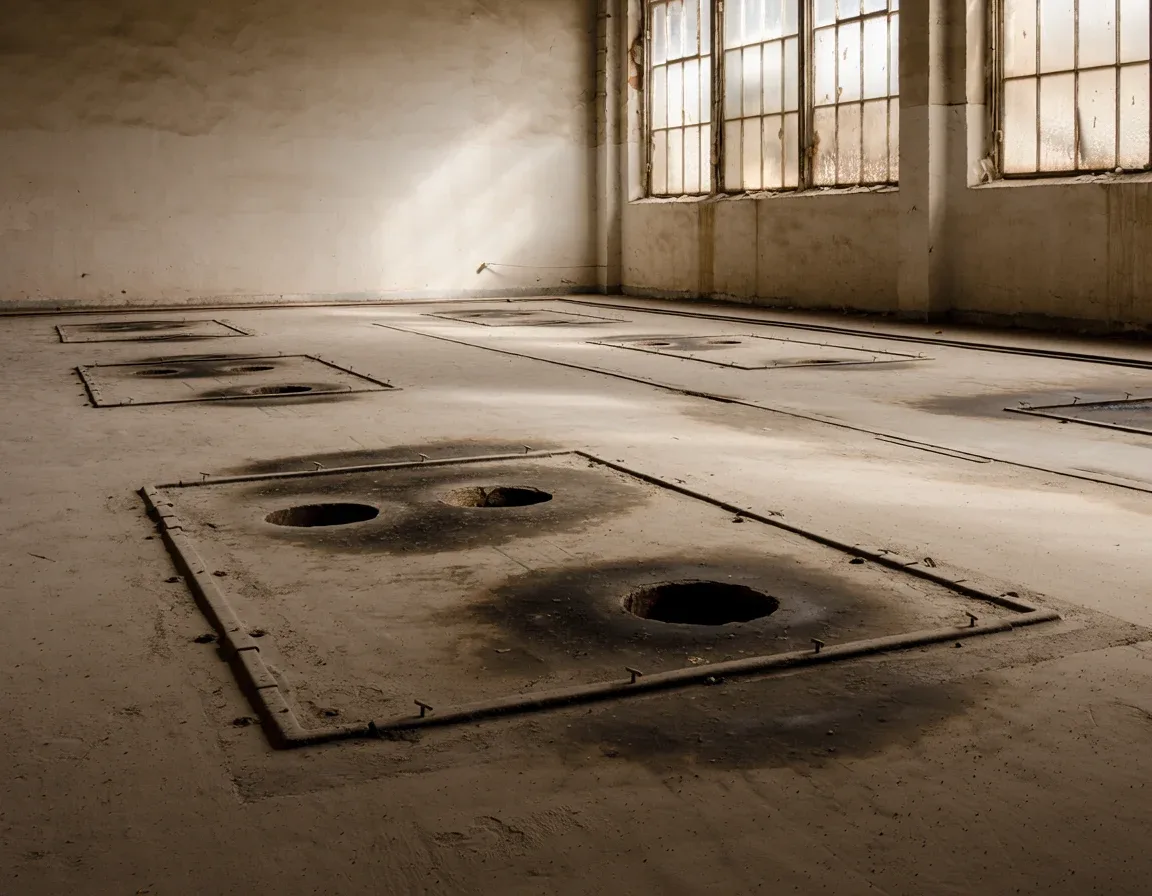
A concrete floor that has worked for fifteen to twenty years carries its past: the line the forklift uses every day has turned into a light-colored road, a dark oil shadow remains where an old machine once stood, once scratched yellow stripes have been ground in places, and a patch in the corner that no one remembers. The first question of a business that has taken over or been using such a floor for years is usually the same: should this floor be broken and repoured? Most of the time, the answer is no. In this article, we explain the typical problems of old concrete floors, which ones the renovation solves and which only alleviates them, why the repair started, the stages of the renovation, and the trial area that allows you to see the result from the start.
In short: A solid old concrete floor with a solid body can be renewed without breaking; what is renewed is the worn top layer. Dirt on the dust, wear paths, and surface largely disappears; deep oil shadows, patches, and casting differences remain visible by lightening. The result is not a freshly poured single-color floor, but a clean, firm, and easy-to-maintain old concrete.
First, Reading the History of the Floor: Three Layers
The aging part of a concrete slab is the thin layer at the top. Traffic, chemicals, and improper cleaning wear down this layer, open its pores, and make it dirty; the underlying body is often harder and drier than the day it was poured. Surface renewal is based on this fact: the worn layer is removed by machine, the solid concrete underneath is exposed, and it is treated as a surface to be reused. The floor does not break, nor does a new layer come on top.
Dividing what you see when looking at an old floor into three layers makes it easier to predict both the scope of the work and the outcome in advance. These layers are:
- Surface fatigue itself: Dust and wear pathways arise from the depletion of the top layer of concrete; these are the problems that renewal addresses directly and almost without leaving a trace.
- On top of that, what came later: Residues such as oil, paint, lines, and adhesives settle on the surface or pores; some are completely removed, while those that go deeper remain as shadows.
- Damages and old repairs: Cracks, pits, broken joint edges, and patches made over the years do not heal with surface treatment; they are first repaired and eventually remain more or less visible.
This path is not open to every old floor. If a thin screed thrown on top of the load-bearing slab lifts like a shell, if the concrete crumbles deeply, if the slabs settle and form steps in the joints, or if the floor constantly receives moisture and salt from underneath, treating the surface does not solve the problem. In such cases, a civil engineer or insulation specialist should first evaluate it; the surface work is only discussed after that.
Dust and Wear Pathways: The Surface Wears Themselves
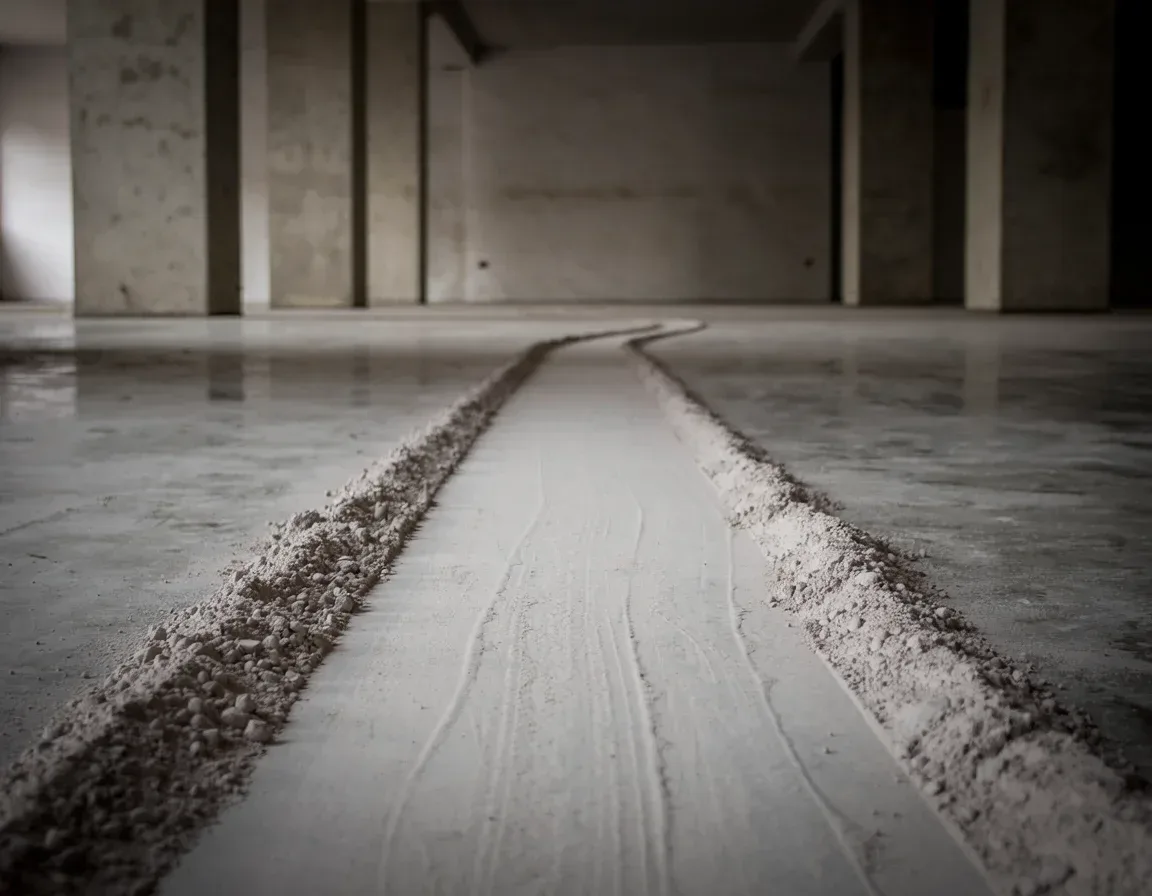
The most common complaint about old floors is dust. The swept floor is powdered again the next day; vehicles, products, and shelves are covered with a thin gray layer. This dust does not come from outside; it forms by grinding weakened cement paste under the wheels. The causes can go back to the day of casting or appear later with years of wear; details and on-site tests Why does the concrete floor dust in the article We explained.
Wear paths are a map of dust. On lines where forklifts, pallet trucks, or vehicles always follow the same path, the top layer is exhausted; a light-colored, rough, and slight pit appears around the road, exposing fine grains of sand. Wear is deeper at turning points and in front of doors. The bottom of the walls and under the shelves are almost completely unworn; two different surfaces stand side by side on the same floor.
Renovation directly addresses these two problems. When the weak layer is removed, the dust source disappears; the hardener impregnated on the exposed surface tightens the concrete and prevents it from dusting again. Areas protected by wear paths are brought to the same plane and texture. The color difference decreases, but a slight tone difference may remain where the concrete is opened at different depths.
Stains, Old Paint and Adhesive Marks
The second layer of aged flooring consists of those that come later. Each of these behaves differently in renovation, and some must be addressed separately before starting work.
Oil is the most stubborn. Oil dripping for years under machines, in car parks, and maintenance points penetrates deep through the pores of the concrete. Surface treatment removes the dirty layer above, but the oil inside stays in place and continues to appear as a dark shadow. Moreover, the oily surface scrapes the machine's diamonds and prevents the hardener from penetrating the concrete; therefore, the oil is absorbed as much as possible with solvent and absorbent pores before renewing. Methods by stain types Oil, rust, and paint stains on concrete floors in the text We collected them.
Old floor paint, corridor lines, and peeled coating islands are the second group. Thin paint and lines are removed during the first passes of the renovation; however, since the paint ages differently from the concrete surrounding it has covered for years, the line is sometimes chosen as a pale shade. Thick epoxy and similar coatings are a separate dismantling task; the method and any surprises that may emerge from underneath In our article on removing old epoxy and floor paint We explained.
The third group is seen on floors that were once covered: marks left by carpet, vinyl, or tile adhesives, leveling mortar residues, tape residues. The adhesive layer is removed by machine; however, dark lines shaped like comb marks may remain where the adhesive penetrates the concrete. How much of these marks will disappear can only be understood by trying.
Patches, Cracks, and Joint Edges: The Work Starts with Repair
A list of repairs to be done before starting to treat the surface on an old floor is always available. Anchor holes from dismantled machines, pits drilled by impact, joint edges broken by wheels, loose joint fillers, and cracks opened over the years are the usual items on this list. These do not hide defects made without repair; on the contrary, they make them more visible in the middle of a clean and smooth surface.
Order is important in repair. Fill and repair mortars are left slightly protruding from the surface and leveled with the ground during renovation; if repair is left until the end of the work, this possibility is lost. How to tell if a crack has moved In the article on crack repair on concrete floors, mortars used for the pit and joint edge In the article on pothole and joint edge repair You can find the details.
A unique subject of old floors is the previous patches. Over the years, repairs made by different craftsmen with different materials reveal themselves one by one when the surface is opened. Solid ones are left in place and processed together with the floor; patches that have separated from the edge, are loose sound, or crumbly are removed and remade. Which patch will remain is decided not by its appearance but by its strength.
Honest Expectation: Old Concrete Won't Be a Single Color
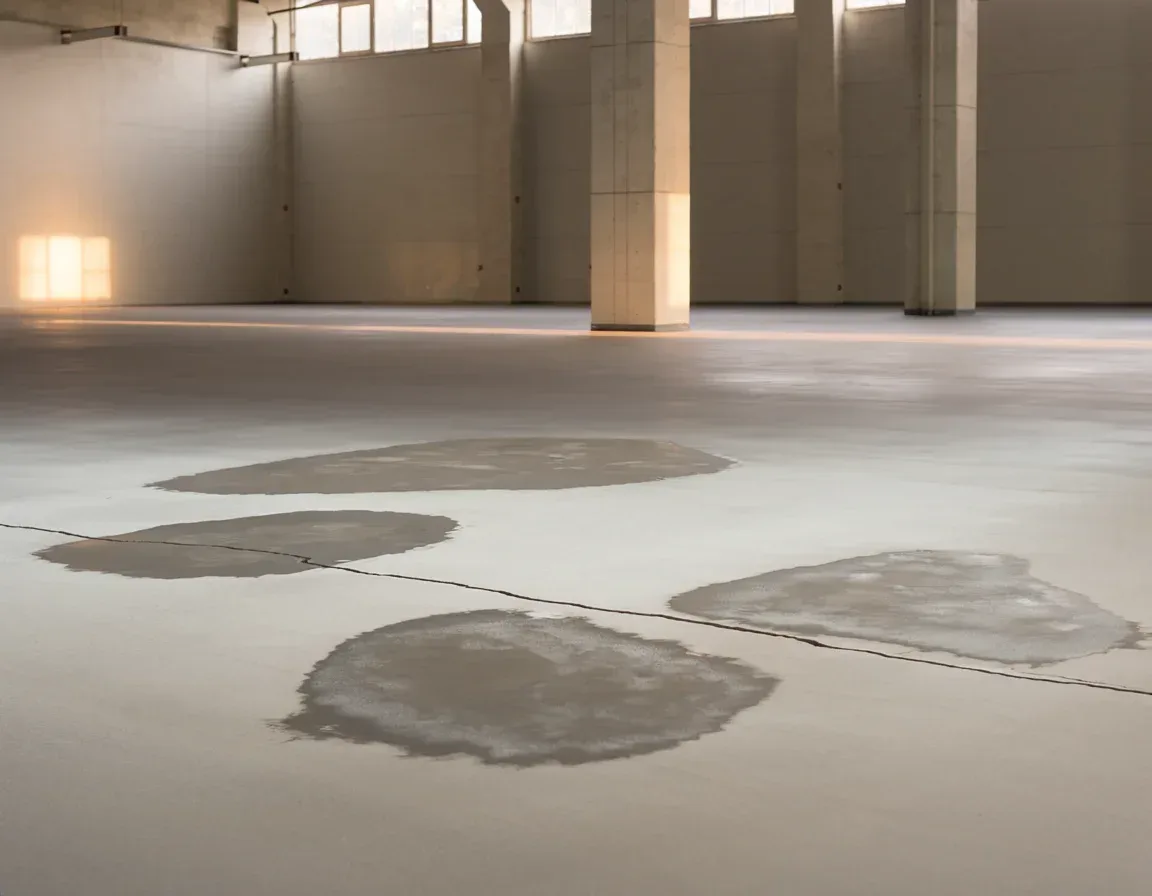
Setting expectations correctly without renovation is as important as the work itself. When you process old concrete, what you get is not a newly poured, flawless gray floor; it is a clean, tight, and easy-to-maintain floor with a readable history. Sections poured on different days appear in different shades, patches appear as patches, and filled cracks remain fine lines. This appearance is not a problem for many warehouses and workshops; in areas where the appearance is prominent, it should be discussed from the start.
On the other hand, there are also those who have definitely changed the old ground during the renovation:
- Powder finishes: When the weak layer is removed and the surface is tightened, the floor stops producing its own dust; gray powder that reaches shelves, products, and vehicles is cut at the source.
- Cleaning becomes easier: The narrowed surface does not attract dirt to the pores; sweeping and machine washing take less time, and the spilled liquid stays longer on the surface.
- The floor is illuminated: Since the processed surface reflects light more evenly, the area appears clearer and tidier under the same lighting.
- Driving improves: Repaired joints and filled pits reduce the shake of the forklift pallet truck; this is a gain from the preliminary repair, not the surface work.
The table below summarizes what is done before renovation for common problems on old flooring and what kind of mark can ultimately remain.

| Seen on the old ground | Done before renewal | The mark that may remain in the end |
|---|---|---|
| Dust and wear paths | No separate preprocessing is required | Slight tonal difference in place of the roads |
| Deeply ingrained fat | Pulling with solvent and absorbent cloth | Dark shadow; may reappear over time |
| Fine paint and lines | Lifts on the first container pass | Faint line shadow |
| Thick coating residues | A separate dismantling job | Darkness in areas where the primer is worked |
| Adhesive and leveling residues | Machine removal of the sheet | Spots in the form of comb marks in places |
| Cracks and loose joints | Filling; flooding is left and scraped off | Visible fill line |
| Pit and broken joint edge | Rebuilding with repair mortar | Patch in different tones |
| Old patches | Durability check, renewal of the decayed | Islets of different colors |
| Differences between casting and finishing | No pre-processing | Tone difference between sections |
How much the appearance is restored also depends on how much the surface has been treated. In old industrial floors, a matte or satin finish is often preferred; since high gloss reflects light sharply, tone differences and repair marks are more pronounced. If a single color and a flawless surface are required, a suitable coating system should be considered instead of treated concrete.
Four Phases of Renovation
Renewing an old floor proceeds differently from polishing new concrete; the weight of the work falls on the head, not the end. The process that craftsmen call grinding, where the surface is gradually thinned with diamond-tipped machines, is only one part of these stages. The entire work roughly follows the following sequence:
- Opening: The oil is dissolved, paint and adhesive are removed, the weakened and dirty top layer is removed with rough diamonds; at the end of this cycle, the true condition of the floor is seen as a whole for the first time.
- Repair: Cracks, pits, joint edges, and rotten patches appearing on the exposed surface are repaired; the time required for the materials to harden is rewritten in the calendar.
- Tightening: The surface is smoothed with thinner diamonds, hardener is impregnated into the concrete, and several more steps are processed until the desired appearance is achieved; this is the main step that cuts off dust.
- Protection: A protective agent that delays liquid absorption is applied to the cleaned surface, the floor is checked together, and a written maintenance instruction is left for the cleaning team.
The first two phases on old soil take up a significant portion of the total time, and the most surprises occur here. Therefore, estimates of time and extent given based solely on square meters are misleading in old concrete; it is not correct to speak definitively without seeing the condition of the ground.
Testing Ground: Starting from the Worst Corner
A reliable way to predict the outcome in old concrete is to work a small section on the floor from start to finish. On new floors, the test area often opens in a visually pleasing corner; on old ground, we recommend the opposite. One test opens at the worst spot of the floor, where the oil stain, old paint, and patch are present; the second opens in a typical section that resembles the overall area.
The worst corner shows how much stains will remain, how patches will look, and how deep the weak layer goes. A typical section gives an idea of how much of the floor will look and how quickly the work will progress. When the contractor sees two areas side by side, they set their expectations not with words but with eyes; the bid is based on the result achieved in that concrete, not an assumption. Trial areas are preserved until the work is finished, and each finished section is compared with them.
Renovation in the Used Building: Segmentation, Dust, and Seasons
Almost all of the old floors are filled and in working buildings. Therefore, the work proceeds section by section: a corridor or a hall is emptied, processed, opened for use, and the next section is moved on. The section boundaries are set to joints so that the joints of surfaces finished at two separate times remain within a natural line. If the renovation is done by the dry method, the machines operate connected to industrial dust extractors; in the wet method, the resulting sludge is collected and not discharged into the drains.
The effect of the season in the Mediterranean climate is limited but real. In Antalya, Mersin, and Adana, concrete heats significantly in the halls under the roof during summer heat; since the hardener and protective dry very quickly on the hot surface, these applications are carried out early in the morning or at night. During winter heavy showers, the door entrances and water-exposed areas are waited until they dry. In service areas and parking lots of tourism facilities, work is often placed off-season, while in production facilities, work is placed on an annual maintenance stand.
When setting out for your old floor, the approximate size of the area, what the building was used for in the past, and photos of the worst-looking spots service request form You can transmit it to; after the preliminary assessment, we will determine the trial areas together on site.
Asking about the building's history

The first question of discovery on an old floor is not technical: what was done in this building before? The answer largely tells us what you will encounter when the surface is opened. An old auto service or lathe shop means deep oil. A section once used as an office means carpet glue, while an old paint shop means pigment embedded in concrete.
This information is often lost in tenant changes. A few sentences learned from the landlord, former employees, or neighboring businesses determine where trial areas will open and how much time will be left in the calendar.
The Invisible Advantage of Aged Concrete

Old concrete is not as disadvantageous a material as it is commonly thought. To start work on a freshly poured floor, the concrete is expected to gain strength and dry; aged concrete has already completed this process. Shrinkage cracks have formed and most have stopped; therefore, the likelihood of repaired cracks reopening is lower.
Well-poured concrete also continues to harden over the years. When the worn crust of such a floor is removed, the surface emerging from beneath is often firm and absorbs the hardener properly. The real cost of aging is paid not in strength but in visible marks.
Have the test area opened not in the best corner but in the worst corner on old concrete. If the result you see there is acceptable, the rest of the floor will not surprise you. — Expert Note
Frequently Asked Questions About Old Concrete Floor Renewal
01Does the renovation also fix waves and elevation differences on the old floor?
02Wouldn't it be easier to lay a thin screed on top of the floor?
03Do stains return over time after renovation?
04Do two sections that were cast in different years look the same when renewed?
05What should be done if rails, profiles, or closed channels are embedded in the concrete on the old ground?
06We do not have the ground project or the casting information; still, can the work be planned?
Related Articles
Why Does a Concrete Floor Dust Out? Causes and Diagnosis of Surface Weakness, Removing Old Epoxy and Floor Paint and Turning Into Concrete, Crack Repair on Concrete Floor: Separating Moving and Immobile Cracks, Concrete Floor Cleaning and Renewal: In Which Situation Is It Necessary?, Concrete Clearing Stages: Step-by-Step Process from Discovery to Delivery