Concrete Floor Cleaning and Renewal: In Which Situation Is It Necessary?
When the concrete floor of a warehouse of thousands of square meters, a multi-story parking lot, or a production hall starts to look gray, stained, and dusty, two options arise: to have the floor thoroughly cleaned or renewed. The two do not replace each other; one takes what is above the surface, the other replaces the surface itself. Repeatedly washing a worn floor does not yield results; renewing only a dirty floor is an unnecessary expense. There is another thing that makes the work difficult in large areas: one part of the same floor needs cleaning, another part needs renewal. In this article, we explain the difference between the two jobs: reading by dividing the floor into zones, what is needed in which area, the order of the work, and the trial zone that finalizes the decision.
In short: Dirt coming from outside to the floor is removed through cleaning; the surface that disappears from the floor, that is, wears and dusts, can only be recovered through renovation. In large areas, the correct question is not which is needed, but which is needed in which area. The answer lies in comparing the traffic path with the protected concrete left under the shelves and conducting a brief test under use.
Two Separate Problems: Incoming to the Ground and Leaving the Ground
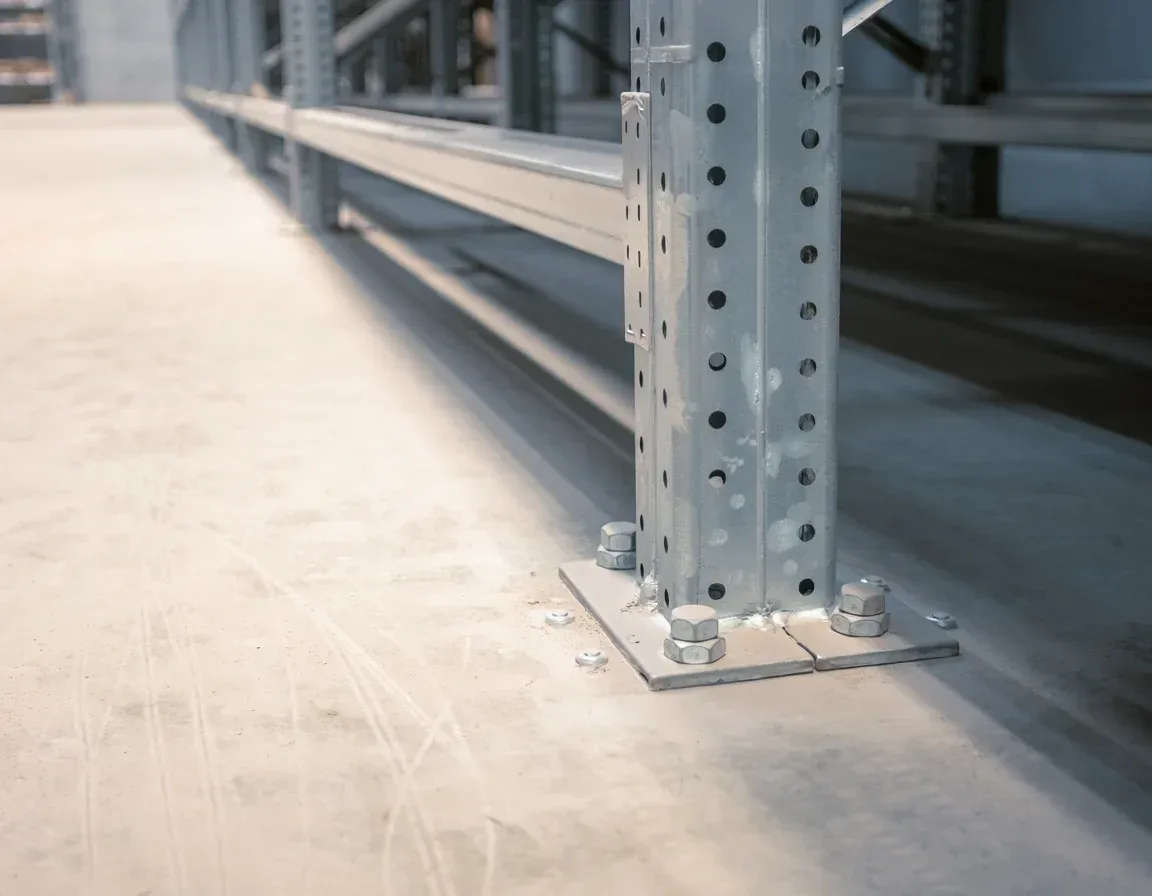
From the outside, concrete looks like a single piece of stone, but its surface is porous, and the top thin layer consists of a weaker cement paste compared to the body. Everything that happens to the floor is in this layer. What we call dirt settles on top of the layer or settles in its pores: dust, mud, rubber residue, oil film, detergent residue. Wear happens on the layer itself: the cement mixture wears down, loosens, forms dust like flour, and sand grains beneath it are exposed. In one, something has landed on the floor, in another, something has fallen off the floor.
Cleaning removes what comes later to the ground; it does not diminish anything from the concrete or add anything to it. Renewal, on the other hand, removes the worn top layer with a machine, exposes the solid surface underneath, and tightens it. Therefore, the results of the two tasks are different. The cleaned floor returns the concrete to its original state; if the concrete is solid, this is more than sufficient. The renewed floor becomes firmer and easier to clean than on the first day.
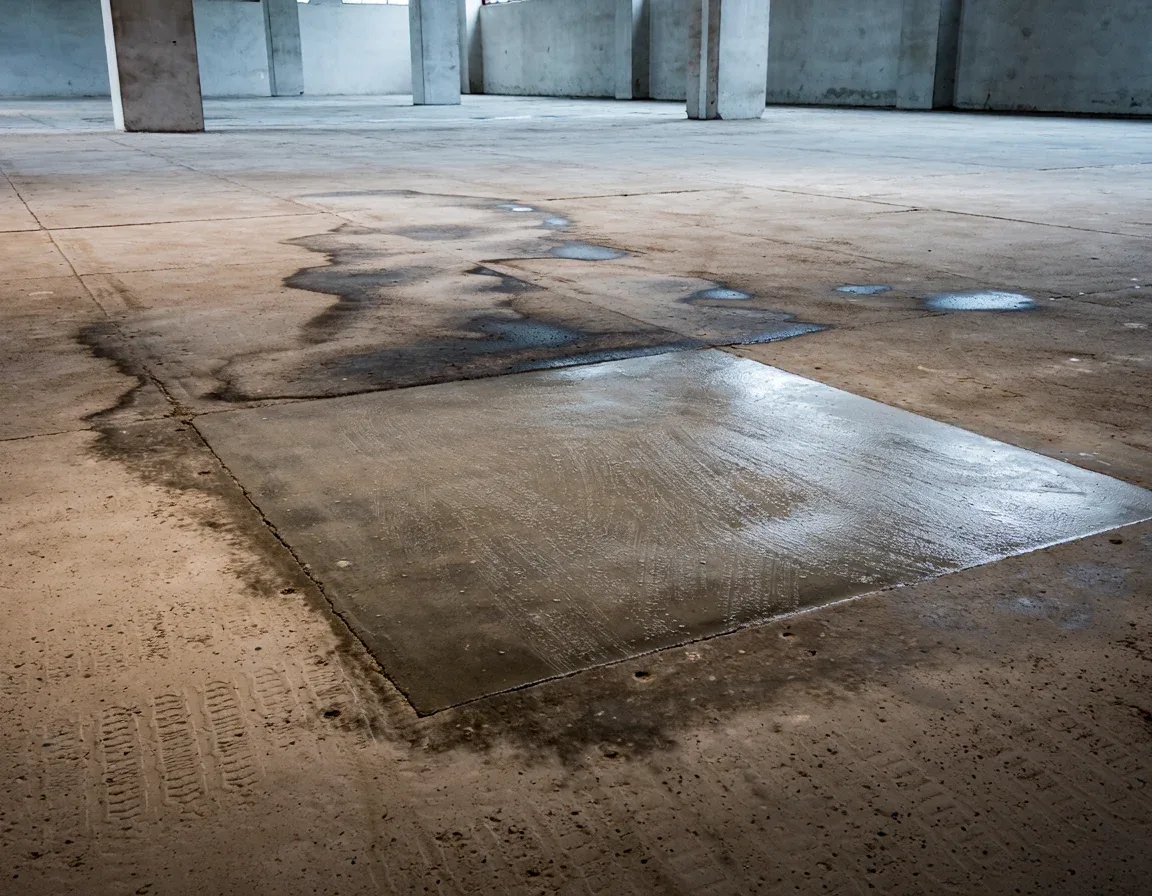
Confusion arises from the two situations giving the eye the same appearance. A gray mist can come from either unswept dust or a self-grinding surface. A dark area can be either a wipeable oil film or a deeply ingrained stain years ago. It is impossible to distinguish by looking from a distance; the ground must be examined area by area and closely.
The floor is not a single piece in a large area
In a small shop, the floor is either cleaned or renewed. In a large area, concrete poured the same day is divided into different areas over the years. The floor under the shelves remains as it was on the day it was poured, while the main corridor is worn down, the front of the loading door may have been roughened with rain and sand, and the battery charging area may have burned with acid. Therefore, looking for a single decision for the entire area is misleading.
The work starts with a simple ground map: places that behave differently to the ground are marked on the site plan. The areas that should be shown separately on the map are as follows:
- Traffic lines: Corridors and driveways where forklifts or vehicles follow the same path every day are the first and deepest places where wear is observed.
- Turning and braking points: At aisle heads, ramp bottoms, and in front of doors, the wheel spins by rubbing the floor; both tire marks and wear concentrate here.
- Door fronts opening to the outside: Loading doors and vehicle entrances receive sand, mud, and rainwater; these areas are both dirtier and rougher than inside.
- Shedding areas: Underneath machines, maintenance points, charging areas, and waste collection sites are areas exposed to oil and chemicals, often stained.
- Protected areas: The shelves, wall bases, and the bottoms of stocks that have been in the same place for years are almost never worn out and show the original state of the floor.
In a typical warehouse that has completed ten years in an organized industrial zone in Mersin or Adana, this map is often colored in three colors: large storage areas that only need cleaning, corridors and doorways that need renewal, joints and potholes that need repair first.
Comparing to Preserved Concrete: What Does Under-Shelf Tell You?
The last area on the map, that is, preserved concrete, is a valuable opportunity offered by large areas: the unworn state of the floor is still there and can be used for comparison. When you clean and dry a small section under a shelf or under a column and the traffic path right next to it in the same way, the difference between the two surfaces indicates the type of problem. The comparison is examined in the following order:
- Color: If the two areas become the same shade after cleaning, the road is only dirty; if the road remains distinctly open or variegated, the upper layer has changed.
- Texture: Run your hand over two surfaces; if the protected concrete is flat and firm, and the road is sandy and grit-grained, it means the cement mixture is worn down.
- Level: Place a flat batten or gauge on top of the road; if a groove matching a wheel track is visible underneath, wear has reached a level that can be measured by the eye.
- Powder: Sweep both areas on the same day and wait one day; if gray powder accumulates again on the road while the protected area remains clean, the dust must come from the ground itself.
If the difference is only in color and is closed by cleaning, the task to be done for that area is cleaning. If there is a difference in texture, level, or dust, the surface is worn and cleaning cannot restore it. Causes of dust and more detailed field tests Why does the concrete floor dust in the article We explained.
Only Contaminated Areas: What Cleanup Has Taken
If the concrete surface is solid, no matter how dirty the floor looks, cleaning with the right method will fix it. The main situations solved by cleaning in large areas are:
- Construction and renovation remains: Gypsum dust, paint splatter, mortar dishes, and site mud sit on the concrete; scraping, brushing, and thorough rinsing remove the floor without damaging it.
- Tire and wheel tracks: The black stripes left by vehicles and forklifts at turning points are rubber stuck to the surface; an alkaline cleaner often comes off completely with a short wait and brush.
- Fresh oil and daily shedding: Oil that has not yet penetrated deeply can be removed with absorbent material and degreaser; if the same stain waits for months, it settles into the pores and exceeds the limits of cleanliness.
- Accumulated detergent and dirt film: Cleaners used in excessive doses for years and not rinsed off cover the floor with a dull, sticky layer; repeated machine washing with clean water exposes the underlying concrete.
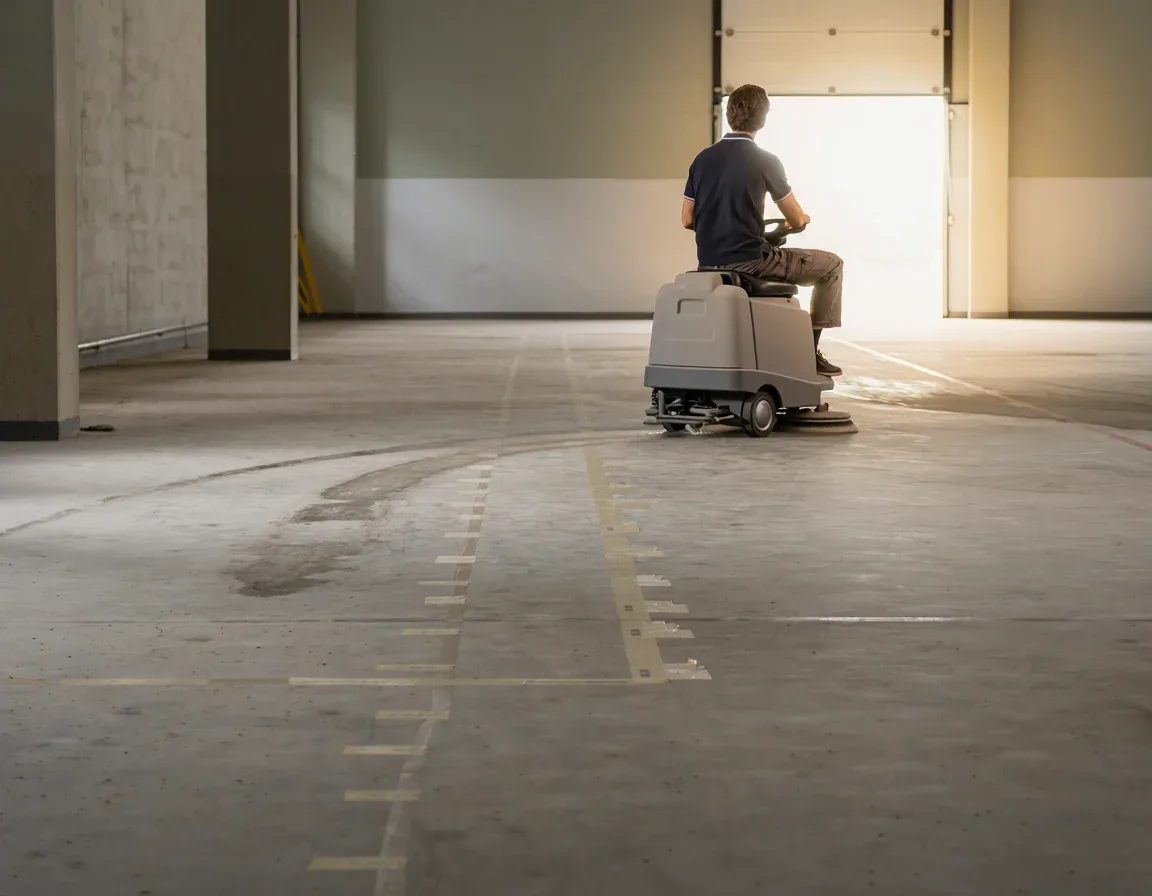
Here, by cleaning, we do not mean mopping with a mop but a job suitable for the scale of the area: first the sweeper, then the brushed floor washer, and if necessary, a special pretreatment for the stain. The selection of machines, brushes, and detergents, as well as what to pay attention to to ensure the cleaning does not damage the floor In the article on factory and warehouse concrete floor cleaning We examined it in detail.
Worn Areas: Signs That Cleaning Is Not Enough
In some areas, no matter how much the machine passes, the result takes several days; because the source of what you think is dirty is the concrete itself. The following signs indicate that the surface is worn down and cleaning alone is not the solution:
- Gray dust returning as it is swept up: If the corridor is swept in the evening and again powdered in the morning, the dust is not being carried away from outside; the weakened cement paste is being ground under the traffic.
- Color and texture differences on traffic roads: If the lines continuously passed by vehicles appear as light-colored, rough, and slightly potholes, the upper layer is worn down and the sand beneath is exposed.
- Peeling paint and coating residues: Peeled floor paint or old coating islands cannot be fixed with cleaning; the remaining film is either completely removed or the floor continues to be patched and visible.
- Deeply penetrated dark spots: Even when aged oil and chemical stains are cleaned from the surface, they remain in the pores and darken again after a while.
The common point of all these symptoms is that the problem lies not above the surface but inside it. Damage such as cracks, pits, and broken joint edges is neither a subject for cleaning nor a single renewal; these are repaired first.
What Does Regeneration Mean? Let's Open the Word Erase
When it comes to concrete floor renewal, most people think of breaking the floor and repouring it or covering it with paint or epoxy. However, in concrete with a solid body, none of these are the most commonly used methods. In what craftsmen call grinding, the surface is gradually thinned with heavy diamond-tipped machines; the worn layer is removed, a hardener that tightens the concrete is absorbed onto the exposed solid surface, and if desired, the floor is treated to a slightly glossy appearance. Since no layer is added on top, nothing remains to peel. The logic of the process and which concrete it can be applied to What is a concrete sieve in the article We explained it from the beginning.
There is no single length of renewal. On a slightly dusty but solid surface, deep cleaning and hardener soaking may be sufficient. In a worn and stained area, the surface needs to be treated in several stages. On a patched and cracked floor that bears the marks of years, the work starts with repair; this comprehensive condition In the article on how to renew old concrete floors We also covered. The table below summarizes which job is often needed in typical areas of a warehouse, factory, or parking lot.

| Region | Common situation | Most of the time, the work that is needed |
|---|---|---|
| Under-shelf and long-term storage space | Dust accumulated, solid surface | Sweeping and periodic washing |
| Large intermediate stock areas | Dirt film, patchy palette marks here and there | Machine deep cleaning |
| Main corridor and driveway | Light color, roughness, continuous powder | Renovation: surface treatment and strengthening |
| Turning and braking points | Tire marks; there may be wear underneath | First, cleaning, then inspecting the surface once the scar is left |
| Loading door and ramp front | Sand etching, wetting, broken joints | Joint repair and a more matte finish renovation |
| Under-machine and maintenance point | Old oil shadow | Stain removal, then renewal; may leave scars |
| Battery charging area | Surface roughened with acid | Removal of the weak layer, chemical-resistant coating |
| Parking pockets in the parking lot | Oil droplets and dirt | Stain intervention and deep cleaning |
| Ramp and outfield | Wear, algae, oil | Cleaning; if necessary, a rough renovation |
The table is a starting point; two regions with the same name can differ in two separate facilities. The decision should be made not by the table, but by the comparison made in that region.
Putting Things in Order: Which Region First?
Dividing into zones makes the budget and business downtime manageable. The queue is usually set up as follows: first, repairs affecting safety and vehicles are made, then the main lines producing dust are renewed, the remaining area is regularly cleaned, and queued as needed. Thus, the problem, which causes many complaints, is first cut at the source.
The order of cleaning and renovation is also important. If the stock area around the corridor to be renovated is not cleaned beforehand, dust and sand carried from there will settle on the new surface. Therefore, in large areas, two tasks are carried out within the same program, region by region and by monitoring each other.
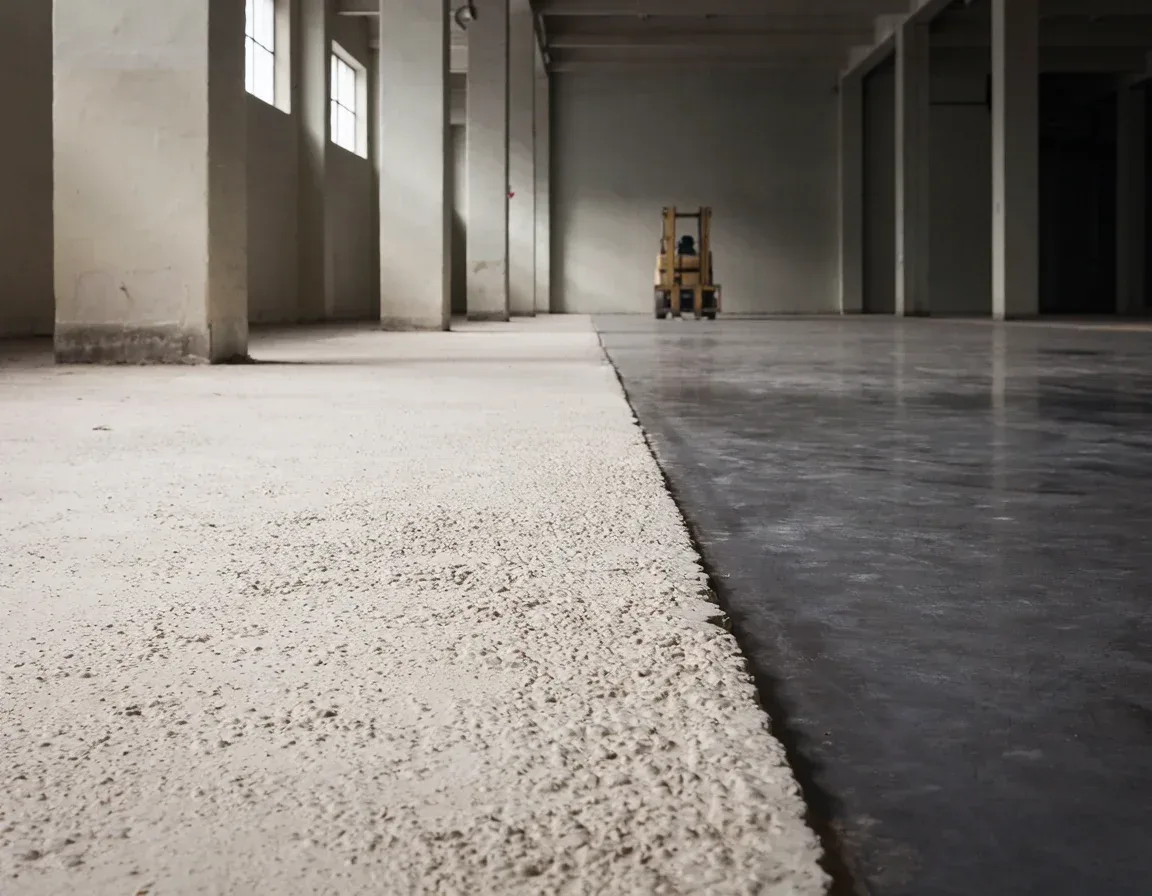
Another point to pay attention to is appearance. When the renovated section and the untouched section are placed side by side, there is a difference in tone and brightness. If the boundary is left not randomly but at a joint or corridor line, this difference is not seen as a defect but as a section separation. In Mediterranean coastal facilities, the schedule is also taken into account: parking lots and service areas of tourism facilities become suitable for operation when the product season ends.
Trial Zone: Seeing the Decision Below Usage
A map and comparison provide a direction; the exact answer is given by the floor while working on it. For this, a single plate section is selected and renewed from joint to joint in a dense corridor: the surface is treated in several stages, hardener is applied. The rest of the corridor is subjected to only deep cleaning. Then the section is opened to normal traffic and monitored for several weeks.
Things to look for during monitoring do not require a measuring tool. Dust collected by the sweeper from two sections, powder falling onto shelves and products, how easily tire marks are removed, and how many days the floor stays clean after washing are all noted. In some floors, the difference between the two sections turns out to be smaller than expected, and the renovation is postponed; in others, the cleaned section quickly returns to its original state and the decision becomes clear automatically. The test also shows how many stains will remain after the renovation, what tone the concrete will come out, and how quickly the work will progress; thus, the offer is based not on assumptions but on the observed result.
What Your Own Team Can Do and What Experts Require
Most cleaning can be done by the business's own team and machine; as long as the order and product are correct. Sweeping, machine washing, intervention in fresh spills, and drain cleaning fall into this category. Renovation requires heavy machinery, diamond tools, dust or mud management, and experience; fixing a surface opened with the wrong step is harder than doing it correctly. Deep stain removal, old coating removal, and repairs are also expert work.
When cleaning with your own team, a few safety rules apply at every scale:
- Do not mix products together: When bleach is mixed with acidic or ammonia-containing products, toxic gases are released; each product should be used alone, in the proportion on the label, and in its own container.
- Ventilation and protective equipment: When working with degreasers in closed parking lots and storage areas, ventilation should be kept on, and chemical-resistant gloves and protective goggles should be used.
- Marking wet floors: Washed concrete is slippery especially when oil or detergent is on top; the area should be closed to pedestrian and vehicle traffic until dry, and visibly encircled.
- Avoid acidic products: Limescale remover and salt spirit do not clean the concrete; it dissolves its surface; the color that lightens in the short term returns to dust and roughness in the long term.
If you are unsure which path is right for your floor, take a plan or approximate measurement of the area and a few photos from different regions service request form You can convey it through it. It clearly states this where cleaning is sufficient, for areas that need renovation Our Concrete Floor Renewal Service We recommend a trial zone within this scope.
Why Can the Floor Look Stainier After Cleaning?

Deep cleaning sometimes gives an unexpected result: the floor is cleaned but looks more mottled than before. This is because the accumulated layer of dirt over years paints the entire surface the same gray, hiding the differences. When dirt is removed, old oil shadows, tonal differences in sections spilled on different days, patches, and worn paths appear.
This image does not show that cleaning failed, but rather the actual condition of the floor. A healthy decision is only made after this stage. Before requesting an inspection for renovation, at least one section must be thoroughly cleaned so that both parties can see what they are facing.
First a major cleaning in the acquired warehouse, then a decision

If you have just taken over a warehouse or production building, you don't have to decide about the floor on the first day. Dirt, tape, and scratch residues left by the previous user cover the real condition of the floor; a hastily requested renovation offer also carries this uncertainty.
A healthier way is to have a thorough cleaning done throughout the entire area before moving and to use the floor with your own traffic for a few weeks. During this time, it becomes clear which corridor has dusted and which stain has returned. If renovation is needed, the scope is no longer the entire area but the already established areas.
Do not look for a single decision for the floor in a large area; measure the protected concrete under the shelf. If the traffic road is separated only by color, cleaning is needed; if it is divided by texture, it needs renewal. — Expert Note
Frequently Asked Questions About Concrete Floor Cleaning and Renovation
01Do we need to have the floor cleaned before the inspection?
02If we try cleaning first and then decide to renew, will the effort spent on cleaning go to waste?
03Can the renovated corridor and the only cleaned warehouse area be cleaned with the same machine?
04Does the tone difference between renewed and untouched sections close over time?
05Who should create the ground map?
06How often should the floor be deeply cleaned?
Related Articles
What is Concrete Plastering? The Path from Dusty Screed to Polished Concrete, Why Does a Concrete Floor Dust Out? Causes and Diagnosis of Surface Weakness, Factory and Warehouse Concrete Floor Cleaning: Machine, Frequency, and Common Mistakes, How to Renew Old Concrete Floors? Dusty, Stained, and Worn Surfaces, Concrete Floor Polishing: Turning Matte and Dusty Concrete into a Glossy Floor