Site and Residence Parking Floor Renewal: A Guide for Managers
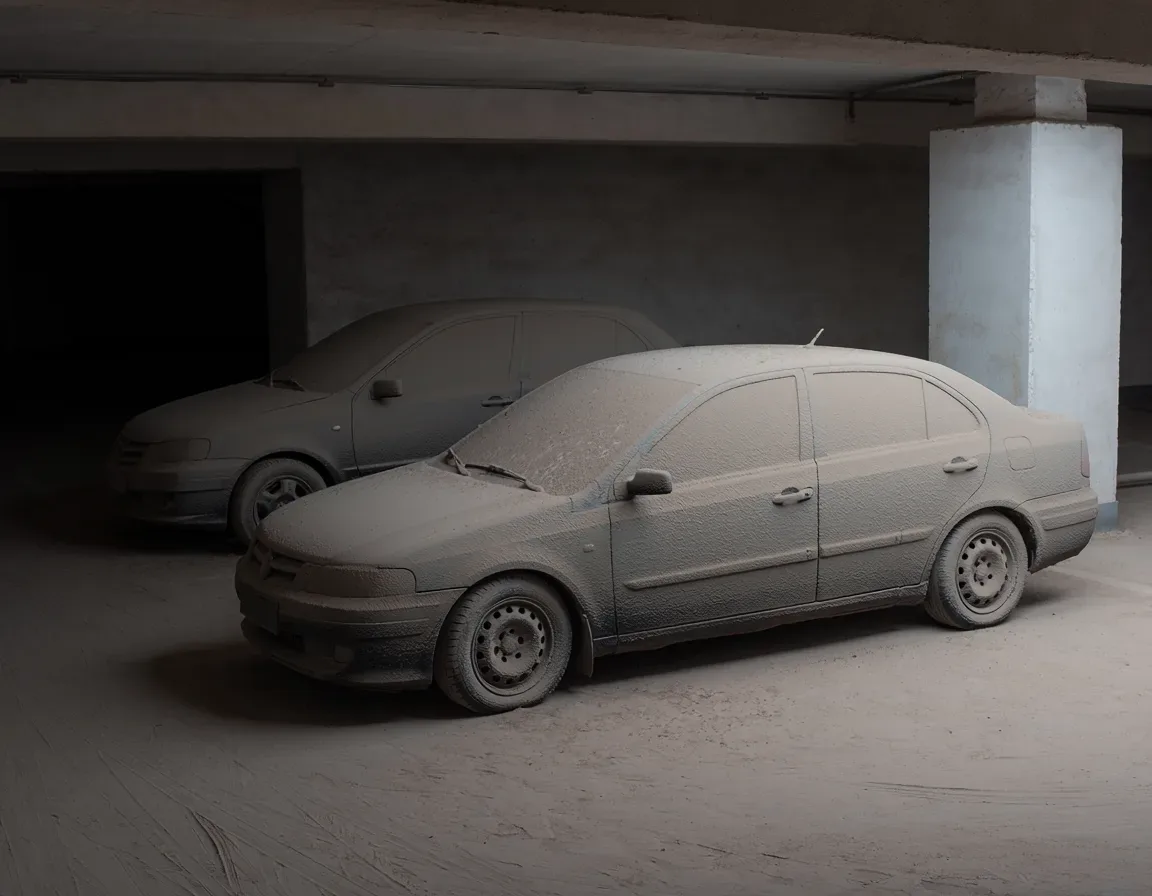
Floor renewal in site and residence parking lots is a management task before a technical task. It is the company's responsibility which machine and steps to use to wipe the concrete; it is the manager who brings the matter to the board, creates the budget, gets hundreds of vehicles to the right place on the right day, and takes over the job. A poorly executed process can make even a carefully done ground work unsuccessful in the eyes of the residents. This guide explains the steps the manager will take from the first day the complaint is raised until the day the acceptance report is signed.
In short: First, document complaints with photos and plans, then bring the matter to the condominium owners' assembly with an inspection report and comparable offers. For the legal aspects of the decision and budget, consult your management plan and an expert. What determines the job itself is the announcement, unloading of vehicles, and block-by-block schedule; make written acceptance upon delivery and start the maintenance plan the same day.
The Role of the Manager: Not Technical Decision, but Process Management
The manager is not expected to be a concrete expert. The company decides which number to start with or which hardener to use for the diamond and bears responsibility for that decision. The manager's field is different: defining the scope of the work, comparing companies to the same standard, informing residents on time, maintaining the schedule, and knowing what is being signed upon delivery.
This distinction protects the manager when a dispute arises. Leaving a written mark at every stage—that is, the board decision, proposal file, announcements, daily notes, and acceptance minutes—is the answer to questions that will be asked later, "why this company, why this date?" Making decisions by sharing them with board members and the auditor also makes it more than a single person's choice. If you wonder what and why is being done on the ground side, the technical framework Covered parking floor renovation You can find it in the article.
Turning Complaints into Evidence

Residents describe the problem in general terms: the parking lot is very dusty, dark, dirty. The board requests concrete information when making a decision. Therefore, the first step is to record complaints received over several weeks by specifying date, place, and topic. At the same time, take a printout of the parking lot's floor plan and mark the driveways with heavy dust, puddled corners, grease-stained parking lots, cracks, and broken joint edges.
Photographs complete this map. Photographing the same points with side light shows dust and surface distortion much better than a shot taken from above. The gray dust picked up by a white cloth on the floor or the layer on a car parked for a week tells board members more than a lengthy explanation.
Each complaint points to a different matter, and separating it from the beginning helps when reading the offers:
- Gray powder on vehicles: It indicates that the top layer of concrete is weak; the solution is not paint but surface tightening with grinding and hardener.
- Ponding on rainy days: It is a slope or expense issue and cannot be solved by erasure; it should be treated as a separate item in the proposal.
- Ramp skid and slip: The ramp requires a surface different from a flat floor floor; it is not polished, but is worked with a separate method that increases adhesion.
- Shield paint and peeling coating: The old coating needs to be removed; the reason it is lifted, mostly moisture coming from underneath, also affects the new choice.
Board Agenda: Decision and Budget
Parking lots are common areas in most buildings. How decisions on repairs and renovations in common areas and how expenses will be distributed among the apartment owners are regulated in your site's management plan by the Condominium Ownership Law. The required majority of decisions may vary depending on the nature of the work; in complex buildings consisting of multiple blocks, which blocks consider the parking lot to be common areas also differ according to the management plan. This article is not a legal opinion: clarify which decision will be made in which committee and by which majority by reviewing your management plan, and if there is any doubt, consult an experienced lawyer in this field.
Go to the board with a file, not an empty agenda item. The file should include a problem map and photos, a brief status report written as a result of the inspection, offers received within the same scope, a proposed schedule, and what will continue if the work is not done. The decision text clearly includes the scope of the work, the upper budget limit, how the payment will be collected, and to whom the authority to sign the contract is given, reducing later objections.
On the budget side, we do not provide figures in this article because the amount varies greatly depending on the condition of the concrete, the amount of repair, and working conditions; these factors Factors determining the cost of concrete grinding We explained this one by one in the article. There are two points the manager should pay attention to: allocating a share in the budget for additional repairs that may arise when the floor is cleared, and setting the payment collection schedule in line with the work schedule. What we wrote for marble floors Renovation decision in apartment management The decision and budget logic in the article also apply to the parking lot.
Discovery Day: What to Show and Ask the Company?
The prerequisite for a comparable offer is that each company conducts an inspection with the same information. Provide each company with the floor plan, the marked problem map, the number of vehicles in the parking lot, water supply points, and the location of the electrical panel; state the site rules regarding working hours from the start. Visit not only the area near the entrance but all floors, ramps, drains, and storage areas together.
During the exploration, we recommend asking the following questions:
- Suitability of concrete: How did you check the hardness and humidity of the floor, do you see any areas that are not suitable for wiping or require separate treatment?
- Testing area: Could you do a trial of a few square meters before making a decision so that board members can see the surface to be obtained on site?
- Dust and sludge management: Which steps will be dry, which will be wet; what is the dust extraction system and how will the mud be removed from the building?
- Segmentation: In how many sections will the parking lot be operated, how many days will each section remain closed, and on which days will entry and exit be affected?
- Repair size: With which materials will crack, pothole, and joint edge repairs be done, and how will the quantity be measured and priced in the bid?
Request that the answers come in writing. A verbal "we will do that too" is the beginning of a scope discussion during the work.
Bringing Offers to the Same Scope
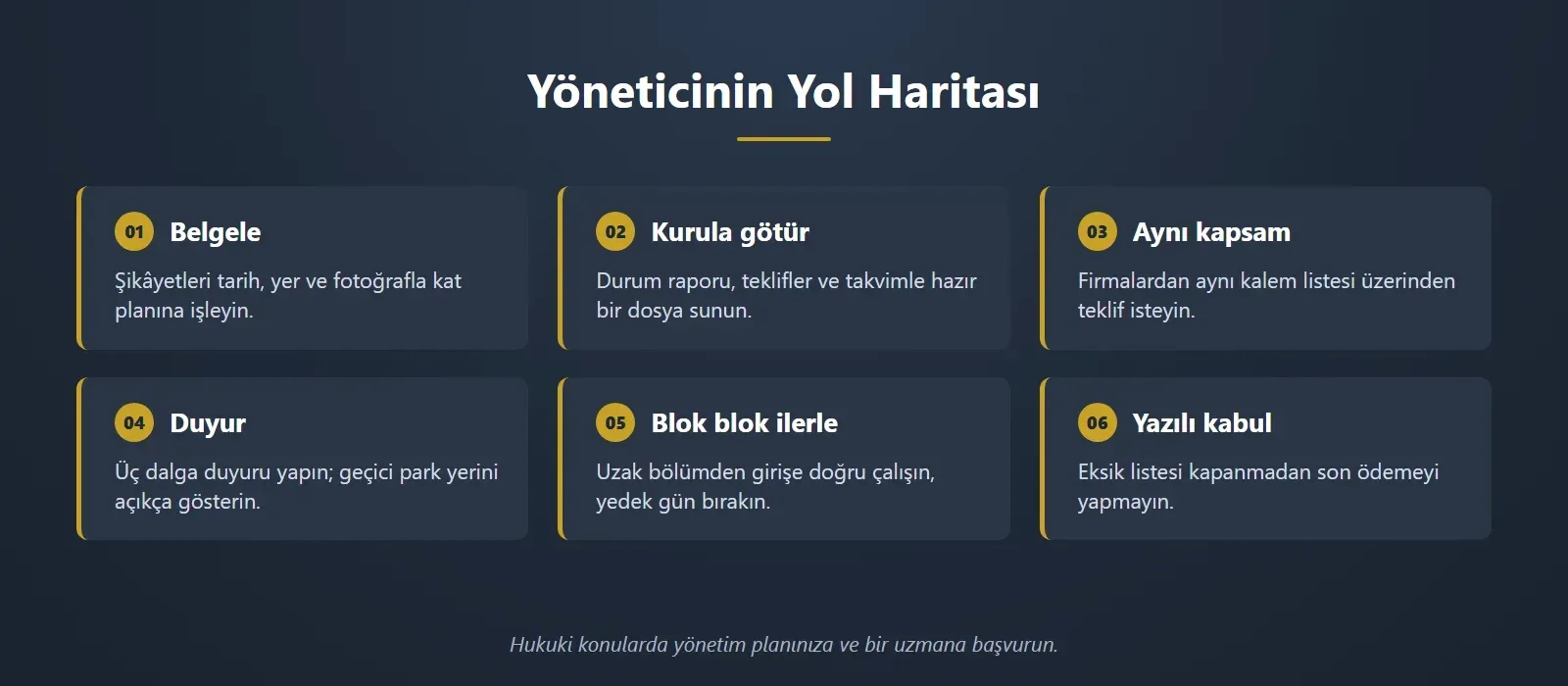
The difference between the two offers is often not a price difference but a difference in scope. One includes repair, edge work, and lines; the other only charges the erasure of the flat area. The manager's job is to request quotes from companies based on the same item list and have missing items completed. If you want to turn this list into a short specification Technical specification for floor cleaning The structure in the article can also be adapted for parking purposes.
The table below summarizes the items to look for in a parking offer and the risks arising if they are not listed:
| Scope item | What should be written in the proposal | Risk arising if not written |
|---|---|---|
| Area and boundaries | Is floor by floor including ramps and pedestrian paths? | Discussion of out-of-scope departments during work |
| Pre-cleaning and disassembly | Is oil stains and old paint a separate pen? | Additional fees or half results in stained areas |
| Repairs | Method and unit for cracks, pits, and joint edges | Irreparable erasure, rapid re-degradation |
| Grinder and hardener | Step sequence, hardener type, target finish | Skipped step, surface that continues to dust |
| Edge work | Column bases, wall edges, stopper bottoms | An unprocessed frame around each column |
| Lines and numbers | Is redrawing included, and with which paint | A parking lot that opens without lines and a second job |
| Waste, water, and electricity | Disposal of mud and dust, from whom the energy will come | Sludge poured into the drain, unexpected bill |
| Schedule and defect conditions | Section-by-section time, delay, and fault measures to be taken | Prolonged lockdown, uncertain responsibility |
In a significantly low bid, one of these items is often missing; before eliminating the company, ask about the missing item and request the completed version of the bid. How the selected bid will be converted into a contract and which clauses should be written Contract and warranty in the silencing business We explained in the article.
Vehicle Unloading and Announcement Plan
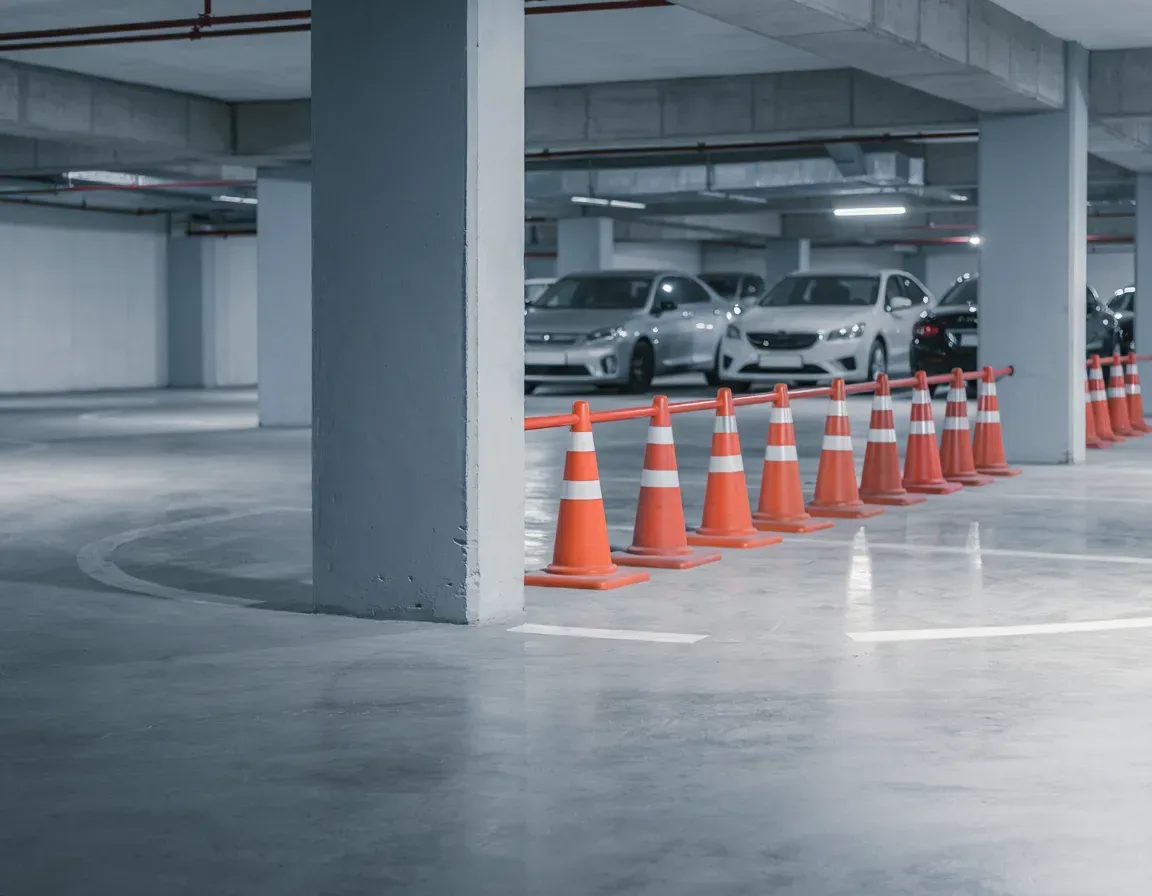
The most disruptive step in site parking works is one unrelated to the ground: unloading vehicles. Even a vehicle left in the section disrupts the work; the machine goes around it, an untreated island remains under and next to the vehicle, and the team has to return to that spot later. The cost of this is time and often additional fees.
Making the announcement in three waves works: a general notification about two weeks before work starts, a reminder a few days before the block and date, and a short note left at the relevant parking lots and elevators one day before. The board alone is not enough; the message group, email, and management software if available are used together, and the announcement is delivered not only to the owners but also to tenants. The following items show the information that should be included in a sample announcement text:
- The subject and rationale of the case: It is written in one or two sentences and with reference to the date of the decision that the parking lot floor will be renewed by board decision due to dust and stain problems.
- Date and time range: The day and time the department will close and at the latest when it will open are specified, along with the possibility of backup days.
- Covered section: Which block, floor, and parking number will be affected is written; if possible, a small sketch showing the section in color is added.
- Temporary parking space: Where vehicles should be parked on those days is clearly indicated, along with nearby areas reserved for disabled and elderly residents.
- Noise, dust, and pedestrian path: It is announced at what hours noisy work will take place and which elevator and stairs will be used to descend to the parking lot.
- Contact person: To whom questions and special situations such as key handover will be communicated are written along with the available hours.
A separate note is needed for items accumulated in the parking lot. Tires, bicycles, and boxes leaning against the column bases also pose obstacles as much as vehicles and must have been removed before the section closes.
Building a Block by Block Calendar
The company proposes the schedule, while the administrator tests it against the site's constraints. The closing and opening days for each section are shown on a single-page sketch along with a backup day inserted. The order of the sections is determined not by the block that complains the most but according to the flow of the work: if the work starts from the section farthest from the entrance and proceeds toward the entrance, no machinery or materials are moved over the finished floor.
The ramp and entrance and exit section are the most sensitive links in the calendar. Since the entire parking lot will be affected on those days, this section is planned as soon as possible, and it is announced in advance that vehicles will be left outside. Periods such as holiday and holiday returns, busy moving days, and the week schools open are considered obstacles to the calendar. In sites dominated by summer use, off-season months are often the most comfortable period due to the low number of vehicles.
The weather is also taken into account. On rainy days, vehicles carry water inside, and in humid weather, after wet stages, they dry out; therefore, backup days on the calendar are not a luxury but part of a realistic plan. If the sketch is updated and reshared every time a section is opened, residents see the next step without asking.
Manager's Control While Work Is Ongoing
The manager cannot control the number of levels or product consumption, but can monitor signs indicating the progress of the work. Daily audit is grouped under the following four headings:
- Short daily tour: The section being studied is toured daily together with the staff, progress is recorded on the sketch, and recorded with a few photos.
- Dust and mud control: Stair landings, elevator halls, and drains are visually inspected; dust brought into the building is reported to the company on the same day.
- Scope change approval: Additional works arising from the ground opening cannot be started without written approval of the cost and duration.
- Single channel complaint: Instead of residents discussing directly with the team, complaints are collected in management and forwarded to the company through the responsible person.
The fact that the work area is separated so that children and pedestrians cannot enter is also one of the topics to be addressed on the tour. Occupational safety is the responsibility of the company, but an accident in the common area of the site concerns everyone.
Delivery, Acceptance, and Aftermath
Before each section opens, a short interim acceptance is made, and when the work is finished, a written final acceptance is made for the entire parking lot. During the acceptance, the floor is inspected with light from the side; column bottoms, stopper perimeters, repair points, and lines are examined one by one, water is poured into the drains to check if they are open, and when rubbed on the surface by hand, dust is checked. Deficiencies are recorded in a dated list, and the final payment is linked to the closure of this list.
Obtain technical documents for the products used, maintenance instructions, and a written commitment showing what to do in case of defects from the company. The main determining factor in the lifespan of the renewed floor is the post-delivery order: the frequency of sweeping and machine washing, intervention for oil droplets, and the product instructions to be given to the cleaning company. When establishing this order parking floor maintenance plan You can benefit from the task table in the article.
If you request a quote for your site's parking lot through the inspection and scope list, you can provide your floor plan and problem map service request form and you can send it to the board. After the inspection, we prepare a status report and partitioning proposal written in a format you can present to the board.
Precautions for Unreachable Vehicle Owners

In every complex, there are residents who spend most of the year in another city or abroad, leaving their vehicles in the parking lot. These vehicles do not leave their places with announcements; therefore, before the schedule is finalized, a list of vehicles that have not moved for a long time is compiled and their owners are contacted one by one.
The solution is often to leave the key with a trusted neighbor or management in the record. Removing a vehicle whose owner cannot be reached can have legal consequences; before taking such a step, review the management plan and consult a legal professional.
Documents to be stored in the administrator file

When management changes or a defect is discussed years later, the work history is read from this file. When the job is finished, keep the following documents in a single folder, preferably with a digital copy.
- Decision and proposal file: The board's decision, the entire list of compared proposals, and the reason for the election answer the first questions that subsequent administrations might ask.
- Contract and acceptance protocol: Scope, defect conditions, and the closing date of the missing list are the key documents to refer to in case of a possible dispute.
- Product and maintenance documents: The technical information and maintenance instructions of the hardener and protector used are transferred to the new team exactly when the cleaning company changes.
The schedule is set by vehicles, not concrete: a vehicle left in the section can waste the whole night, so dedicate as much time to announcements and key delivery as to the groundwork itself. — Expert Note
Frequently Asked Questions About Site Parking Floor Renewal
01Is a decision from the condominium owners' assembly required to renew the parking lot floor?
02How are expenses distributed to apartment owners?
03How many companies should you get quotes from?
04Can residents access their storage in the parking lot during work?
05Which is more suitable for site parking in summer or winter?
06What happens to company commitments and records if management changes?
Related Articles
Covered Parking Floor Renewal: Dust-Free and Bright Parking with Concrete Cleaning, Factors Determining the Cost of Concrete Screed: Reading the Quote Correctly, Parking Floor Maintenance Plan: Daily, Monthly, and Yearly Tasks, Marble Renovation Decision in Apartment Management: Budget, Proposal, and Schedule, Contract and Warranty in Erasure Work: Which Clauses Should Be Written?