Open Parking and Concrete Fields: Renovation Against Sun, Rain, and Oil
In an indoor parking lot, concrete deals only with tires and dust; in an open area, sun, downpour, moss growing in the shade, tree roots, and seasonally changing temperatures are added. Open parking lots, loading areas, around gas stations, and factory yards are therefore evaluated differently from indoor floors. Shiny polished concrete that works indoors can become a safety issue in the first minute of rain outside. In this article, we explain what wears outdoor concrete, what is targeted in renovation, and the order in which the work is done.
In short: The goal outdoors is not brightness; it is a clean, dust-free, tight, and wet-adhering surface. The way to do this is deep cleaning, renewing the texture with coarse wiping if necessary, hardener, and a water-repellent that does not form a film. No matter how well the surface is treated, if the grout fillings are damaged and water seeps under the tile, the problem returns; therefore, joints and the waterway are half the job.
Why Does the Outdoor Target Change?
Polished concrete indoors is achieved by thinning and polishing the surface with diamond steps. As the surface thins, the roughness shrinks, light reflects evenly, and cleaning becomes easier. The same smoothness works against the outside: rainwater forms a thin film on the surface, and the rubber and shoe sole pierce this film and cannot find the roughness that reaches the concrete. When fine dust, pollen, or oil is added on top, the surface becomes thoroughly slippery.
Therefore, four properties are sought in open areas: the surface must be clean, not dusty, firm enough not to easily absorb water and oil, and remain rough enough to grip wet conditions. The last two properties seem to work against each other but do not contradict. Firmness relates to the pore structure of the concrete, roughness to the texture of the surface; hardened and water-repellent, coarse-textured concrete provides both. How adhesion is measured on wet surfaces How to read anti-slip values We explained in the article.
Sun and Heat: The Daily Movement of Concrete
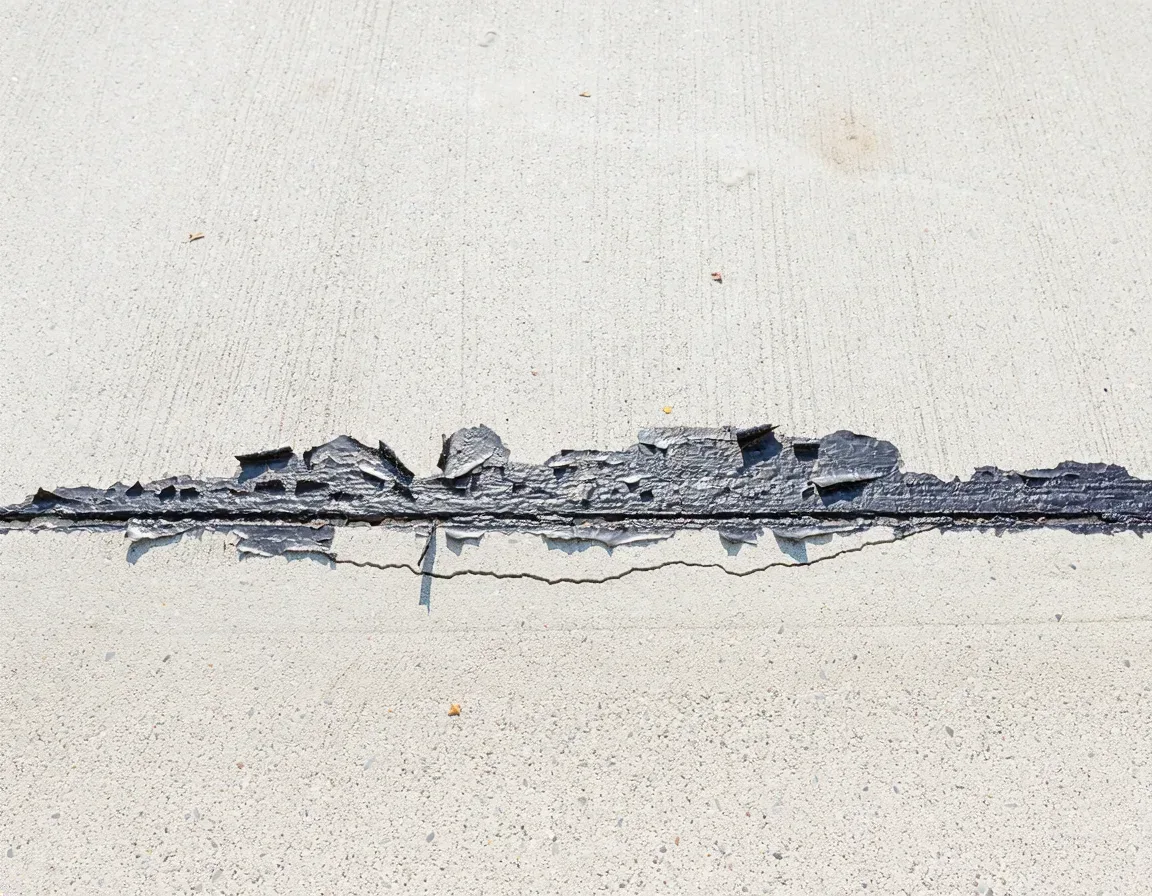
In the Mediterranean climate, an open concrete field heats up so much that it cannot be touched during the summer day and noticeably cools down at night. Concrete stretches with every heating and shortens with each cold; on a ten-meter slab, the difference between summer and winter can reach a few millimeters. The joints exist to accommodate this movement. If the joint gap is too wide, the joints are filled with dirt and jammed, or if they are never cut, the concrete opens its own place to move; random cracks and breaks at the joint edges occur this way.
Heat also affects materials applied to the surface. Film-forming paints and varnishes exposed to the sun yellow, chalk, and flake off over time; most epoxy-based coatings are not resistant to ultraviolet light. Dark-colored coatings increase heat even more. If one reason we avoid film-forming products in open fields is slipperiness, another is this wear cycle.
The third effect is the application time. Hardening or water-repellent applied to hot concrete dries on the surface before it has a chance to penetrate the pores and can leave a white residue. In summer, these products are applied early in the morning or in the late afternoon when the surface is warm; lunchtime is reserved for cleaning and mechanical work.
Downpour, Shadow, and Algae
The rainfall regime is the second major factor. A heavy rain following a long and dry summer leaves a lot of water in a short time; in an area with insufficient slope or blocked grates, water waits for hours. The waiting water flows into the pores, carries dirt and salt, and when dries up, leaves marks on the ring. The causes and solutions of pondling are discussed in our article for indoor parking lots water accumulation in the parking lot It largely shares the same content as the article; the only difference in open field is that the source of water is directly the sky.
In shaded, tree-lined or north-facing sections, concrete remains moist for a long time, and green algae, black mold, and over time lichen develop on it. This layer appears harmless when dry, but slides like soap when wet; these green strips are the places with the highest risk of falling on pedestrians in open areas. Types of biological dirt and cleaning logic lichen and black mold on outdoor stones We addressed this in the article; the same principles apply to concrete as well.
When moss is removed only with pressurized water, it returns quickly because spores and moisture in the pores remain in place. For a permanent result, a suitable product that kills biological dirt is applied, the duration of effect is waited, then rinsed off with a brush and controlled pressure. Afterwards, a surface that does not absorb water and, if possible, pruning that reduces shadow delays regrowth; however, it cannot be promised to completely prevent it.
Oil and Fuel: Contamination by Field Type
Not all open areas get dirty in the same way. Parked vehicles leave oil drop by drop; in loading areas, hydraulic oil and tread marks from trailer tires, fuel droplets around the station, and in the factory yard, overflowing chemicals and metal shavings stand out. Oil becomes more fluid in sun-heated concrete and sinks deeper than indoors; therefore, old oil stains outside are often more stubborn. Methods by stain type Grease, rust, and paint stains on concrete floors We explained this in detail in the article.
The table below shows how priority varies depending on the field type:
| Field type | Main compelling factor | Targeted surface | Priority work |
|---|---|---|---|
| Open parking | Oil drops, algae, puddles | Coarse-textured, water-repellent applied | Deep cleaning and joint filling |
| Loading area | Heavy axle load, rotational force, hydraulic oil | Tight, hardened, rough | Joint edge and pit repair |
| Around the fuel station | Fuel and oil droplets, continuous vehicle rotation | Does not absorb oil, is easy to wash | Fat dissolving and protective renewal |
| Factory courtyard | Forklift, chemical leakage, metal particle | Hardened, repaired | Repair of surface breaks |
| Intra-site road and pedestrian crossing | Seaweed, root lift, elevation difference | Distinct textured, non-stuttering | Shaving of denim differences |
The section where filling stations are located at fuel stations is subject to separate regulations regarding leakage and explosive atmospheres. Ground works in that section are carried out with the operating permit system of the station operator and with experts in the field; what we are describing is the surrounding areas such as the front of the market, parking lots, and entrance and exit roads of the station.
Surface Texture: Rough Wiping from Broom Marks
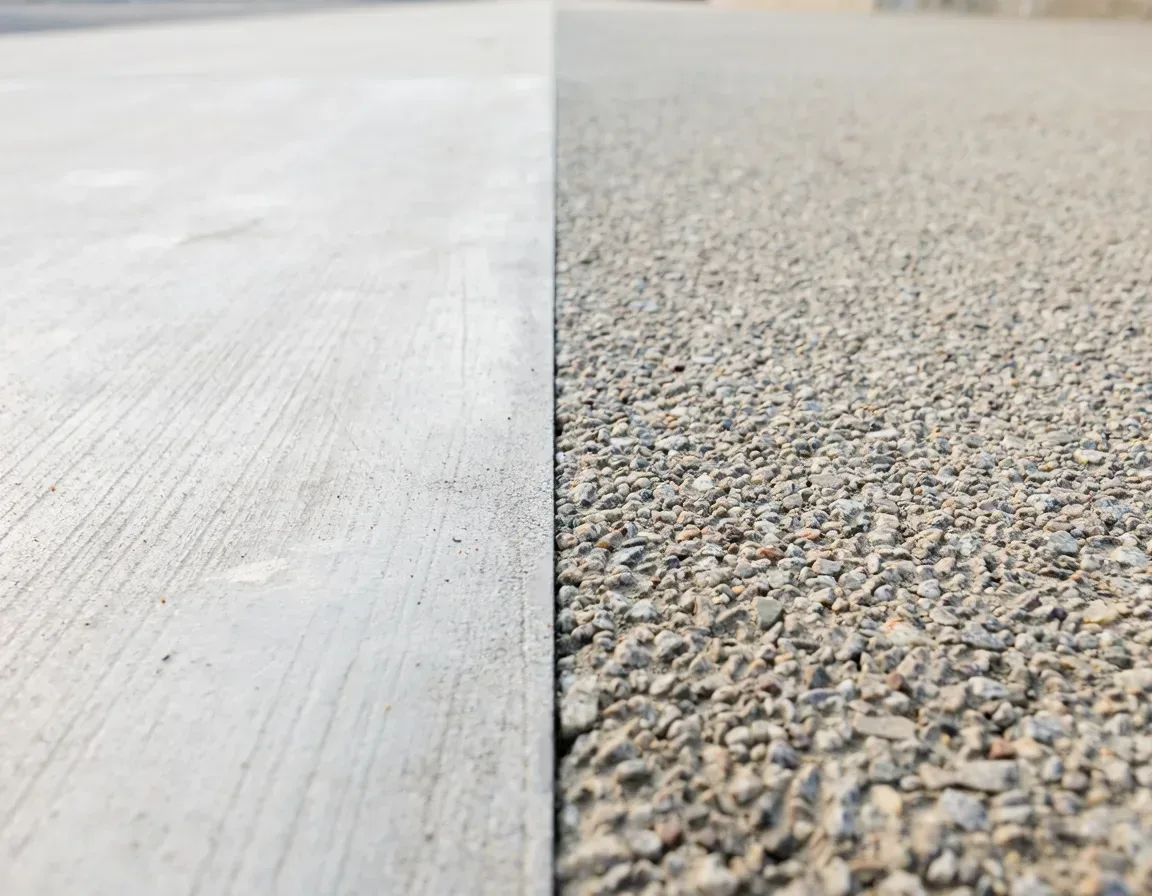
Most outdoor concrete is finished by applying a stiff brush to the surface immediately after pouring. This sweeping texture is the main source of wet adhesion. Over the years, rubber, sand, and rain wear down the tops of the lines; especially at entry, exit, and turning points, the surface flattens, and even the bare aggregate begins to shine. Therefore, the first question in renovation is how much of the texture remains.
Three methods are followed depending on the tissue condition:
- Cleaning while preserving texture: If the sweeper marks are still visible, the surface is not eroded; it is cleaned with degreaser, biological dirt remover, and controlled pressurized water, then a hardener and water repellent are applied.
- Opening up new texture with a rough wipe: If the surface is flattened, dusty, or covered with old paint, the weak layer is removed with coarse-grained metal bonded diamonds, leaving behind a deliberately rough surface.
- Roughening with ball blasting: Machines that spray steel balls in wide, flat fields absorb dust and abrade the surface; they provide an even and defined texture but require care at the joint edges.
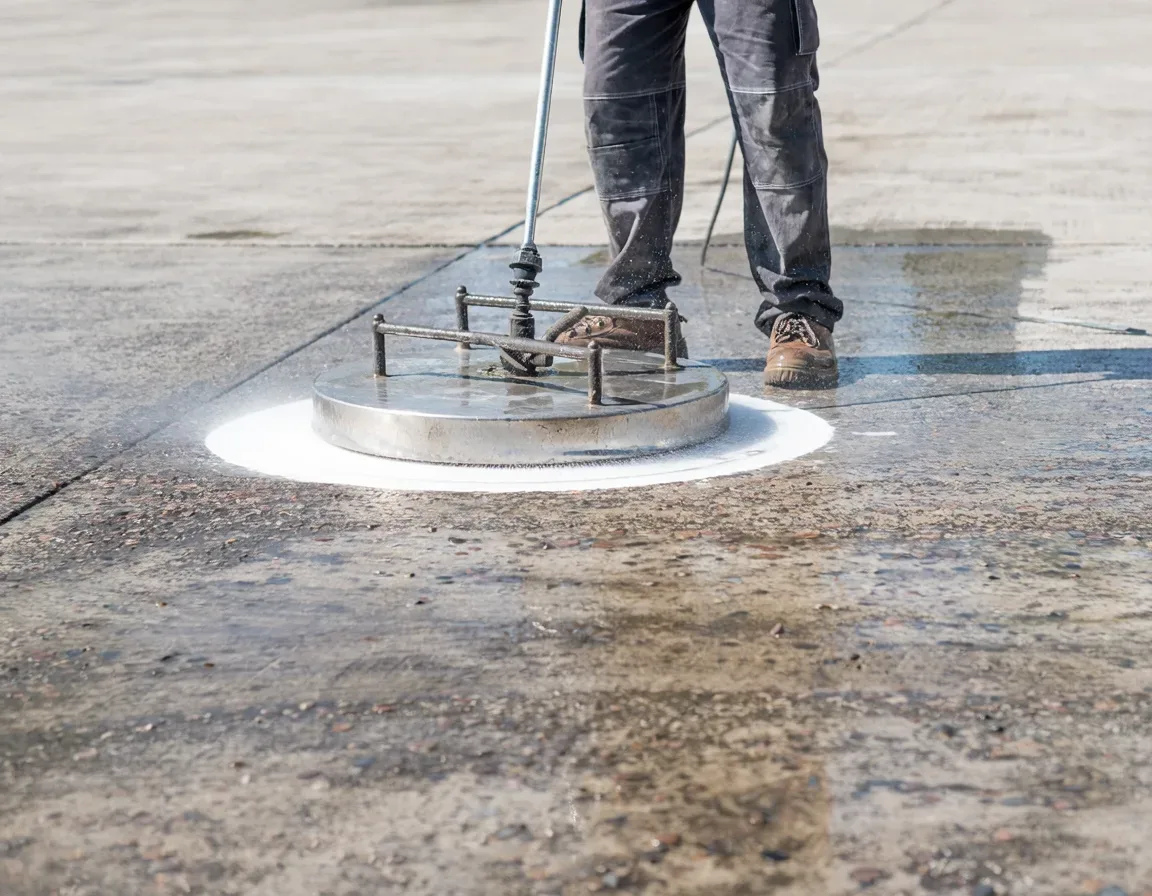
The place to rest is important in coarse polishing. If you go to thin steps like indoors, the surface closes and becomes slippery; outside, the silting is left in the coarse stage, and only the impregnated products are applied on top. Small elevation differences between the plates, that is, the thresholds where the foot and wheel are attached, are also shaved at this stage. Measurement is also required regarding pressurized water: washing very closely with a narrow-tipped nozzle removes the upper syrup from the concrete and leaves the surface more absorbent.
What Are Hardeners and Water Repellents Used Outdoors?

Silicate-based hardener reacts with free lime inside the concrete, forming a rigid bond inside the pores. Since it does not leave a film, it does not alter the texture or adhesion of the surface; its gain is to cut off dust and increase resistance to wear. It is applied in open fields, especially after rough polishing, to tighten the exposed fresh surface. The chemistry of the reaction and the differences between silicate types concrete hardener You can find it in the article.
Hardening strengthens concrete but does not make it waterproof. This function is taken on by silane and siloxane-based water repellents: they stick to pore walls, make it harder for water to be drawn in, and since they do not form a film on the surface, they allow concrete to breathe. How the same product family works on natural stone facades Silane and siloxane water repellents we explained in the article. If protection against oil is desired, oil-repellent types are chosen; however, no impregnating product completely blocks the stain, only saving time for intervention.
Water-repellent is applied to dry concrete; after washing or rainfall, the concrete is allowed to dry; otherwise, the product cannot enter the filled pores. Its effect is not permanent: it diminishes over years under traffic and sunlight and needs to be renewed. A simple check is to drip water onto the surface; if the water is like a bead, the protection continues; if it darkens and absorbs immediately, it is time to renew.
Joint Fillings: The Door Where Water Enters the Ground
In open areas, joint fillers deteriorate before the concrete itself. Fillers that harden and crack in the sun, separate from the edge, or disappear completely reduce rainwater directly under the slab. As the subfloor gets wet, the thin material is carried away by water, and the slab remains in the void; when a heavy vehicle passes by, the edge breaks. Grasses growing in the joints also push the fill with their roots and widen the gap.
Outdoor joint filling is chosen differently from indoor warehouse joints. Because the temperature movement is high, elastic fillings that can stretch and shorten are used instead of hard fillings. Renewal is done with the following steps:
- Removing the old filling: Cracked filling, soil, and plant roots are completely removed from the joint; the joint surfaces are opened with a brush and compressed air down to clean concrete.
- Repair of joint edges: Broken edges are rebuilt with repair mortar because the filler only serves its purpose when it adheres firmly and smoothly to two faces.
- Adjusting the depth: A compressible sheath is placed at the base of the seam; this way, the filling adheres only to the two side faces and does not tear during movement.
- Application of the filler: The sun- and traffic-resistant elastic padding is filled just below the surface and is expected to cure before the wheel touches.
Joint filling is planned not after surface treatments but before or together with them. In a site with the joint left open, the water-repellent protects only the surface; the water that causes the main damage continues to enter through the joint.
Tree Root, Sitting, and Broken Plaques
Some problems are not related to the surface and cannot be solved by surface treatment. The roots of trees at the edge of the site go under the slab and lift the concrete; since cutting the root can affect the tree's balance and health, this decision is made together with a landscape expert. In areas with fill soil or on lines with water leaks, slabs collapse, corners sway, and cracks form steps.
In these cases, the options are to fill the gap under the plate or break and recast the damaged section; which is correct is decided by a competent engineer in the ground and structure. A grind only plays a helpful role here: steps of a few millimeters can be shaved, and larger differences can be smoothed if the plate is shaved. Local damages such as surface breaks and joint edge fractures are repaired with repair mortar and brought to the same texture as the surrounding area.
Seasonal Planning and Maintenance
The schedule for open-field work depends on the weather. Cleaning and mechanical work can be done for most of the year; impregnation products and joint fillers require a dry surface and a few days without rain. In our region, the weeks before autumn rains begin and spring are favorable periods for these tasks; if work is to be done in mid-summer, application hours are shifted to cooler hours.
Maintenance of the renovated site is simple but requires order. Before the rainy season, grates and channels are cleaned, joint fillers are visually inspected, and if greening has started in shaded areas, they are removed before they grow. Oil droplets are collected with absorbent material and washed with degreaser; the condition of the preservative is checked once a year with a water droplet test.
Photos showing the overall appearance of the area, joints, and problem areas so that we can assess the condition of your open parking lot or concrete field service request form You can send it through it. During the survey, we look at the condition of the texture, the joints, and the path the water follows, and write down the tasks in order of priority.
Does Pressure Washing Damage Concrete?

Pressurized water is the most common cleaning agent for outdoor concrete and is harmless when used correctly. The problem starts with bringing the narrow-tipped nozzle too close to the surface to quickly remove dirt: when the water jet tears off the thin top layer of concrete, light-colored lines and a more absorbent texture remain on the surface.
Wide-angle nozzles, fixed distances, and rotary head surface cleaners reduce this risk. If a suitable cleaner is applied and left to sit first for oil and algae, low pressure is sufficient; wastewater should be collected before being sent to the rainwater grate.
Loading Site of a Packaging Facility

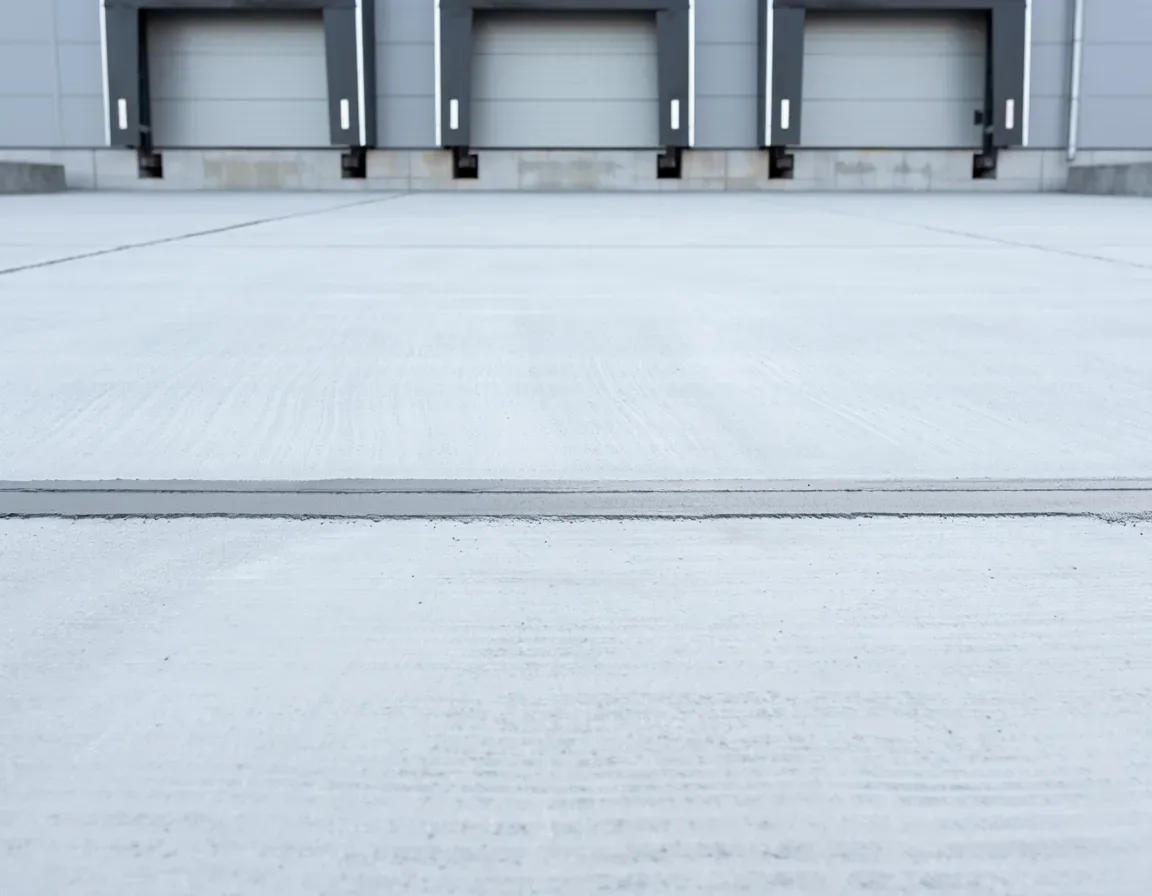
During the citrus season, we plan the work before the season starts at a loading site where trucks pick up trucks day and night. First, we walk around the site to mark where the water flows and which joints have been emptied; at the points where the trailers turn, the joint edges are mostly broken.
The sequence proceeds as follows: repair of broken edges, cleaning joints and filling with elastic filling, washing oily platform fronts with solvent, and finally water repellent to the dry surface. Since we divided the site in two, loading never stops; it is done only from one side for a week.
In outdoor concrete, first consider the path of water, then the surface: any surface treatment done on a site with open joints and a clogged grate loses most of its effect during the first rainy season. — Expert Note
Frequently Asked Questions About Open Parking and Concrete Fields
01How long before or after rain can you work?
02Does the color or appearance of the floor where water repellent is applied change?
03How often is the water repellent replaced?
04Does the field completely close during the operation?
05Does dust spread to the environment when cleaning in an open field?
06Is the same method applied in areas with truck and construction machinery traffic?
Related Articles
Water Accumulation in Parking Lot: Slope, Drain, and Pond Problems, Covered Parking Floor Renewal: Dust-Free and Bright Parking with Concrete Cleaning, Pit, Breakage, and Joint Edge Repair on Concrete Floors, Crack Repair on Concrete Floor: Separating Moving and Immobile Cracks, Lichen and Black Mold on Outdoor Stones