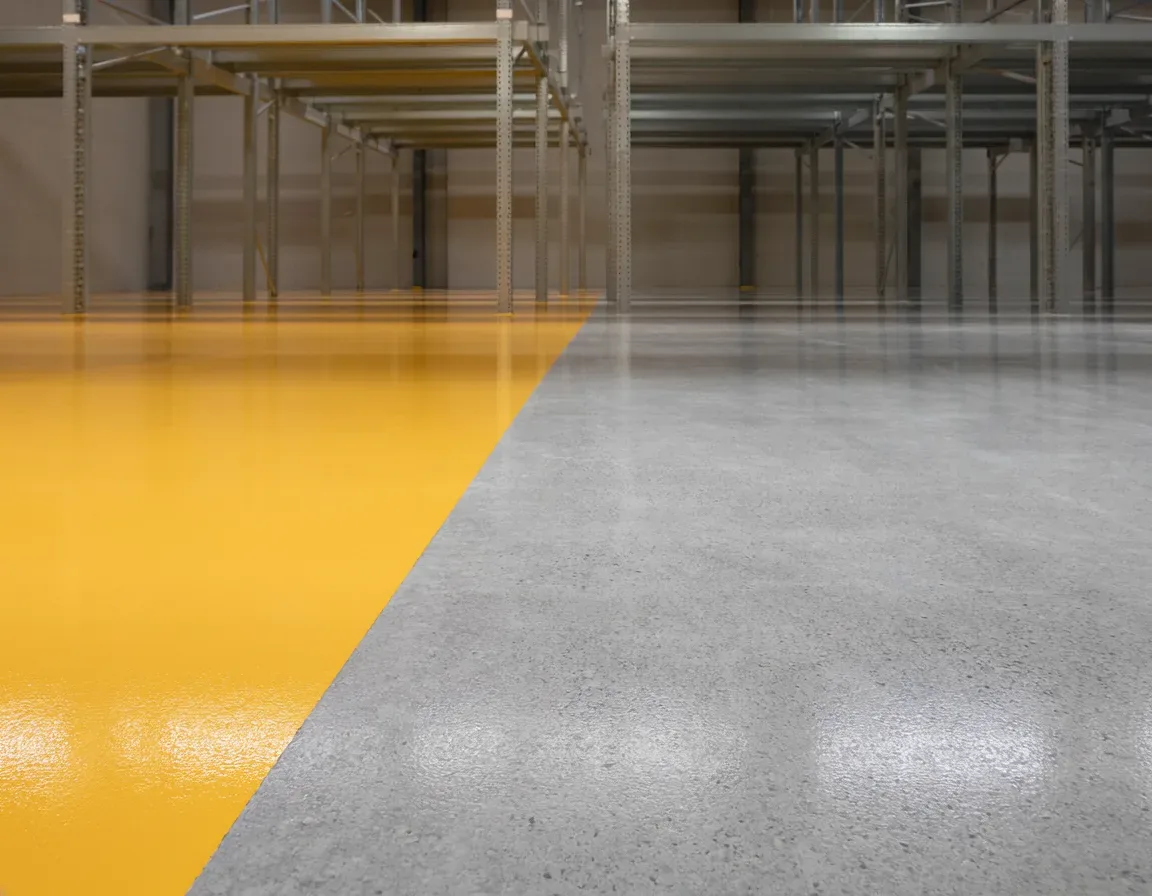
Concrete Coating or Epoxy Coating? Comparison of Lifespan and Maintenance in Large Areas
When the floor of a parking lot, warehouse, or production hall covering thousands of square meters is to be renewed, usually two options come to the table: wiping and polishing the concrete or coating it with epoxy. Both work flawlessly for years in the right place, but if in the wrong place, they become complaints at the end of the first year. What often makes the difference is not the quality of the product but the moisture under the floor, the traffic on top, and the liquids poured on it. In this article, we compare the two methods with the questions of someone who will operate the floor for ten years: when to peel it, how to renew it, which chemical it is based on, and when the area is opened for use.
In short: Epoxy is a impermeable film added on top of concrete; it is superior to chemicals and hygiene but fragile to moisture and spot wear from below. Polished concrete is the concrete surface's own surface; it does not peel and renews on site, but it does not provide a barrier against acids and does not hide the concrete's defects. In large facilities, the correct answer is often to use both together according to regions.
Key Distinction: Surface Treated with Added Film
Epoxy coating is a separate layer formed by applying or pouring a two-component resin onto concrete. It is applied in thicknesses ranging from a thin layer of paint to self-leveling systems a few millimeters in size, and even thick mortars with quartz sand. The logic is the same regardless of thickness: it is no longer concrete that absorbs the load, wear, and poured liquid, but this film stuck to the concrete. The film's lifespan also largely depends on how firmly it adheres to the concrete.
In concrete grinding, no layer is added to the surface. The weak outer layer of concrete is removed with a diamond, impregnated into silicate-based hardener pores, and the surface is gradually thinned and polished. The surface carrying traffic is again concrete; it is simply a firmer, smoother, and dust-free concrete.
This distinction is the essence of each of the following headings. The strengths and weaknesses of a film come from being a film: it is closed, colored, does not transfer chemicals to the concrete; but it can be pierced, scratched, and lifts if pushed underneath. The strengths and weaknesses of processed concrete also come from being concrete: it has no layer to lift off but is porous, reacts with acid, and carries its history on it.
Moisture From Beneath: The Silent Enemy of the Coating
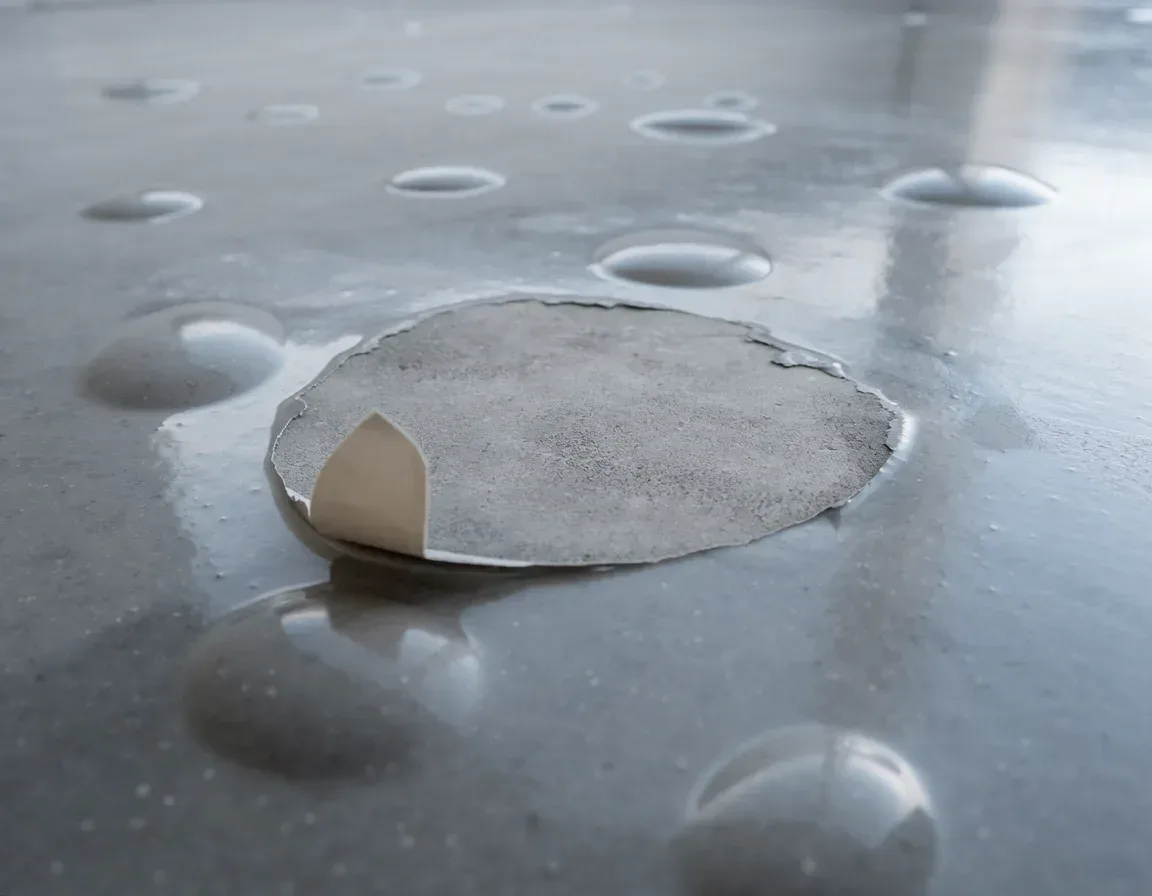
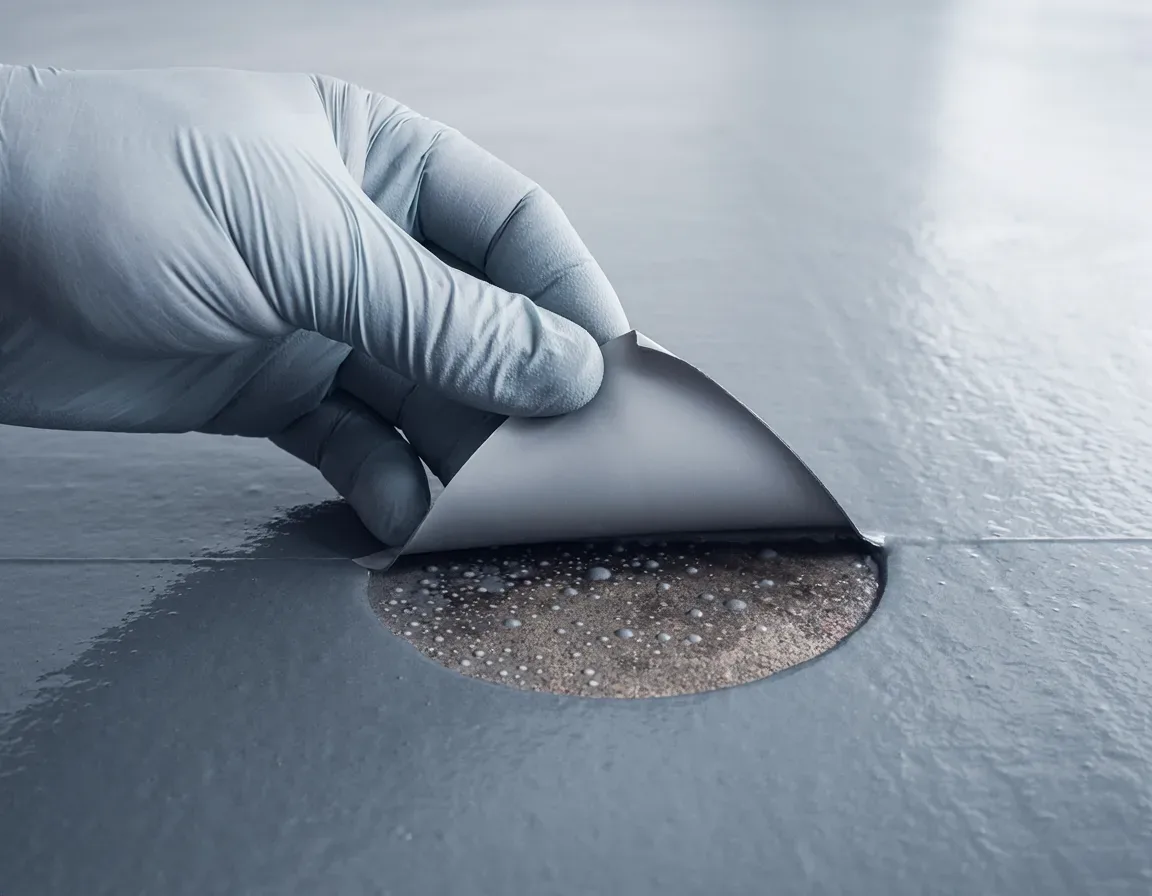
In large areas, the most common cause of epoxy complaints comes not from the surface but from below. In floors that settle into the soil, especially in older buildings without a solid vapor barrier underneath, moisture continuously enters the concrete from the ground and moves upward as water vapor. Bare concrete releases this vapor into the environment and no one notices. When covered with an impermeable film, the vapor accumulates under the film, creates pressure, and pushes the coating away from its weakest adhere. The result is hollow or liquid-filled bubbles and areas that gradually rise in layers.
The second effect of moisture is chemical. Water passing through the concrete carries dissolved salts and alkalis to the surface; these condense under the film, weakening adhesion. Therefore, coating manufacturers require measuring the concrete's moisture before application and recommend primer systems with moisture barrier features on floors above the limit value. Without measurement, floors coated only because the surface looks dry are at the center of this risk. How moisture is measured In the article on alum moisture We explained; the measurement logic is the same for concrete slabs.
This mechanism does not work in polished concrete because there is no film trapping the vapor. Concrete continues to breathe. However, moisture can still leave marks: in areas where water constantly flows from below, dark spots or white salt blooms may appear on the surface. This appearance does not damage the floor and can be cleaned, but it recurs unless the source is cut off; the subject In the white salting text in the interior we addressed it. Humidity in underground floors and coastal areas where groundwater is high is the first item of the decision.
Two Grounds Under Tire and Forklift Traffic
Traffic wears down the two floors differently. Although epoxy film is resistant to impact and friction, its thickness is limited; a hard forklift wheel, drifting track, or falling metal piece cause scratches and tears in the film. Each opening point is a door where water and oil enter under the film, and damage spreads from there. At turning and braking points, the film gradually thins, and the underlay or concrete begins to appear. In parking lots, the effect of hot tires is added: the heated tire from a long-distance vehicle softens some tires, when the vehicle moves again, a piece of the tread may lift along with the tire, or a black mark remains.
In polished concrete, wear is not peeling but dullness. In heavy traffic lanes, the surface shine decreases and paths distinguishable from its surroundings form; the floor does not lose its function, only its appearance changes. The rubber mark left by the tire also forms in polished concrete, but it is a residue stuck to the surface and there is no film underneath that could cause damage. Cleaning methods Tire and brake mark in the parking lot sign We explained.
The common weak point of the two floors is the joints. Every time a hard wheel hits the joint edge, the concrete breaks from the edge; having epoxy on it or a polished surface does not prevent this. Filling joints with semi-rigid filler should be planned separately in both methods.
Chemical Resistance and Hygiene: Where Epoxy Excels
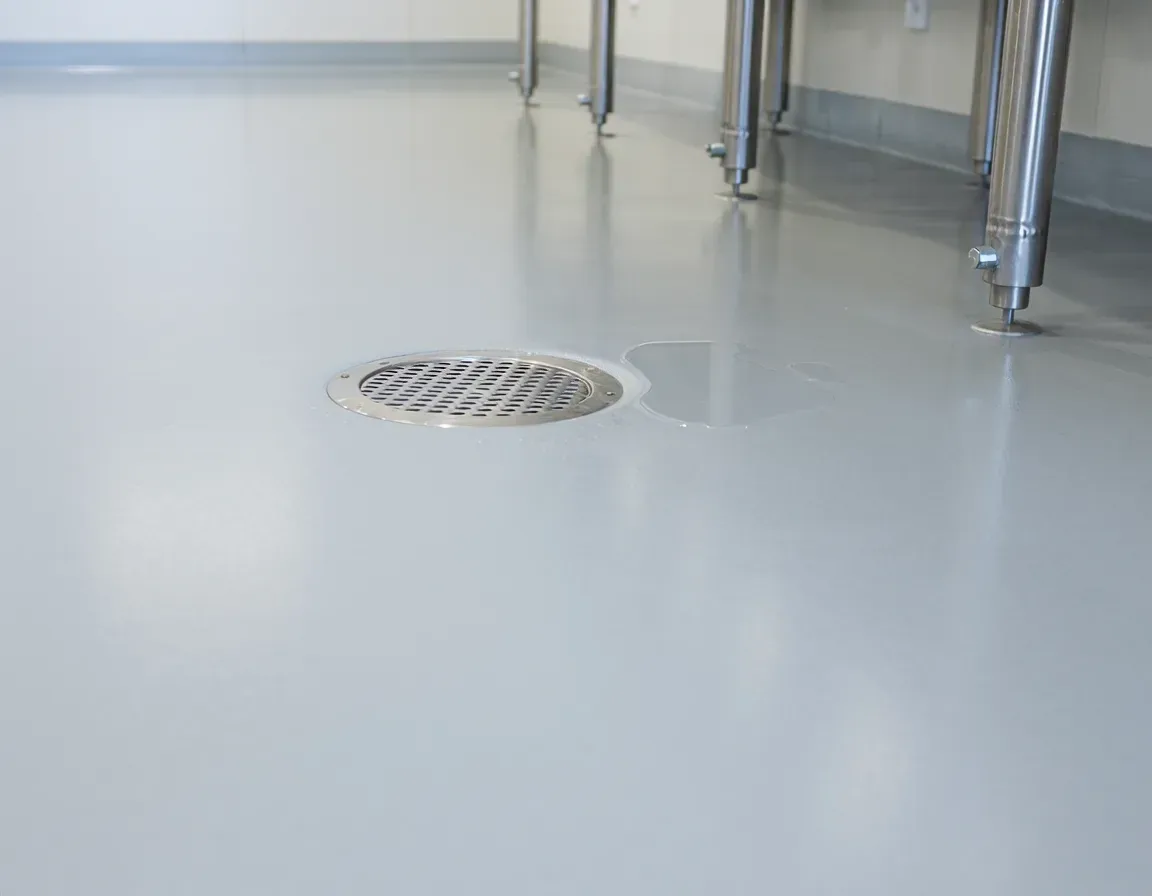
An impartial comparison should clearly state where polished concrete is not enough. Concrete consists of calcium compounds in cement, and acids dissolve these compounds. Hardener tightens the surface and delays the absorption of stain-protective oil and water; but neither is a barrier against acid. When acidic liquid is left on polished concrete, it dulls and roughens the surface. A properly chosen resin coating does not transmit the chemical to the concrete at all.
The situations where epoxy or another resin system is significantly more accurate are as follows:
- Continuous acid and chemical spillage: Spills in battery charging areas, coating and paint shop lines, and chemical warehouses are part of daily work, and bare concrete wears out quickly.
- Acid and sugar from food: Juice, dairy products, vinegar, and sugary syrups attack concrete over time; wet processing areas require a closed surface.
- Mandatory seamless, washable surface: In hygiene areas where the floor and wall meet with chamfered baseboards, a continuous coating is the solution that inspections expect.
- Need for color zoning: If the pedestrian path, forklift route, and danger zone are to be separated by ground color, the pavement does this more permanently than the line.
- Weak and patched concrete: A thick coating on concrete whose surface is too damaged to be polished or full of repair marks brings the appearance to a single color.
Most of these areas are not the entire facility but part of it. In fresh fruit and vegetable packaging facilities, cold storage, and food production, which area is desired which surface On the concrete floor text in a cold storage and food facility We also processed it.
Regeneration Cycle and Repairability
Every floor is renewed one day; the main difference is how the refresh is done. The lifespan of an epoxy film varies greatly depending on thickness, traffic, and ground preparation, so giving a single year number is misleading. What is certain is this: when the film wears or peels off, to add a new coat, the surface must be sanded, the shielding areas must be opened to a solid surface, and the color difference with the patch must be accepted. When patches multiply, the only solution is to completely remove and redo the road covering. What this removal requires In the article on removing old epoxy and floor paint We explained.
Renovation in polished concrete is the reworking of the same surface. Matteing traffic paths are repaired with maintenance pads and high-speed polishing; the protective is renewed at regular intervals. After years, when a deeper renovation is needed, there is no layer to be removed; only the upper levels are reapplied. When a regional renovation is done, the difference between it and its surroundings largely disappears with use. Maintenance requirements in the article on polished concrete maintenance You can find them.
Both floors require realistic repair in terms of repair. In epoxy, patch color differences, while in polished concrete, crack fill and pothole repair remain visible due to texture differences. It is not correct to expect invisible repairs in either.
Application Duration and Opening the Area
In a working facility, the topic is less the floor itself but how many days the floor cannot be used. Epoxy application consists of surface preparation, primer, one or several coats, and waiting times between coats. After the final coat, the resin needs to cure: separate periods are given in the product document for pedestrian traffic, vehicle traffic, and full chemical resistance, which can be extended or shortened depending on temperature. Low temperature, high humidity, and condensation can completely prevent the application. Tires and wheel marks remain permanent on the opened floor before curing is complete.
There is no resin expected to cure in concrete grinding. When a section is finished, it can be walked the same day, and shortly after the preservative dries, it can be opened to vehicle traffic. In contrast, the work itself requires machine time: as the number of stages increases, the same area is passed over more times, and dust or mud management is necessary. In parking lots and warehouses, it is possible to carry out work in sections, at night, or outside shifts; the finished section is given for use in the morning. There is also a difference in terms of odor: water-based hardeners and preservatives do not leave a distinct solvent odor, while some resin systems require ventilation during application and curing.
Appearance, Light, and Non-slip
Epoxy offers a color option and hides all the concrete imperfections under a single-colored surface. When newly applied, it looks smooth and shiny; over time, scratches become more pronounced on the glossy film, and in sunny areas, some types of epoxy yellow or chalk. Therefore, a sun-resistant topcoat is required in open parking lots and glass-fronted entrances.
Polished concrete is gray and reflects the character of concrete: tone differences, old repairs, and casting boundaries remain on the surface. This is not the right choice for a business that considers it a defect. On the other hand, its light-colored, reflective surface allows for more efficient lighting in enclosed parking lots and storage areas. In terms of anti-slip, it does not cause problems when both floors are dry and clean; in wet and oily conditions, both glossy film and glossy concrete become slippery. In epoxy, the solution is to sprinkle quartz sand on the surface, while in concrete, it remains at a lower level in the wet areas.
Decision Table: Which One When?

The table below summarizes the general trends; the actual result of each row depends on the product, application, and condition of the floor.
| Criteria | Polished concrete | Epoxy coating |
|---|---|---|
| Moisture coming from below | Allows steam to pass through; no bubbling, and signs of salinization may be visible | Moisture measurement and if necessary a moisture barrier lining is required; otherwise, risk of bubbling |
| Tire and forklift traffic | It does not peel off; traffic roads become dull, and they recover in place | Scratching, thinning, and pinpoint breakage; hot tire marks |
| Acid and continuous chemical | Weak; the surface wears and dulls | Strong; creates barriers with the right system |
| Fat and daily shedding | Time is gained with a protector; it should not be kept waiting | As long as the film is intact, it does not absorb |
| Hygiene and jointness | The joints remain; sufficient for dry areas | Seamless, washable surface with chamfered baseboard |
| Renewal | The same surface is repolished, no disassembly | Sanding and top coat; full disassembly in case of widespread damage |
| Launch | After the episode ends, the same day on foot and quickly by vehicle | Curing time is required; depends on temperature |
| Overview | Gray, the character of concrete is visible | Colorful and monotone; scratches and yellowing over time |
To clarify the decision, we recommend thinking of your facility not as a single ground but as zones. Answer the following questions separately for each zone:
- What is poured onto the floor: Whether it's just water, dust, and occasionally oil, or is acid, chemical, or food liquid poured every day; the answer often makes the decision on its own.
- Is there moisture underneath: Is the flooring sitting on the soil, has the covering been raised before, is salinity visible at the base of the walls? If there is doubt, measurements should be taken.
- How many days can the field be closed: If work is required in sections and at night, a system with a curing period enforces the calendar, which must be calculated from the start.
- What to expect from the view: Whether a monochrome and flawless surface or a clean, bright, and dust-free concrete is desired; the expectation must be written down from the start.
Large parking areas, warehouse corridors, and general production halls often produce correct results with polished concrete; chemical zones, wet processing areas, and charging stations are accurately covered with resin coating. If you want to see firsthand which part of your floor is suitable for which method service request form you can request an inspection; we also clearly state areas where polished concrete is not suitable.
Both Together: Ground Plan by Regions

In large facilities, it is not necessary to settle for a single type of floor. In a logistics warehouse, aisles between shelves and loading areas can be polished concrete, and the front of the battery charging room and chemical racks can be coated with resin. In the closed parking lot, polished concrete can be left in the parking areas, while the vehicle washing point can be covered.
For this plan to work properly, the junction line of the two surfaces is aligned with a joint or threshold, leaving no elevation difference. Also, the cleaning team should be informed that the two areas require different products and pads; the same powerful cleaner may not be suitable for both floors.
Looking Beneath the Bubbling Coating

When we go exploring a peeling underground parking lot, the first thing we do is open one of the bubbles. If water or a sticky liquid is coming out and the back surface of the paving is clean, the problem is moisture coming from underneath; repaving the same floor with the same system gives the same result. If dust and cement membranes are stuck behind the pavement, it is due to insufficient surface preparation.
This distinction changes the decision. In moisture-induced bubbling, we recommend that the management remove the coating and polish the concrete or have a moisture barrier system evaluated by taking measurements.
Start the comparison not from product catalogs but from the floor: moisture underneath, acid on top? If there is moisture, the film is risky; if there is acid, bare concrete is not enough; if neither is available, the decision is left to maintenance and appearance. — Expert Note
Frequently Asked Questions About Concrete Coating and Epoxy Coating
01Can concrete plaster be applied over epoxy coating?
02Can polished concrete be coated with epoxy afterwards?
03Which cuts the dust more permanently?
04Which one is preferred for open parking?
05Which one can be applied in winter and humid weather?
06Does the same comparison apply to other coatings like polyurethane?
Related Articles
Removing Old Epoxy and Floor Paint and Turning Into Concrete, Polished Concrete Care: From Daily Cleaning to Repolishing, What is Concrete Plastering? The Path from Dusty Screed to Polished Concrete, Covered Parking Floor Renewal: Dust-Free and Bright Parking with Concrete Cleaning, White Salting on Indoor Floors: Moisture from Screed and Adhesive