Factors Determining the Cost of Concrete Screed: Reading the Quote Correctly
Sometimes surprising differences are seen between quotes received for two concrete floors of the same size, and this is often not because one company is expensive and the other is cheap. The difference arises because the quotes do not describe the same job: one includes all the stages, the hardener, and joint repair, while the other consists of several stages and a coat of polisher. The cost of concrete grinding is determined by the condition of the floor per square meter, the intended result, and working conditions. In this article, without giving a single number, we explain which items a quote consists of, which factor magnifies which item, and how to read the two quotes side by side.
In short: The cost of concrete removal is the sum of machine hours, diamond consumption, chemicals, labor, and logistics; each varies depending on the ground and the target. Unit price only matters among offers with the same scope. A quote without a step list, hardener, preservative, repair, and edge workmanship cannot be compared.
What Expenses Are Included in a Quote?
Concrete grinding is not a material sale but a production done on site. Behind the proposal stand five expense groups: the hours machines spend on site, diamond tools used up during this time, chemicals like hardeners and preservatives, the team's labor, and the logistics of bringing the work to the site. The unit price is the total divided by square meters; that is, it is not the start of the calculation but the result.
None of these expense groups are fixed. In hard concrete, diamonds cut more slowly and machine time increases; in soft and abrasive concrete, cutting is fast, but diamonds wear out faster. A bright finish hardly changes chemical consumption and increases the number of passes through the same area. Night work does not change diamond consumption; it increases labor and installation time. Therefore, without exploration, a price given only in square meters either includes a broad margin of safety or leaves part of the work out.
The form of the offer also affects the reading. Some companies give a lump sum fee for the entire job, others calculate the erasure per square meter, and repairs in separate units. A lump sum bid is relieving in terms of budget but hides uncertainty if it does not specify what is assumed inside. In a unit-based bid, the amount to be paid is finalized according to the amount measured on site; therefore, it must be decided from the outset who will perform the measurement and according to which plan. Regardless of the chosen form, one should ask how the area is calculated: the difference between the net area minus columns and walls and the gross area of the plan is a significant amount in large buildings.
Size and Shape of the Area

The reason for the unit cost decrease in large areas is not the discount but the spread of fixed costs over more square meters. Machine transportation, installation, energy connection, trial area, and end-of-work cleaning are done both in small and large areas. Additionally, large planetary machines and mounted equipment can be used on wide and unobstructed surfaces; these can cover a much wider lane in a single pass.
However, square meters alone are misleading; the shape of the area is at least as important as its size. In a parking lot with dense columns, between shelf legs, or in a warehouse consisting of narrow corridors, large machines cannot maneuver, and a significant part of the work falls to small machines. Wall bases, column perimeters, manhole and drain edges are always machined by hand machine. Edge work is slow and proportional to circumference length, not area: a long and narrow corridor of the same square meter contains more edges than a square hall. A careful proposal also specifies whether edges and column bases are included and up to which stage they will be processed.
Concrete Hardness and Surface Condition
On two surfaces of the same size, the factor that changes the machine clock the most is the concrete itself. Diamond tools are selected according to the hardness of the concrete: in hard concrete, a soft-bound set is used to open the diamond; in soft concrete, a hard-bound set is used to prevent rapid depletion. In the wrong match, either the diamond slips without cutting and the hours are wasted, or the tool is finished in half a day. The logic behind this choice in resin, metal, and hybrid diamond inscriptions we explained. The trial area is the step that most reduces uncertainty in the bid because it shows how concrete responds to diamonds.
The condition of the surface is the second determining factor. A flat and tightly polished floor is ready with less rough cutting. If it is a wavy, sparsely marked, or rain-damaged surface, more material needs to be removed to achieve a smooth appearance. A dusty, weak top layer is taken up to solid concrete and sometimes requires multiple coats of hardener. Oil-absorbed parking spaces and production areas must be also degreased before polishing; otherwise, the oil diamond will not hold on, hardener, or protective agent. Each of these is included either as a separate line or as an invisible share in the unit price in the offer.
Disassembly and Repair: The Most Obscure Pencils
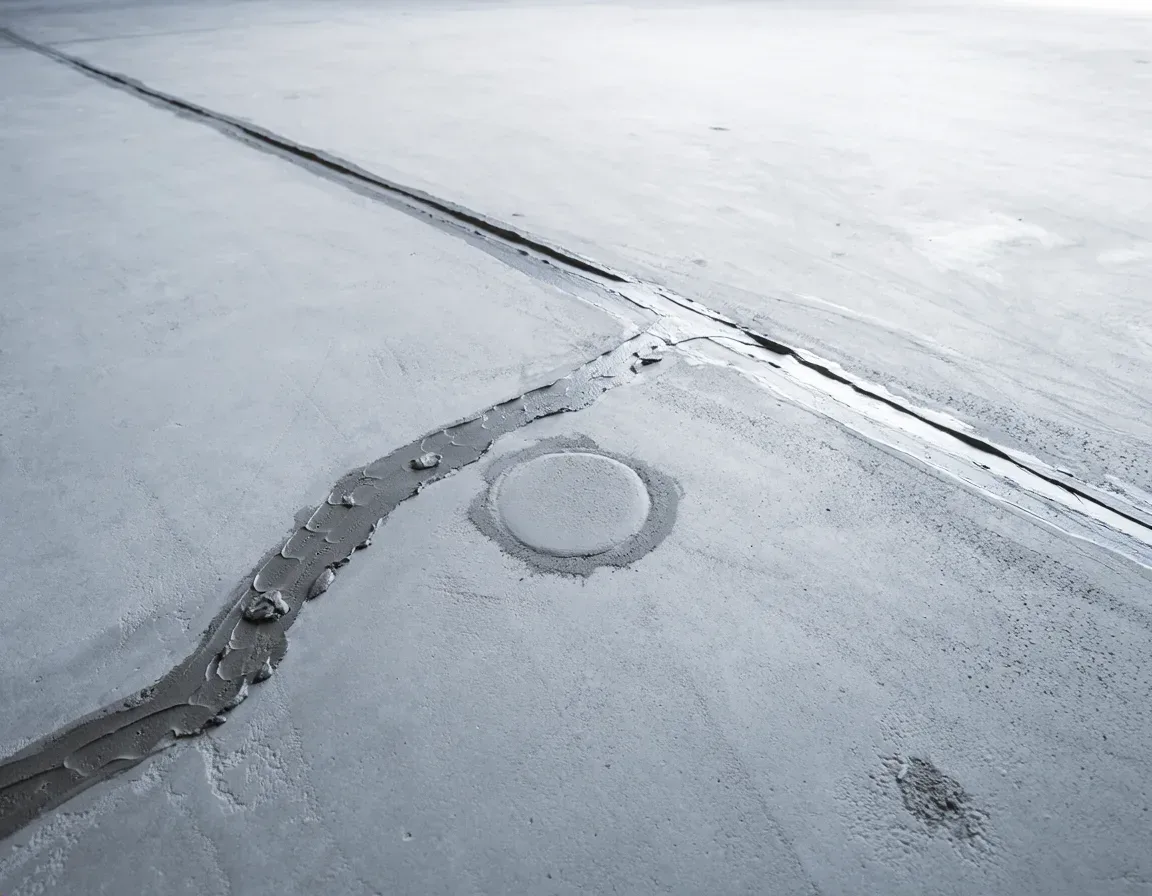
If there is an old coating on the floor, the process becomes two-stage. Epoxy, floor paint, carpet or vinyl adhesive, and leveling screed must be removed before mopping; depending on thickness and type, this stage can take as long as the actual mopping. Since the condition of the concrete beneath the covering cannot be fully known before the removal is finished, this pencil is inherently uncertain. Methods and possible surprises from below In the article on removing old epoxy and floor paint we addressed it.
Repairs are the second uncertain group. Cracks, joint edge breaks, pits, old anchor holes, and damaged joint fillings are repaired before grinding; because the gradient does not fix these defects but makes them visible. Repair work is measured not by area but by quantity and length: cracks and joints are calculated by meter, by the number of potholes and holes, or by the material consumed. Therefore, a quote that inserts the repair into the unit price cannot be directly compared to one that writes the repair as a separate item.
The fair path for uncertain items is as follows: repairs seen during the inspection are counted and recorded, and for any work that may arise later, a unit and approval method are determined. Thus, neither the employer signs an open-ended contract nor the contractor is forced to undertake a job they did not foresee.
Target View: How Does Tiering Grow the Business?
When the target changes on the same surface, the amount of work also changes. Cutting depth—that is, whether cement cream, sand grains, or coarse aggregate will appear on the surface—determines the load of the coarse steps. Deep cutting is the stage where the most diamonds are used up and the most waste is exited. Brightness determines the number of fine steps: there are several additional transitions between a satin finish and a bright finish, and often a high-speed finish. The effect of these two decisions on the appearance in the article on aggregate view and brightness selection We explained in detail.
Chemicals also vary depending on the target. The type of hardener and how many coats to be applied, whether pore filling will be done, and whether stain protection will be applied afterward are factors in both material and duration. Mirror brightness, which is unnecessary for a parking lot, can increase costs while also making daily operations more difficult. Asking for more than necessary is the easiest way to protect your budget.
Working Conditions: Clock, Energy, Water, and Waste
Even if the ground is the same, the conditions under which the work will be done changes the cost. The conditions that are often passed with a single line in the proposal but gain or lose days on site are as follows:
- Working hours: Working nights, weekends, or shifts shortens productivity time; setting up and assembling machines every day and delivering the area cleanly are added to the job.
- Segmentation: If the parking lot or storage area needs to be closed section by section, a combination of protection, guidance, and passage is done separately for each section, and the time increases depending on uninterrupted operation.
- Electricity availability: Large sweepers and dust extraction machines require triphase energy; if there is no suitable panel, a long cable line or generator is needed, which is a separate drain.
- Water and drain: In wet work, a clean water source and a system where sludge is collected are required; since the sludge cannot be discharged into the drain, it is left to be separated, and then transported from the site.
- Waste disposal: Removal waste is bagged with grinding dust and mud, removed from the building, and properly removed; this volume should not be underestimated in large areas.
- Access and transportation: Lowering machines from ramps or elevators, transportation and accommodation for out-of-town tasks, and transporting equipment constitute fixed costs of the offer.
The share of fixed expenses in out-of-town jobs increases significantly; therefore, bringing teams from long distances for small areas often does not make sense for either side. This is why we only work in large areas outside Antalya, Mersin, and Adana. How large-scale projects are planned In the large area concrete sweep project planning article We explained.
Reading Two Proposals Side by Side

The first rule for comparing quotes is to equalize the scope before looking at the total amount. The table below summarizes the items that should be written in a quote and the risk that arises if they are not written.
| Pen | What should be written in the proposal | If it doesn't write, risk |
|---|---|---|
| Tier list | Start and end stages, order of intermediate stages | Step skips; scratch marks and quick dullness |
| Target view | Aggregate appearance and brightness level, reference to the trial area | Expectation dispute in delivery |
| Hardening | Type, how many layers, and at what stage they will be applied | It is never applied or remains superficial; it applies to my powder |
| Protective | Whether stain protection and final polish are included | Oils and fluids leave marks from day one |
| Repairs | Unit of measurement and material type for cracks, joints, and pits | No additional cost or non-repair delivery during work |
| Edge and column bases | Up to which stage it will be processed | A dull, untreated band remains at the base of the wall |
| Dust and waste | Dust extraction system, removal of sludge and waste | Dusty facility, clogged drain, waste left on site |
| Calendar and hours | Partitioning, working hours, delivery order | Operations are disrupted, the time is extended |
After the scope is equalized, the remaining difference is the actual difference and usually stems from the team's experience, machinery fleet, and fixed expenses. In corporate recruitment, putting this scope into a specification from the start ensures that all companies submit bids for the same job; how to prepare In the technical specification text for floor wiping You can find them.
What steps does a very low bid skip?
A clearly low bid does not always show bad faith; sometimes the firm made an optimistic assumption without seeing the floor. Still, the same shortcomings often emerge behind a low bid. The most common is skipping the step: when moving directly from the rough tier to the thin tier, deep scratches do not close, only polish, and a ring appears in the light from the side. The second is to apply a glossy film to the surface instead of real grinding and hardening. This film looks bright in the first weeks, wears out quickly under traffic, and the dusty concrete from underneath comes out again; the concrete itself is unprocessed, only the top is polished.
Other deficiencies are quieter. Cracks and pits remain on the floor wiped without repairs. When edges are not treated, a hand-width matte band appears along the wall. If the dust extraction system is poor, concrete dust spreads to shelves, vehicles, and ventilation ducts, leaving cleaning costs to the operator. If a single thin coat of hardener is applied, the dust decreases but does not end. Each of these deficiencies appears as the absence of a line in the bid; therefore, before rejecting a low bid, it is necessary to ask about the missing lines and request a written response.
Information to Prepare Before Requesting a Quote
A healthy offer starts with sound information. When you provide companies with the same information, the incoming offers also converge. We recommend compiling the following information in advance:
- Plan and measurement: A scaled plan of the area, or at least its dimensions, column spacing, ramps, and areas not to be worked on, should be prepared.
- History of concrete: The year of manufacture, whether there is a dry sprinkler or old coating on the surface, and previous repairs should be written as far as known.
- Photos: Close-ups showing details of cracks, stains, joints, and edges should be added alongside the overall appearance, each containing an object for scale.
- Operating conditions: The hours and sections in which the area can be evacuated, as well as the location of the energy panel and water source, must be clearly specified.
- Expectation: What is expected from the floor should be dust-free, bright, or shiny in appearance, and the current cleaning routine should be briefly explained.
How photos should be taken In the text on the floor photo for the bid We demonstrated with examples. With this information service request form When you contact us, after the discovery and testing area, we prepare a detailed proposal item by item.
Construction Cost or Lifetime Cost?

Looking only at the construction cost in the ground decision is an incomplete calculation. The real load of a ground arises from adding cleaning, maintenance, repair, and renewal expenses over the years to the construction cost. The fact that the area cannot be used on the days the work is to be done is also part of this calculation.
The maintenance item in polished concrete mostly consists of regular machine cleaning and intermittent protective replacement; there is no layer that is removed and redone. When evaluating offers, requesting the recommended maintenance schedule from the company in writing completes the comparison.
What Do We Look for in Exploration?

When we come to the inspection, we first scratch the concrete to check its hardness, then to check its absorbency by dropping water. Then we measure joints and cracks, count pits and fractures, and note the edge length and number of columns. We see the location of the energy panel on site, how machines will land in the area, and where water will be collected from.
Finally, we discuss with management the order in which the space can be vacated. This information forms the basis for every line of the offer; the estimates in these lines remain in place for the price given without discovery.
Compare the rows of two quotes, not the sum. A quote that does not include a step list, hardener, repair, and edge crafting is not low, only incomplete; ask for missing lines in writing. — Expert Note
Frequently Asked Questions About Concrete Sealing Quotes
01Can a definitive quote be obtained with photos and plans?
02How does the trial zone affect the bid?
03Is there an additional fee after the work starts?
04Is it more economical to have only the defective section done?
05If the budget is limited, what can and cannot be given up?
06Should admission conditions be included in the offer?
Related Articles
Concrete Clearing Stages: Step-by-Step Process from Discovery to Delivery, Aggregate Appearance and Gloss Level Selection in Polished Concrete, How to Plan a Concrete Clearing Project of 1,000 m² and Above?, Writing the Technical Specifications for Floor Cleaning: Tender and Bid Comparison, Contract and Warranty in Erasure Work: Which Clauses Should Be Written?