Concrete Floor in Cold Storage and Food Facilities
The agricultural economies of Antalya, Mersin, and Adana largely rests on the cold chain: tomatoes and peppers from the greenhouse, oranges, lemons, and pomegranates from the garden; starting from pre-cooling, passing through the packaging line and cold room. In these facilities, the ground under the same roof faces conditions that are completely unlike each other: constant wetness and fruit juice in one section, condensation at near-zero temperatures in another, and subzero ice in another. Expecting a single ground solution to fit all these sections is where most problems begin. In this article, we explain what wears down concrete in cold and food facilities, what is expected from the floor in terms of hygiene, in which areas the grinder and hardener are sufficient, in which they are not enough, and the limits of working in a working cold room.
In short: Dry storage, shipment, and plus-grade cold rooms provide a dust-free, easy-to-clean floor with wiped and hardened concrete; the goal is not gloss but a firm and non-slip surface. In processing areas that are constantly wet, acidic, and washed with hot water, concrete alone is not sufficient; a resin coating produced for this job is required. Most work in cold rooms is done after the room has been emptied and heated.
Three Separate Ground Conditions Under the Same Roof
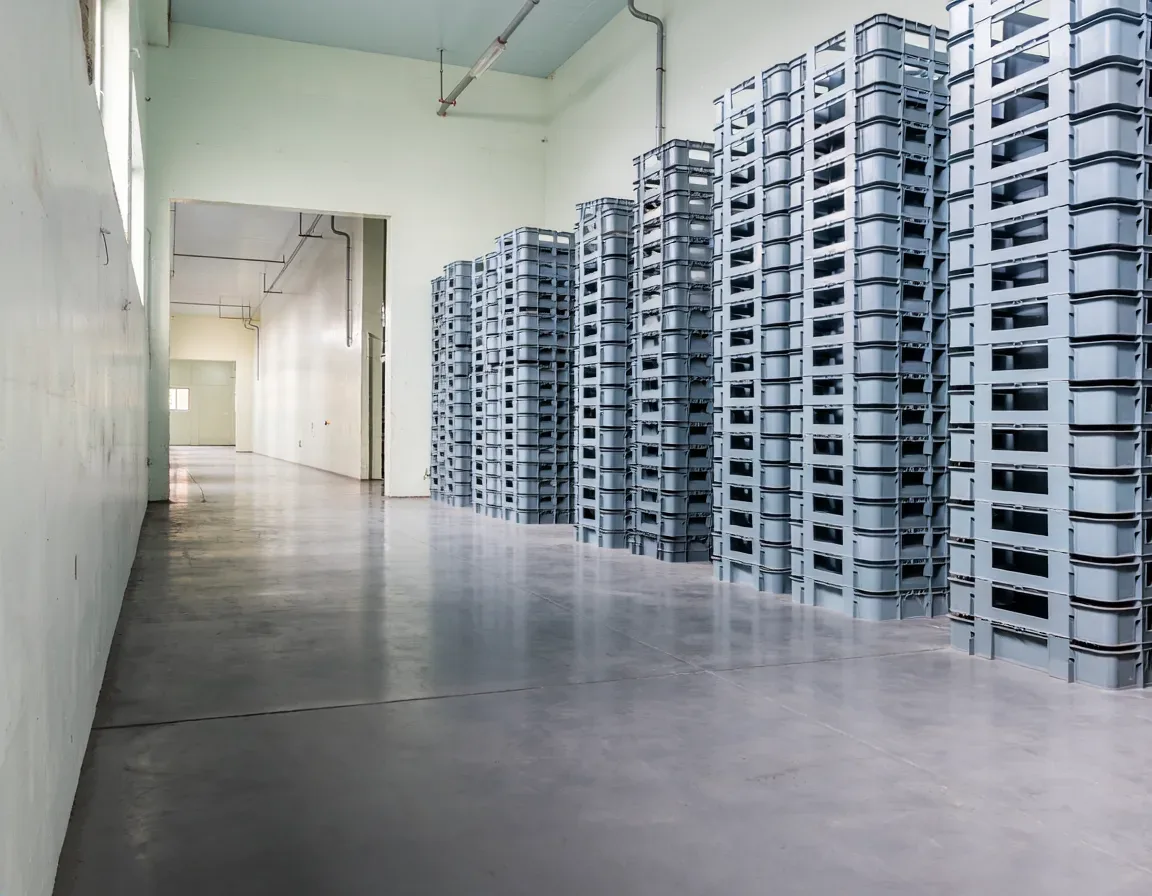
Dividing a packaging and cold storage facility into three zones in terms of floor facilitates all subsequent decisions. The first are dry areas at ambient temperature: goods acceptance area, packaging and crate warehouse, shipping corridor. Here, the floor load is the same as an ordinary warehouse floor; forklift, pallet truck, dust, and joints. The second are wet processing areas: around washing, brushing, waxing, sizing, and packaging lines. The third are cooled volumes: pre-cooling rooms, storage rooms operating above zero, and frozen storage warehouses operating below zero.
The boundaries of these three areas are the most problematic parts of the facility. Vehicles leaving the wet line carry water into the dry corridor; every time the door of the cold room is opened, moist air enters inside, and cold air escapes out. Therefore, when evaluating the floor, we look not only inside the rooms but also separately at the entrances, passage corridors, and ramp openings.
Condensation and Ice: What Happens at the Door of a Cold Room?
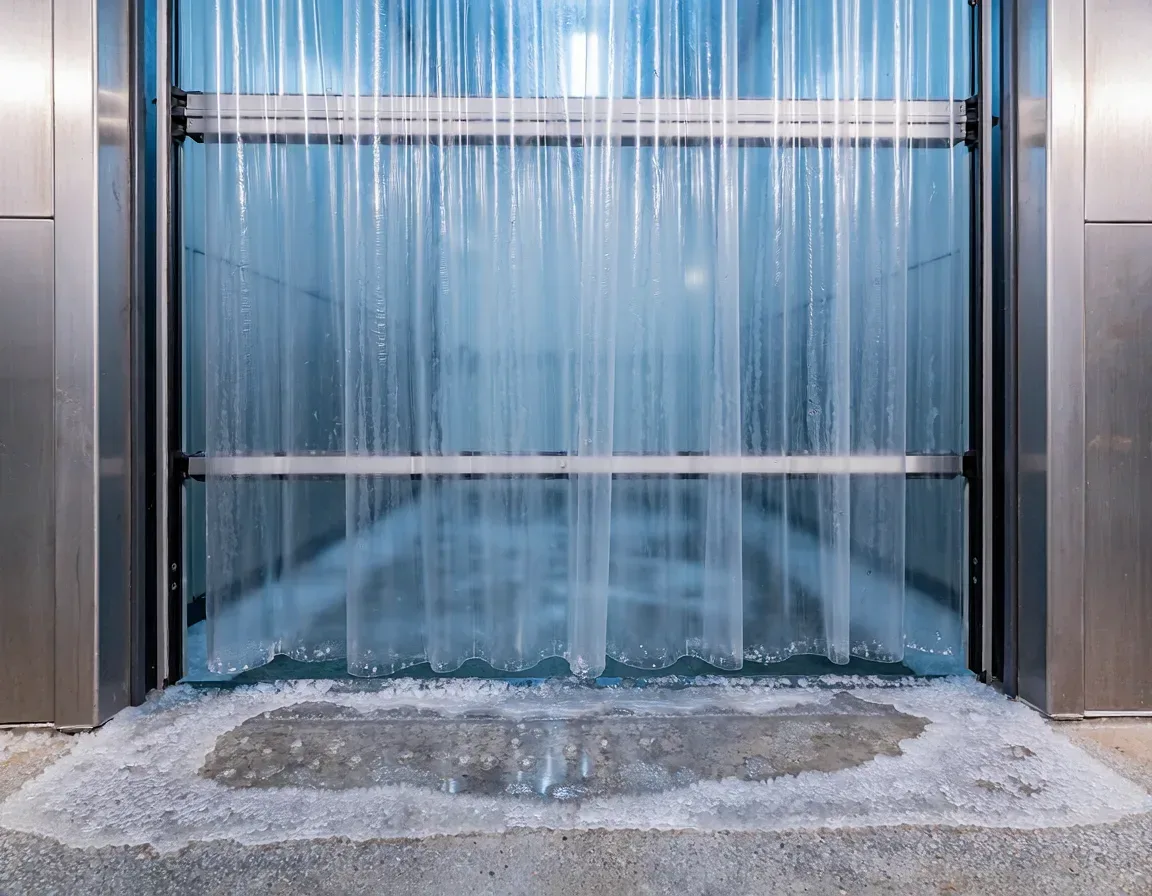
Summer air on the Mediterranean coast is both warm and humid. When this air enters through a cold room door or touches a cooled floor, it can no longer hold the water vapor it carries; the vapor turns into water droplets on the cold surface. Since the floor is one of the coldest and widest surfaces in the room, condensation first appears as a thin film of water on it. In plus-temperature rooms, this film makes the floor slippery; in subzero storage rooms, it turns into ice in front of the door and on the threshold.
Condensation is not a floor defect but an air problem, and the solution lies first on the air side: quick-closing doors, strip curtains, air curtains, front rooms that act as buffers between the cold room and the outside environment. What can be done on the ground side is to keep the surface safely walkable and drivable with this waterproofing film. A brightly polished concrete holds well when dry, but it does not provide the same confidence in front of a door with a water film on it. Therefore, we avoid going to thin steps inside a cold room or in front of doors; we leave the surface in a matte or satin texture. How non-slip is measured on wet floors and what the values mean In the article on non-slip values We explained.
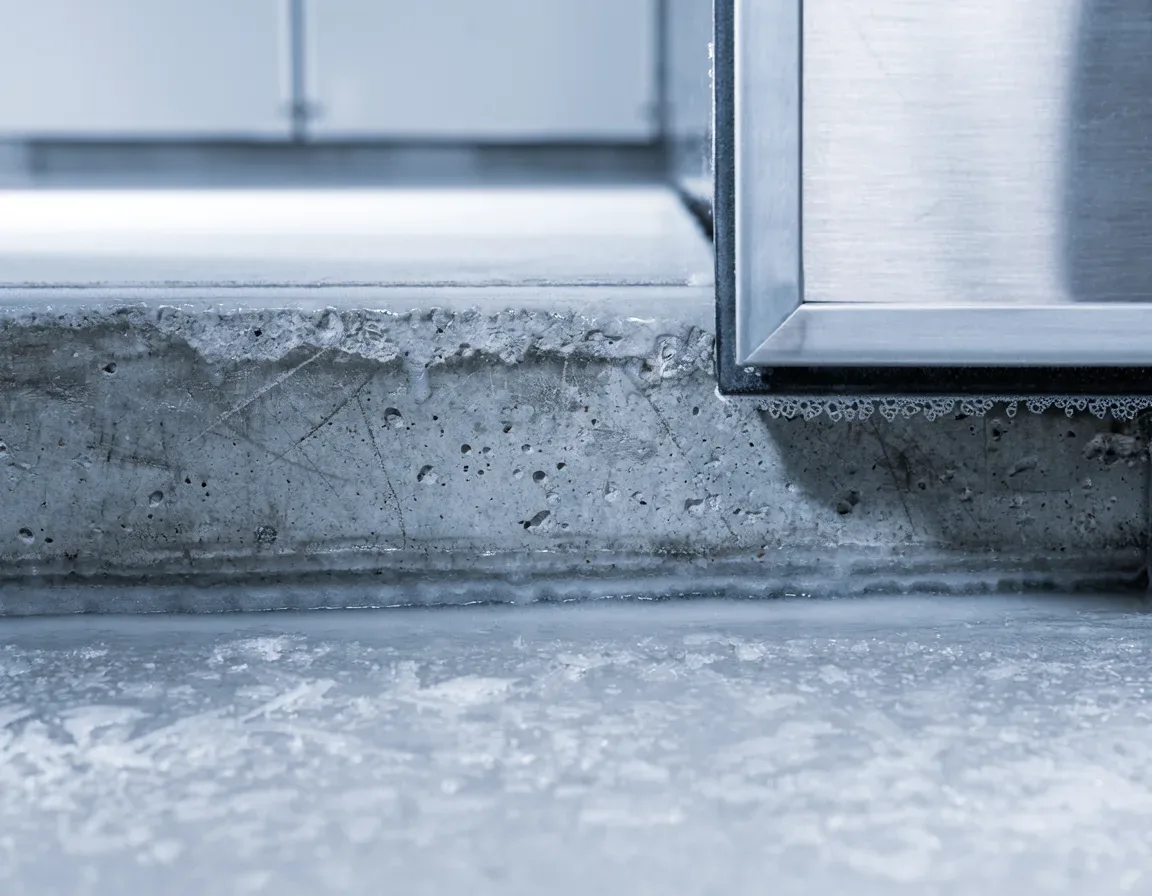
A common mistake with icy sills is breaking the ice with a metal shovel or chisel. Each impact also takes a piece off the concrete; the sills become pitted over several seasons, the pit holds more water, and thicker ice forms. Taking ice with salt-based solvents is not innocent either: these products increase the freeze-thaw damage of the concrete and can damage the reinforcement.
Freezing-Thawing and Underground: Problems That Wipe Cannot Solve
Concrete is a porous material and absorbs water into its pores. Water expands when it freezes; when a water-saturated concrete surface repeatedly freezes and thaws, the pore walls become fatigued and the surface rises in thin flakes. In cold facilities, this cycle is most common in doorways, where defrost water flows, and in rooms cooled before drying out after washing. A tight, less porous surface absorbs less water and is more resistant to this damage; this is the main contribution of the grinder and hardener in the cold room.
In storage rooms operating below the level, there is a separate risk hidden from the surface. Cold moves down the floor over the years; if the soil beneath the floor freezes, the water inside rises to form ice lenses and pushes the floor upwards from below. Therefore, frozen storage storage tanks are designed with thermal insulation under the floor and often with an underground heating or ventilation system. Changes in floor level, doors starting to rub, shelves slipping vertically, and long cracks appearing in the middle of the room can be signs of this type of bubbling.
In such a case, wiping the surface or filling the crack does not solve the problem; it only covers the surface. In a warehouse where bubbling is suspected, the company that installs the cooling system with a civil engineer should first examine the underground layout; we only plan the surface work after this assessment.
Fruit Juice, Wash Water, and Disinfectant: Chemical Load
In citrus packaging lines, water is not the only thing spilled onto the ground. The juice of crushed oranges and lemons contains citric acid; tomatoes, pomegranates, and grapes are also acidic products. Organic acids do not work as fast as mineral acids but gradually dissolve the cement paste, which binds concrete. Under the line and at rot separation points, the ground gradually becomes rough, aggregate grains are exposed, and the surface crumbles like sand. The roughened surface holds more juice and pulp; when sugar and moisture come together, mold and odor are prevented.
Daily washing is added to this. Hot water, foam cleaners, chlorinated or acid-based disinfectants are necessary for food safety, but each leaves marks on concrete. Acidic products dissolve cement paste, strong alkaline products remove some preservatives, and sudden temperature differences between hot water and cold floors can crack thin coatings. The relationship of cleaning products with lime and cement-based surfaces in the article on cleaning chemistry We examined it in detail.
It must be clear here: silicate-based hardener does not make concrete acid-resistant. It tightens the surface, reduces absorbency, and slows the penetration of acid; but as the juice sits on the surface, dullness and roughening still occur. Trying to dissolve a line under a constantly acid- and water-exposed line with polished concrete means recovering the same floor after a few seasons.
What Should Be Expected from the Floor in Terms of Hygiene?
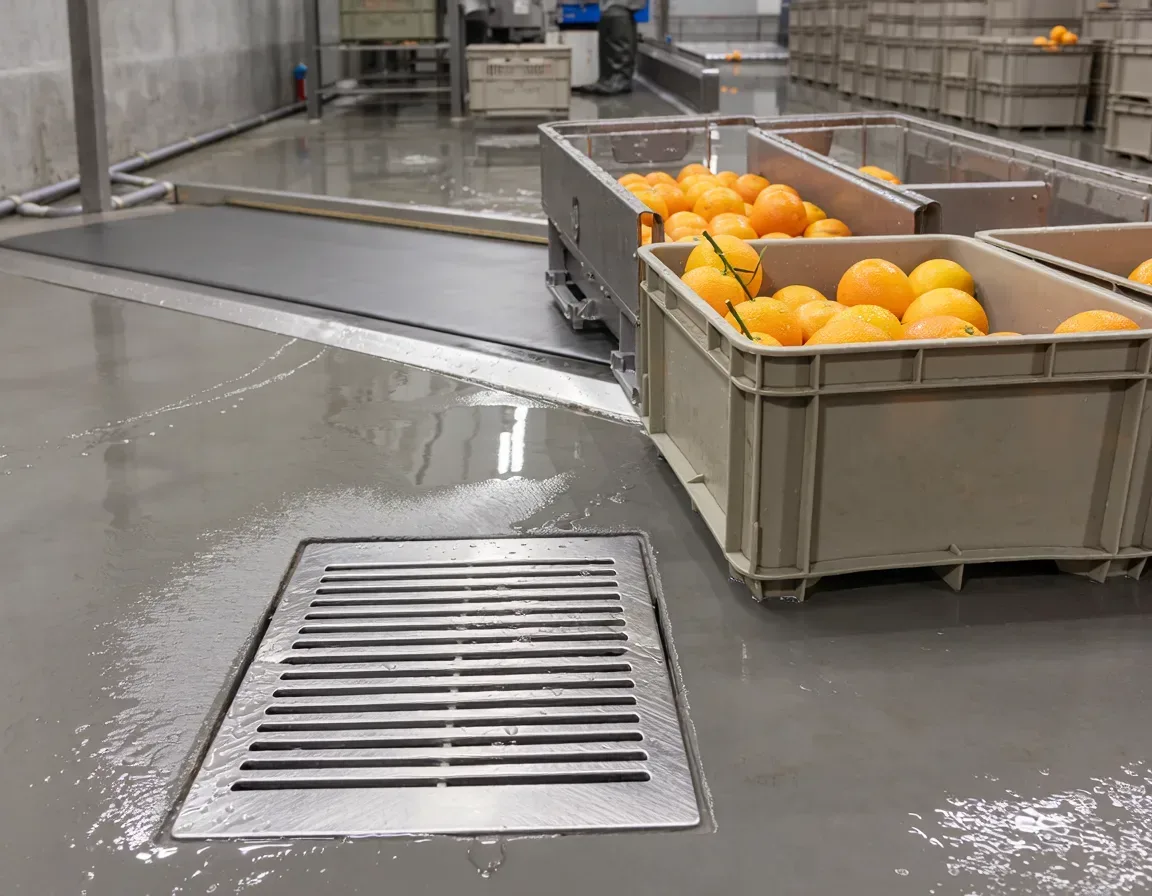
Food hygiene legislation does not specify a material name for the floor; it defines a result. In general, floor surfaces must be kept in solid condition, easy to clean, and disinfected when necessary; for this, it is expected that they be made from waterproof, non-absorbent, washable, and harmful materials, and that water drains properly from the surface where necessary. In which section and which surface meets this definition, the food safety officer of the facility and the inspecting institution decide this; we evaluate the floor together with this expectation.
According to this criterion, dusty, flaky, or cracked concrete is not acceptable in any section. Dust settles on the product and packaging; cracked and open joints are shelters for water, fiber, and microorganisms. Swept and hardened concrete does not dust up, has a sealed surface, and is easy to machine wash; it often meets this expectation in dry and semi-dry sections. However, it is not non-porous and has joints; therefore, it is as important that the joints are full, cracks are repaired, and the joints between the floor and wall are cleanable are as important as the surface itself.
Regardless of the surface, the following details are considered for hygiene in the floor:
- Seams and cracks: Every crack containing water and residual is an area that cannot be cleaned; joints should be filled flush with the surface, and cracks should be repaired.
- Floor and wall joint: A steep corner holds dirt and the brush does not reach; in wet areas, turning the joint with a rounded baseboard significantly facilitates cleaning.
- Slopes and expenses: Water should reach the drain without pooling at the surface, drain grates should be dismantled and cleanable, and the surrounding concrete should remain intact.
- Equipment feet: The area around the line and bench legs is the most difficult part of the ground to clean; the surface work is not complete without repairing the broken concrete around the anchor.
In which section is grinding sufficient, and in which is coating needed?

Washed concrete and resin coating are not competitors but two solutions suitable for different parts of the same facility. The decision is determined by three questions: how much of the day the floor is wet, is acid or oil poured on it, and is it washed with hot water? If the answer to all three is no, treated concrete is a long-lasting and easy-to-maintain floor. If even one is consistently yes, a coating produced for this condition should be considered. In food processing fields, polyurethane-cement-based coatings are mostly preferred for this purpose; because they withstand hot water shock and organic acids better than fine epoxy coatings. General comparison of the two approaches In the article Concrete Shear or Epoxy Coating You can find them.
The table below breaks down the sections of the facility according to ground conditions and summarizes the appropriate approach:
| Section | Ground condition | Appropriate approach | Points to consider |
|---|---|---|---|
| Packaging and safe storage | Dry, wheel traffic | Grinder and hardener, satin finish | Joint filling and edge repair |
| Shipping corridor, in front of the ramp | Dry-humid, heavy traffic | Smoothing and hardening, matte finish | High grip-holding texture in front of the door |
| Cold room with plus rating | Cold, condensation | Smoothing and hardening, matte finish | The work is done while the room is off |
| Frozen storage storage | Minus temperature, ice | Surface repair, limited wiping | Subfloor layout and joints |
| Washing and packaging line | Constantly wet, fruit acid | Polyurethane-cement-based coating | Slope, drain, and baseboard |
| Battery charging area | Acid drip | Acid-resistant coating | Drip pan and intervention kit |
Can Cleaning Be Done in a Working Cold Room?
The short answer is: in plus-grade rooms, in limited amounts, in minus grade storages, practically no. The wiping itself is not affected by the cold; diamond cuts concrete at any temperature. The problem lies elsewhere. The water and mud of wet wipes freeze below zero. Silicate hardeners are water-based; they cannot be applied below freezing, and their reaction slows down noticeably at low temperatures. Most epoxy resins used for crack and pit repair do not cure in cold or remain soft for days.
The product side is added to this. Even if done with a dry wiping dust absorber, there is a risk of some dust settling on the product in the room, and this risk is unacceptable in the food storage. The heat emitted by machines and workers and the frequently opened door also disrupt the room's temperature balance. Therefore, most cold room work is done after the room has been emptied and disabled and the floor has reached a workable temperature.
We recommend that the plan include the following steps when disabling the room:
- Discharge and sequence: In multi-room facilities, rooms are emptied in turn; the product is transferred to the adjacent room, and the facility never completely stops.
- Stepwise heating: The room temperature is raised at the rate recommended by the cooling company; sudden heating increases condensation and unnecessarily forces the floor with the panels.
- Drying: Ice and condensate water from the ground are withdrawn, and the surface and joints are ventilated until dry; resin and filler do not adhere to damp concrete.
- Repair and wiping: Pit, edge, and crack repairs are made, then the surface is wiped and hardened is applied and allowed to react.
- Gradual cooling: The room temperature is gradually lowered again to operating temperature; the cooling company determines the cooling speed and order.
The timing of joint filling should also be considered. As concrete cools, it shrinks and joints widen; a joint filled at ambient temperature can separate from the edge when the room temperature drops below freezing. For this reason, most filler manufacturers recommend filling frozen storage tanks with a product that can cure after the floor is brought down to room operating temperature, the floor balanced, and cured at low temperature. Why joint edges break and the function of the fill In the article on forklift and pallet truck traffic We explained.
From a calendar perspective, every facility has its own quiet period. For a facility that mainly operates citrus, this period is mostly summer; for a facility processing summer vegetables and fruits, it's winter. Placing groundwork in this gap is both less expensive and healthier than making emergency repairs mid-season.
Habits That Protect the Ground in Daily Business
In a food facility, the lifespan of the floor is determined by daily operation without application. Spilled fruit juice and crushed product should be removed without waiting for the end of the shift; as long as acid remains on the surface, it continues to work. Use the dilution ratio on the cleaning product label, rinse the surface after disinfectant application. In dry areas where a floor washing machine is used, neutral cleaner and soft pads are sufficient; maintenance arrangement of polished concrete in the article on polished concrete maintenance We also explained.
A permanent system for water film and ice should be established at the doors: rickshaws and wet vacuums should be placed next to the door, ice should be removed by melting and pulling it out, not by breaking it, and potholes on the threshold should be repaired before they grow. The risk and simple precautions posed by wet floors formed during cleaning for employees in the article on wet ground management We collected them.
To see which section in your facility will be wiped and which with coating, here are a few photos showing the sections, temperatures, and washing patterns service request form You can send it through. During the exploration, we will review the chapters one by one and suggest a sequence that fits your season calendar.
Removing the Ice at the Doorstep Without Breaking It

Ice formed at the door of the frozen storage warehouse breaks with shovels and chisels in most facilities; each impact also carries a piece of concrete off the threshold. After a few seasons, the threshold hollows out and the forklift shakes with every pass.
The less damaging way is to reduce ice formation and remove it by melting it. Door seals and strip curtains are kept intact, the door remains open, and the water at the threshold is removed with a rake before it freezes. The pitted threshold is cut while the room is not in use, and rebuilt with cold repair mortar.
Section-by-Section Solution in a Packaging Facility

In a packaging facility processing citrus, the floor complaint was a single sentence: dust everywhere and under-line spills. During the inspection, we divided the plant into three. We filled the joints in the crate warehouse and shipping corridor, wiped the surface, and hardened it; the dust complaint ended in these sections.
Under the washing and sizing line, we took the acid-weakened layer of concrete and delivered this section ready to the coating company. We handled the cold rooms by emptying them one by one at the end of the season. Three sections were completed with three separate surfaces but with a common schedule.
When choosing flooring in a food facility, look for water, not brightness: if the surface is wet most of the day and juice is spilling on it, talk about a coating made for that condition instead of polished concrete. — Expert Note
Frequently Asked Questions About Cold Storage and Food Facility Floors
01Is wiped concrete accepted in food inspection?
02How long does a cold room stay disabled?
03Do hardeners or preservatives harm food?
04Can matte stains left from fruit juice be removed by wiping?
05Why does the floor seem to sweat in a cold room?
06Is filling cracks in frozen storage sufficient?
Related Articles
Forklift and Pallet Truck Traffic: Wheel, Joint, and Floor Wear, Warehouse and Logistics Center Floors: Dust-Free Warehouse with Concrete Cleaning, Concrete Coating or Epoxy Coating? Comparison of Lifespan and Maintenance in Large Areas, How to Read Anti-Slip Values? R Class, Pendulum Test, and Wet Ground, Shopping Mall and Hotel Service Areas: Loading Ramp, Back Corridor, and Trash Room Floors