What is Concrete Plastering? The Path from Dusty Screed to Polished Concrete
The solution sought for a dusty parking lot, a warehouse that turns gray again as it is swept away, or a workshop floor whose paint peels off every year often begins with the question, "What should we apply on top?" Concrete grinding reverses this question: instead of adding something on top of the floor, it removes the weak surface of the concrete, tightens the remaining solid concrete, and polishes it to the desired level. The resulting floor is called polished concrete or polished concrete in the market. In this article, we explain what the process is, what it changes in concrete, which floors it can and cannot be applied to, where it is used, and where it falls short.
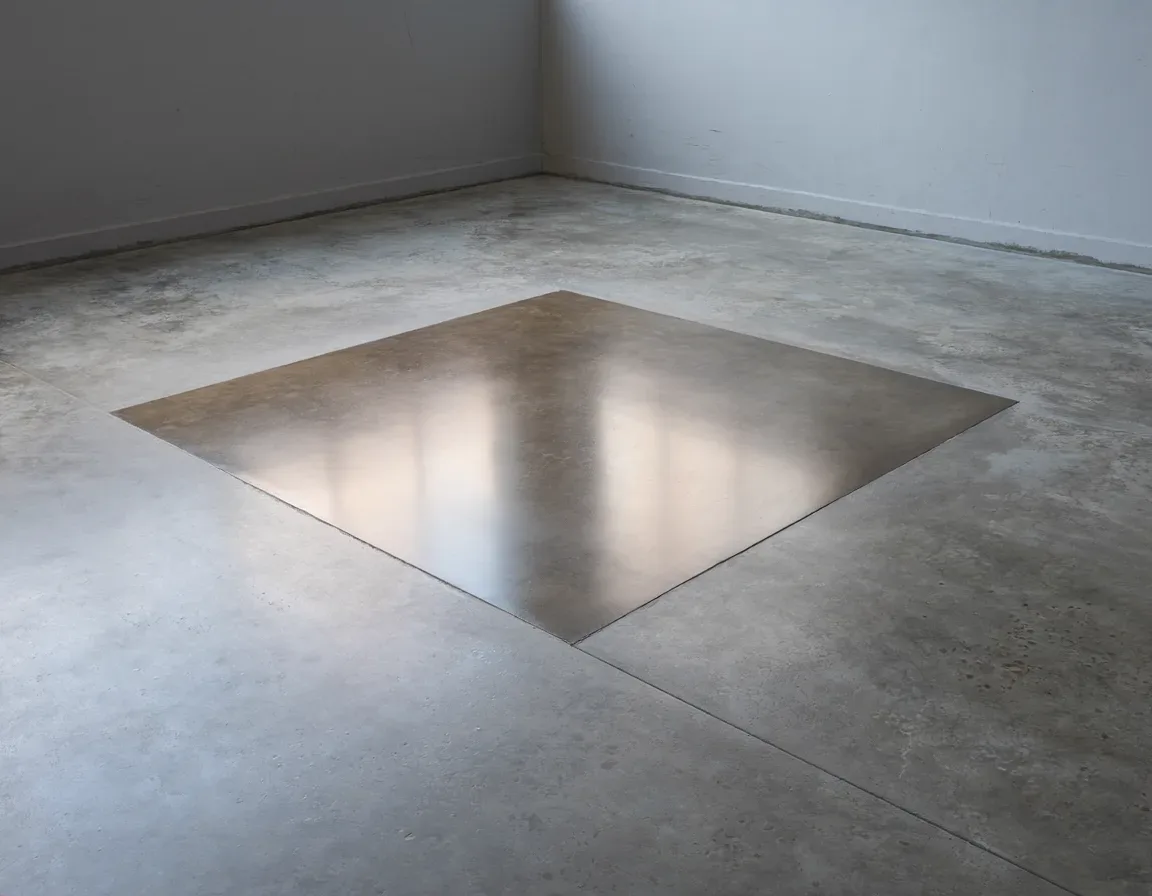
In short: Concrete grinding is the step-by-step treatment of the hardened concrete surface with diamond abrasives, condensing and polishing it with a silicate-based hardener; it leaves no film to peel off on the floor. It provides a dust-free, easily cleanable, light-reflecting surface in solid and sufficiently thick concrete. It does not save weak and thin screed, oil-absorbed concrete, or a continuously chemically poured area on its own.
Not the coating, but the concrete itself
Most floor renovation methods place a new layer on top of concrete: paint, epoxy, polyurethane, self-spreading screed, or tile. What these layers have in common is that they stick to the concrete and stand up; when the adhesion is broken, they bubble, peel, or break. There is no such layer in concrete polishing. The surface being processed, transporting traffic, and giving it its final appearance is the concrete itself.
The naming is mixed in the field, and several terms describe the same job. Concrete grinding describes the entire work, that is, the mechanical process from rough grinding to final polishing. Polished concrete or polished concrete is the name of the surface obtained at the end of this process; the word "polish" here refers not to a polish applied but to the mechanical polishing of the surface. Concrete polishing mostly refers to fine stages. When requesting a quote, one should look more at the scope than the term itself: how many stages of grinding will be done, whether hardener will be applied, and at what gloss will the surface be finished?
A common mixing involves microconcrete. Microconcrete is a polymer-addled coating applied several millimeters thick over the existing floor and its care varies; this In the article on microconcrete and microcement maintenance We also addressed it. The dark and shiny gray surface obtained by polishing a tray on fresh concrete is not polished concrete; that surface is created with a trowel rather than a diamond before the concrete hardens, and can be wiped off later if desired.
What Does the Process Change in Concrete?
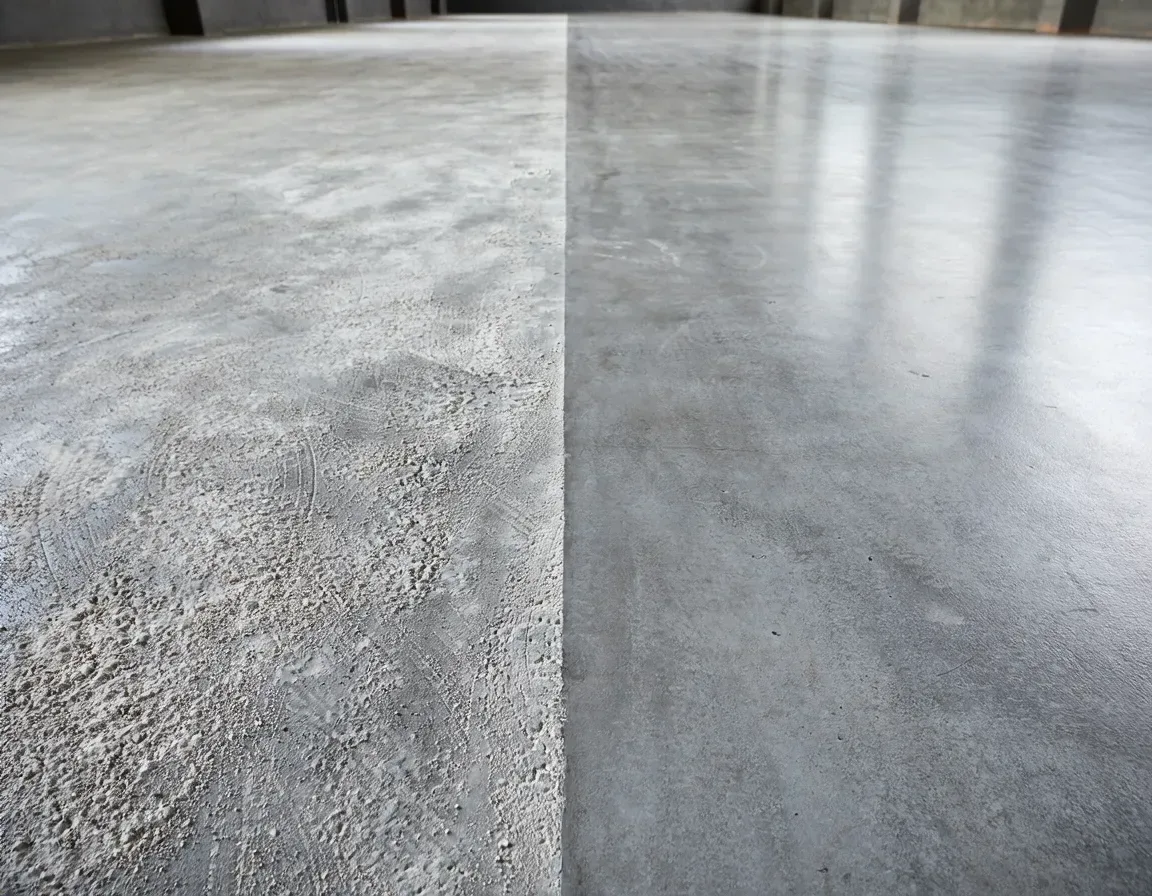
As concrete is poured, the water and finest grains of the mixture move upward. This cement syrup layer remaining on the surface is more porous and softer compared to the concrete underneath; if the cure is poorly done or the surface is polished with excess water, it weakens significantly. This is the first part under the wheel and foot that is worn out and covered as dust. The causes of dust and how it is diagnosed on site Why does the concrete floor dust in the article We explained in detail.
A grind does three things at once. First, rough diamonds cut through this weak shell and settle into the denser body concrete. Second, silicate-based liquid hardener is impregnated into the opened pores; it reacts with the free lime inside the concrete, forming a hard binder in the pores and densifying the surface. Third, the increasingly thin diamond grades reduce the scratch pattern left by the previous one. When the scratches become too thin for the eye to discern, the surface begins to reflect instead of scattering light; the shine does not come from a polish layer but from the smoothness of the concrete itself.
Therefore, the result is both permanent and renewable. An area that dulls over the years is not removed and re-peeled as with coatings; it is restored by repeating several thin steps. On the other hand, the process cannot be reversed: the layer cut from the surface cannot be put in place, and the appearance emerging from underneath is the new face of the floor.
Bird's-eye view process
The number and order of each project stage vary depending on the condition of the concrete, but the work goes through four main phases. The following sequence shows the overall flow:
- Exploration and preparation: The hardness, moisture, cracks, and old coatings of the concrete are examined, and in a small test area, it is observed how the concrete responds to the diamond.
- Rough wiping and repair: Weak surfaces and debris are removed with metal-bonded diamonds, cracks, pits, and broken joint edges are filled and leveled to the ground.
- Hardening Treatment: When the surface is sufficiently opened up, silicate-based hardener is saturated and applied and the product is allowed to wait as long as desired for the reaction to occur.
- Polishing and protection: The surface is brought to the targeted matte, satin, or glossy level with resin-bound diamonds, and if necessary, stain protector is applied and polished at high speed.
What is looked at at each stage and how the outcome is ruined when a step is skipped? In the article on concrete sieving stages You can follow it step by step. What should be known here is that the quality of the result is determined not by the last bright stages but by the first rough stages: a surface that is not properly unfolded shines wavy and streaky no matter how thin the diamond used.
Which concrete is suitable and which is not?
Concrete does not add new properties to sleek concrete; it reveals what already exists. Therefore, the ceiling of the result is determined by the concrete itself. Concrete poured with sufficient thickness and strength, such as load-bearing slabs, ground-based field concrete, and industrial floor concrete, generally respond well. Age alone is not a problem; a decades-old factory floor shines quite well if its body is solid, even if its surface is worn. The table below lists the types of floors encountered on site in terms of suitability:
| Ground | Eligibility for deletion | Why and what to do |
|---|---|---|
| Load-bearing slab or field concrete | Suitable | There is sufficient thickness and strength; surface defects are repaired and wiped |
| Finished, surface-hardened industrial concrete | Convenient, carefully | The sprinkler layer is thin; it is worked with light cutting without going too deep |
| Fine and weak leveling screed | Mostly not suitable | Sandy screed disperses under the diamond; it is dismantled and renewed or coated |
| Concrete absorbed by oil and contaminated with chemicals | Limited | Deep fat blocks the hardener and preservative; pre-cleaning and trial are essential |
| Frost-tested, flaked concrete | Depends on the depth of damage | If the weak layer can be removed completely, it is removed; if deep, the top layer is renewed |
| Old coated concrete | Suitable after disassembly | Epoxy, paint, or adhesive is used; the decision is made based on the concrete coming from below |
| Concrete that constantly absorbs moisture from below | Convenient, with the risk of staining | There is no film to peel off, but salt leakage and dark spots may be visible |
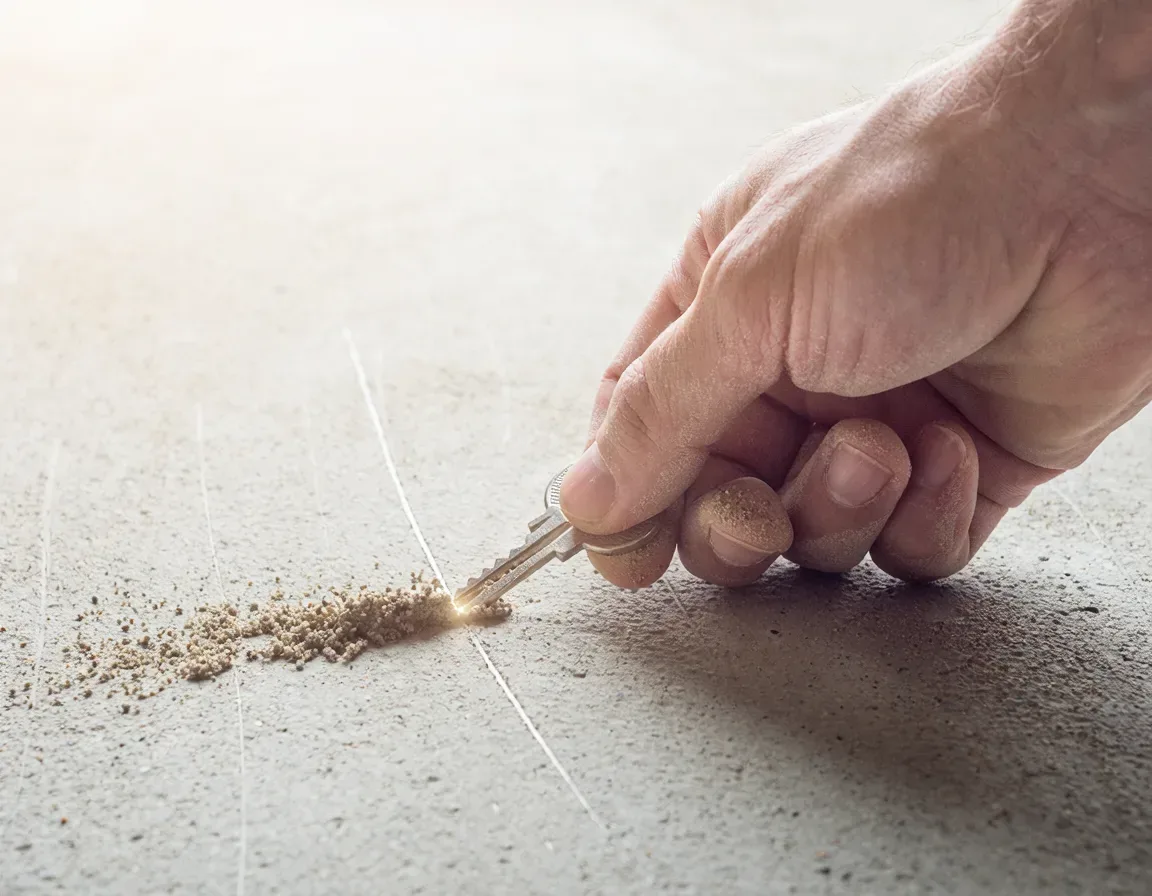
The thin screed, which is often described as "mostly unsuitable," is especially important because it is the most common misconception in residences and shops. A few centimeters of screed with a high sand ratio thrown over the slab concrete for leveling is not designed as a wear surface. If it is easily carved out with a wrench and sand spills from the line, it behaves the same way under the diamond: grains break off, and the surface roughens rather than smooth. A hardener somewhat recovers such a floor but cannot provide it with a body capable of carrying traffic.
Compliance is not confirmed at the desk. In the inspection, boot testing, hammer hammering, water droplet, and moisture control are performed; the decision often provides a trial area of several square meters. How to capture images to be sent for preliminary evaluation In the text on the floor photo for the bid We described.
Where Is It Used?
The natural area of polished concrete is wide, traffic-bearing concrete floors. The main gain in closed parking lots is dust reduction: gray dust on vehicles, thin material filling ventilation ducts, and dirt carried by tires decrease, and light-colored surfaces reflect lighting, refreshing dark floors. The brightness goal in parking lots is usually kept low; the goal is not showiness but a dust-free and washable surface.
In warehouses and logistics centers, the same dust then settles on products, packaging, and shelves. Since forklift and pallet truck wheels constantly grind the weak surface, the problem does not go away on its own and grows year by year. The compacted surface wears down more slowly under the wheel and is easily cleaned with a floor washing machine.
In factories and workshops, the expectation is durability and cleanability. The absence of a coating to peel off the floor under chips, oil, and pallet friction makes the maintenance team's job easier. In stores, showrooms, cafes, and offices, polished concrete is the design choice: the gray tones of concrete, aggregate stains, and even old patches are considered the character of the space. In such spaces, gloss and aggregate appearance are pre-selected and approved in the trial area.
Outdoor space is a separate matter. On open parking, fields, and ramps, the bright surface becomes slippery when wet, so it is not targeted; here, grinding is only used to remove the weak layer and tighten the surface, with a rough finish.
Gains: What Changes in the Daily Life of the Business?

The benefits of concrete wiping are understood not through brochure language but through the problems the business faces daily. The most noticeable changes on site are:
- Cutting the powder: Since the weak syrup layer is removed and the pores are tightened by the hardener, the surface stops pouring like flour under the wheel.
- Easy cleaning: Dirt cannot settle in the pores on a smooth surface; the rider washing machine cleans a larger area with less chemicals in a single pass.
- Light reflection: The light gray and smooth surface reflects the light from the fixtures back to the ceiling and walls, making dark parking lots and storage areas perceive as brighter.
- No peeling or swelling: Since there is no film on the surface, moisture or hot rubber coming from below cannot remove the layer, eliminating the recoating cycle.
- In-situ regeneration: Over the years, the dull traffic paths can be brought closer to their original appearance without being removed, only by repeating thin steps.
The common condition for these gains is keeping the surface clean. Sand and gravel are also enemies of polished concrete; floors that are not regularly swept and washed with a neutral cleaner will become duller, albeit more slowly, than a paved floor.
Limits: What polished concrete cannot do
An honest assessment should also point out where the method is insufficient. Concrete is a porous and alkaline material even if wiped and hardened. Acids, such as battery acid, some cleaning products, and even long-standing fruit juice and vinegar, dissolve the cement binder, leaving matte and rough marks on the surface. Oils can settle into the pores and cause dark stains. Stain protectors extend this time and buy time for intervention but do not turn the surface into an impermeable container.
The second limit is appearance. Cleaning does not erase the concrete's history; it makes it visible: old cracks, repair patches, traces of removed walls, and tonal differences between sections poured on different days become even more pronounced on a bright surface. Repairs are made, but not without marks. Aggregate distribution is also determined in the pour; the same spot density cannot be achieved everywhere afterwards. For a user expecting a flawless, uniformly colored surface, polished concrete may not be the right choice.
The third limit is wet ground. Dry and clean polished concrete is generally safe for walking, but when water, oil, or fine dust forms a film on the surface, slip resistance decreases. In wet working areas, brightness is kept low or a different surface is chosen; how measurements are interpreted In the article on non-slip values We explained.
Finally, in some businesses, coating is actually the more appropriate solution. Production lines that continuously pour acid or solvent, wet food processing areas requiring seamless and washable hygienic surfaces, and facilities requiring colorful, monotonous floors are better protected with resin coating. Comparison of the two methods in terms of lifespan, maintenance, and renewal In the article Concrete Shear or Epoxy Coating We presented it with a neutral picture.
Three Common False Expectations
The first mistake is the idea that wiping is a form of deep cleaning. A wiping takes material from the surface and permanently changes the appearance of concrete. Once a cream-looking polishing surface is cut, it does not come back; therefore, how deep to go is decided before the work begins.
The second mistake is the assumption that the hardener is a polish or varnish. The hardener does not form a shiny layer on the surface but reacts inside the concrete to tighten it; when applied alone, the floor does not shine, only less dust. The shine is given by diamond steps. The opposite is also a trap: a surface with rough steps skipped, polished only with thin pads without hardening, looks good in the first months, then quickly becomes dull on traffic roads.
The third mistake is that polished concrete requires no maintenance. Compared to coated floors, the maintenance burden is indeed low but not zero: regular dusting, neutral cleaner, not leaving spills waiting, and periodic polishing on busy routes are necessary. On a floor that has never been maintained, the matte appearance after five years is not the result of the method but of the operation.
Who Is It the Right Choice For?
The decision becomes easier once it is clarified what is expected from the floor. For businesses with solid concrete, large spaces, complaints of dust and cleaning difficulties; and those who do not want to recoat the floor every few years, concrete sweep is often the least surprising option. For the parking manager, this means the end of dust complaints from vehicle owners; for the warehouse manager, the time allocated for product and shelf cleaning is reduced; for the technical manager, the floor paint pen in the maintenance schedule is removed.
On the other hand, for a business with a weak screed floor, a uniform and flawless surface, or regularly using acid and solvents in its area, other solutions should be considered first. In cases in between, for example on an old workshop floor stained with oil, the decision is made only after seeing the trial area; sometimes part of the area is wiped and the area with a high chemical risk is covered.
The way to understand which group your floor falls into is to look at it on site. The size of the area, the age of the concrete, and a few photos service request form If you send it to, we conduct a preliminary evaluation; if deemed appropriate, we set a date for the discovery and trial area.
Screed and Concrete Are Not the Same

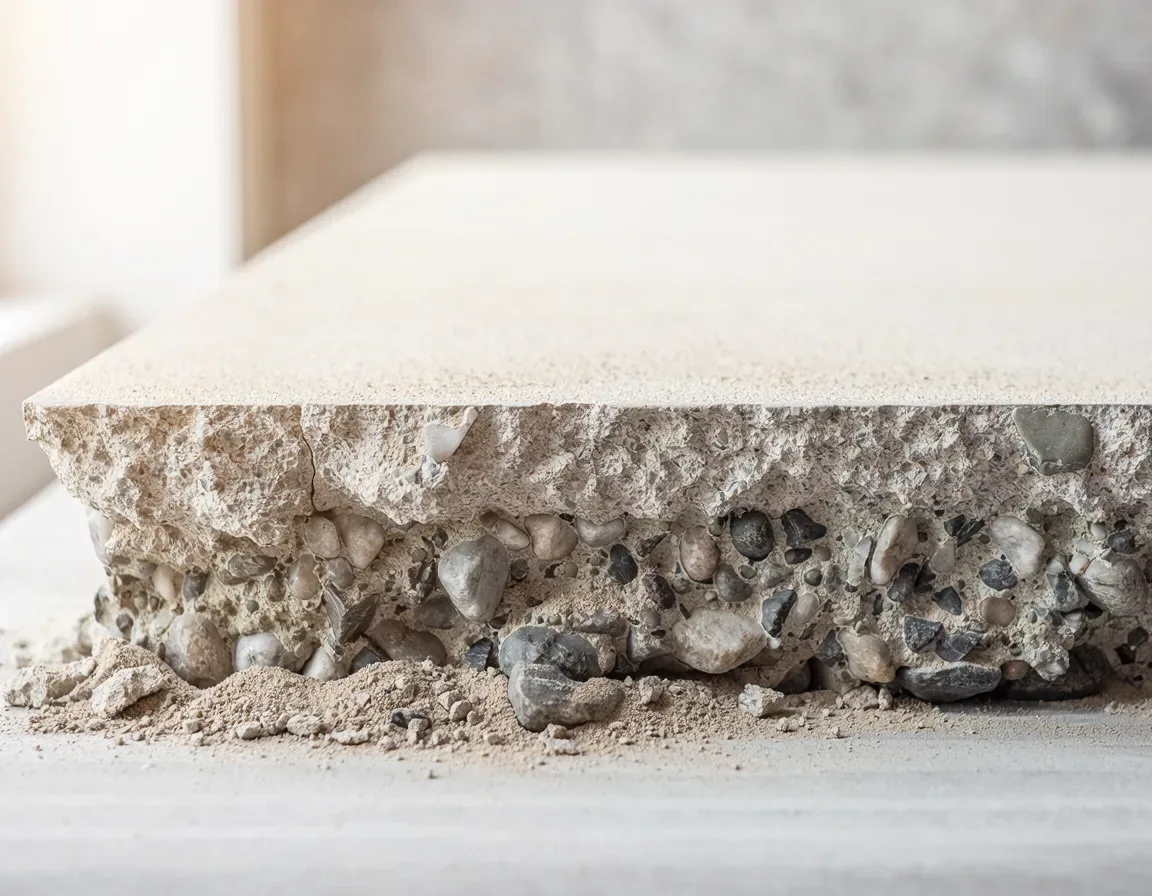
In everyday language, screed and concrete are used interchangeably, whereas the difference between them is decisive in terms of silent. Concrete; consists of cement, sand, and coarse aggregate, is load-bearing and is poured with a density that resists wear. Screed, on the other hand, is mostly a thin layer made solely of sand and cement, laid to level the floor or create a covering.
A tightly cast, sufficiently thick, and well-cured screed can be wiped off; sandy and brittle ones cannot be wiped off. The distinction is made during exploration by drawing the test and, if necessary, by looking at the cross-section from a broken edge.
What does a test area show?

For floors where we can't decide on it, we start with a trial area of a few square meters. We select a corner from the most worn part of the floor and apply all steps from rough steps to the targeted brightness on a small scale.
This area answers three questions: is the concrete falling apart under the diamond or is it cut cleanly, how much and how smoothly the aggregate comes out, and how the stains and repairs look on the shiny surface. The business owner sees the result in their own light, on their own floor; scope and expectations are written down through this area.
In concrete wiping, the result is determined by the concrete, not the machine; do not approve a proposal that promises to polish a sand-covered floor when you draw with a wrench before you see the test area. — Expert Note
Frequently Asked Questions About Concrete Smoothing
01Can the floor where concrete was sieved be painted or coated later?
02Does the business completely shut down during the erasure?
03Is concrete slime a scented job?
04How thin does the floor become, and does an elevation difference occur?
05When can vehicles and forklifts enter the ground?
06How long does polished concrete last?
Related Articles
Concrete Clearing Stages: Step-by-Step Process from Discovery to Delivery, Why Does a Concrete Floor Dust Out? Causes and Diagnosis of Surface Weakness, Concrete Coating or Epoxy Coating? Comparison of Lifespan and Maintenance in Large Areas, Covered Parking Floor Renewal: Dust-Free and Bright Parking with Concrete Cleaning, Polished Concrete Care: From Daily Cleaning to Repolishing